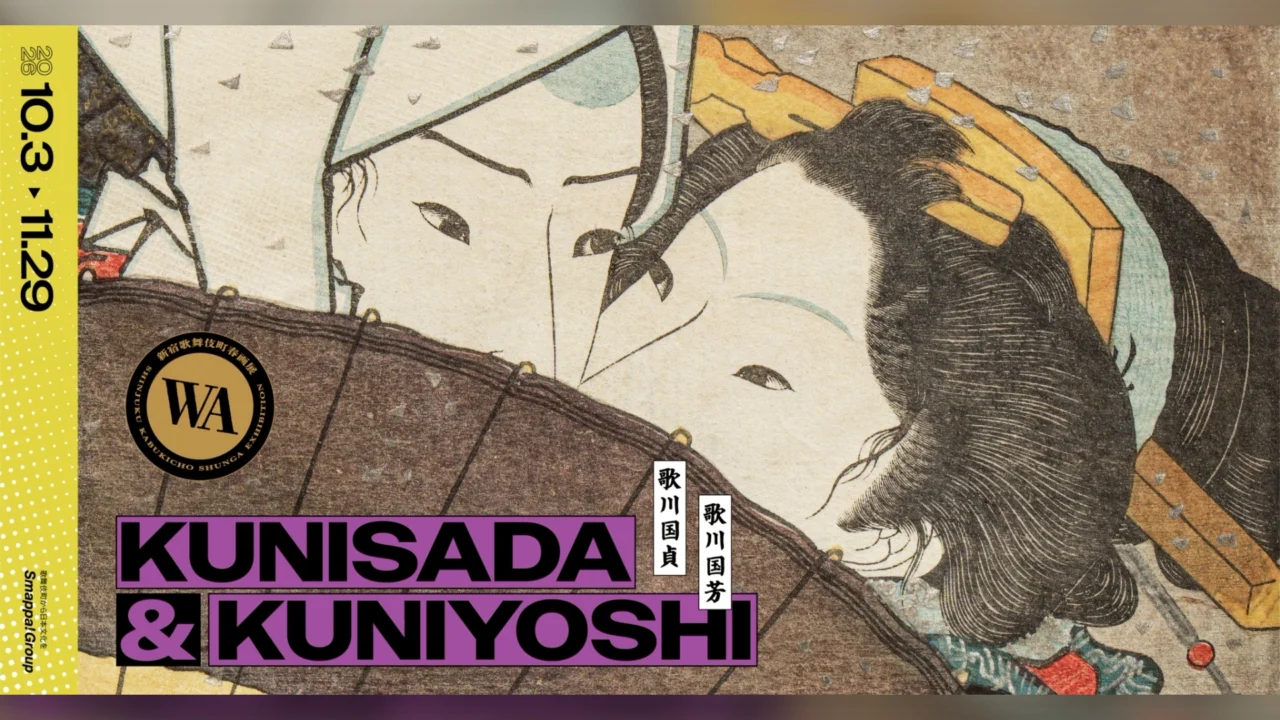
Utagawa Kunisada and Utagawa Kuniyoshi: Shinjuku Kabukicho Shunga Exhibition WA is currently being held at the Shinjuku Kabukicho Noh Stage in Tokyo.
The exhibition is organized by Smappa!Group, which operates more than 20 businesses in Kabukicho, including host clubs, bars and hair salons. In recent years, the group has been working to promote Japanese culture from the heart of Kabukicho. Now in its fourth edition, the exhibition focuses on two legendary ukiyo-e artists: Utagawa Kunisada, whose illustrations for Ryutei Tanehiko’s Nise Murasaki Inaka Genji sparked a craze for Genji-themed prints in Edo, and Utagawa Kuniyoshi, a devoted cat lover known for his wildly imaginative works. Both are among the most celebrated artists in the history of ukiyo-e.
Kunisada is best known for his portraits of kabuki actors, while Kuniyoshi made his name with depictions of warriors. The exhibition brings together works of shunga, or Japanese erotic art, by these two distinctive masters in the unusual setting of a Noh stage in Kabukicho. Beyond the exhibition itself, visitors can also take part in the Shunga Tour with Hosts, an optional two-hour experience that combines a guided viewing of the artworks with working hosts from Smappa!Group, some of whom speak English, followed by an hour at a Japanese host club.
It might sound like a fun experience on paper, but the reality turned out to be even better. The tour was so enjoyable that it offered a welcome escape from everyday life, leaving a lasting sense of excitement and energy. Here’s what makes this unusual experience so special.
Please note: This article contains sexual themes and descriptions.
INDEX
Shunga on a Noh Stage in Kabukicho: Art Wasn’t Always a Solo Experience
Before meeting the hosts, I had a chance to explore the exhibition with someone from the PR team. And honestly, the exhibition itself was full of surprises.
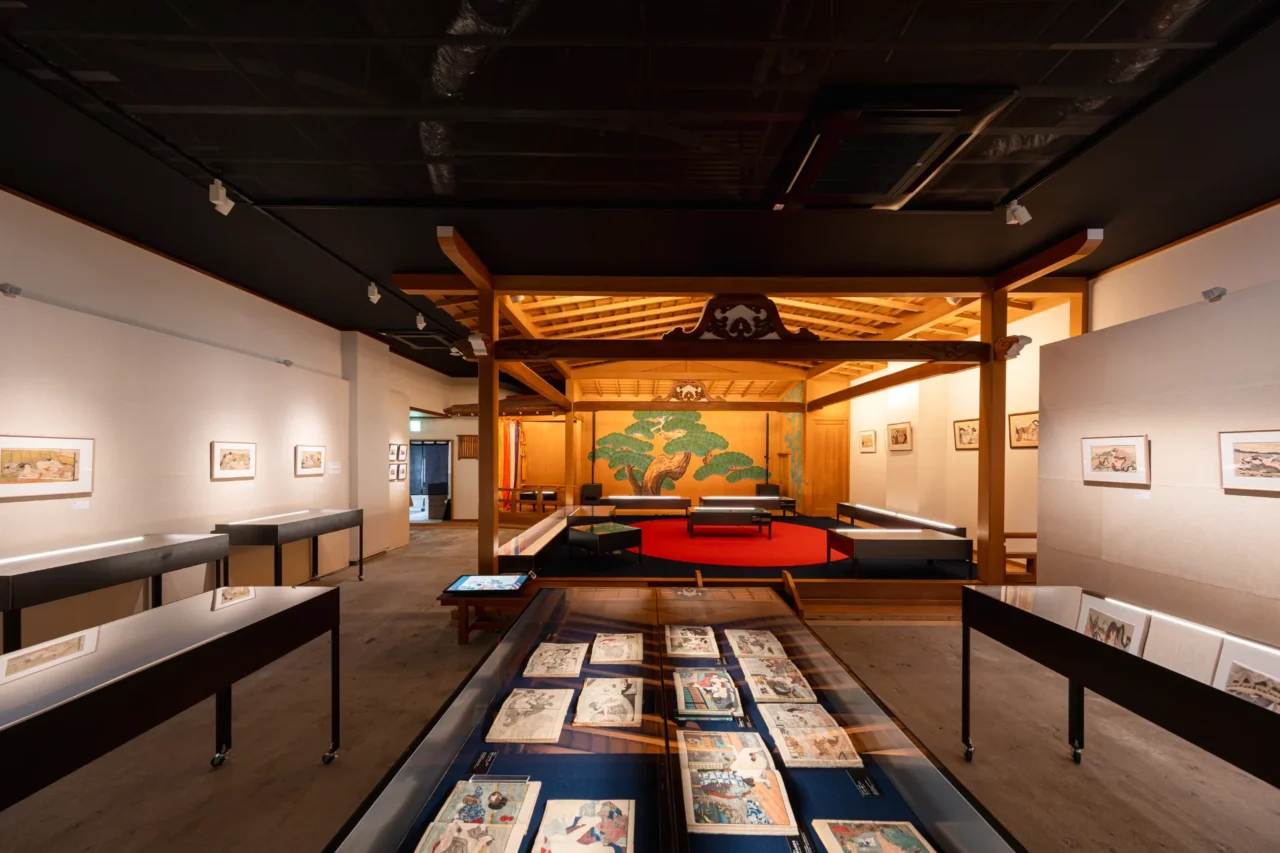
For starters, I had no idea there was a Noh stage in Kabukicho, let alone one that dates back to 1941. The way the exhibition was set up was just as interesting.
Back in the Edo period, shunga was also known as warai-e, or “laughing pictures.” Rather than being enjoyed only in private, these erotic artworks were often shared among groups of people, who would laugh and chat about what they were seeing. The exhibition brings back that spirit with glass display cases arranged in a circle. Visitors can see not just the artworks but also each other’s faces and reactions, making the whole experience feel much more social than your typical art exhibition.
The descriptions are refreshingly casual, too. Instead of the usual dry, academic explanations, they’re written in a friendly, enthusiastic tone that makes the art easy to get into. Free audio guides are also available in both Japanese and English, making the exhibition more accessible to international visitors.