Since its serialization began in 2022, Akane banashi has become one of the defining Weekly Shonen Jump series of the Reiwa era. Centered on the traditional Japanese art of rakugo, the manga has surpassed 3 million copies in circulation as of January 2026, proving that a centuries old performing art can still resonate with a new generation of readers.
The story follows Akane Osaki, a young woman who sets out to become a rakugo performer after her father is expelled by his master. Determined to restore her father’s honor, she enters a world filled with legendary performers, a devoted mentor, talented senior apprentices and fierce rivals, overcoming setbacks and growing with every performance. By combining the disciplined world of traditional performance with the excitement of a classic Weekly Shonen Jump story, Akane banashi transforms the pursuit of artistic mastery into a gripping coming of age tale with the intensity of a battle manga.
The TV anime premiered in spring 2026, bringing the series to an even wider audience. Featuring a theme song by Keisuke Kuwata, the adaptation has generated widespread attention and is even said to have inspired more members of Gen Z to attend live rakugo performances. For this interview, we spoke with Anna Nagase, who won the role of Akane through an audition. She reflects on her rigorous rakugo training, the process of discovering Akane’s voice, and how she grew alongside the character throughout the production.
This interview contains spoilers for the anime.
INDEX
Finding Her Voice Through Rakugo
Episode 10 has just aired by the time we’re sitting down for this interview. Looking back on the series so far, how are you feeling?
Nagase: Honestly, I felt an incredible amount of pressure at first. It was my first time leading a series, and it was an adaptation of such a beloved manga. But once the anime started airing, all of that pressure just melted away. I found myself enjoying each episode right alongside the audience, and that honestly surprised me. As Akane has grown throughout the story, I feel like I’ve been growing with her. Looking back now, it feels like we found our footing together.
We heard your rakugo training actually began more than a year before voice recording started.
Nagase: That’s right. I trained under our rakugo supervisor, Master Kikuhiko Hayashiya. He would first perform an entire story for me, then I would transcribe the recording by hand, memorize it, and perform it back to him. Once he gave me his approval, I could move on to the next story. That was the process we repeated over and over.
So your training was very similar to how professional rakugo performers learn.
Nagase: Exactly. I was in drama club throughout school, so I always thought memorizing lines was one of my strengths. But this was much more challenging than I expected. It was my first time performing every character in a story completely on my own. On top of that, I had to think about each character’s expressions and movements while telling the story, which made it incredibly difficult.
My very first performance was awful. When I watched the recording back, my eyes kept wandering, my gestures didn’t look natural, and even my delivery felt uncertain. All I could think was that I was nowhere near good enough. It was honestly embarrassing to watch. But instead of letting that discourage me, I used it as motivation. After every lesson, I told myself I would do better next time. I kept building on each performance, little by little, until I could finally see the progress.
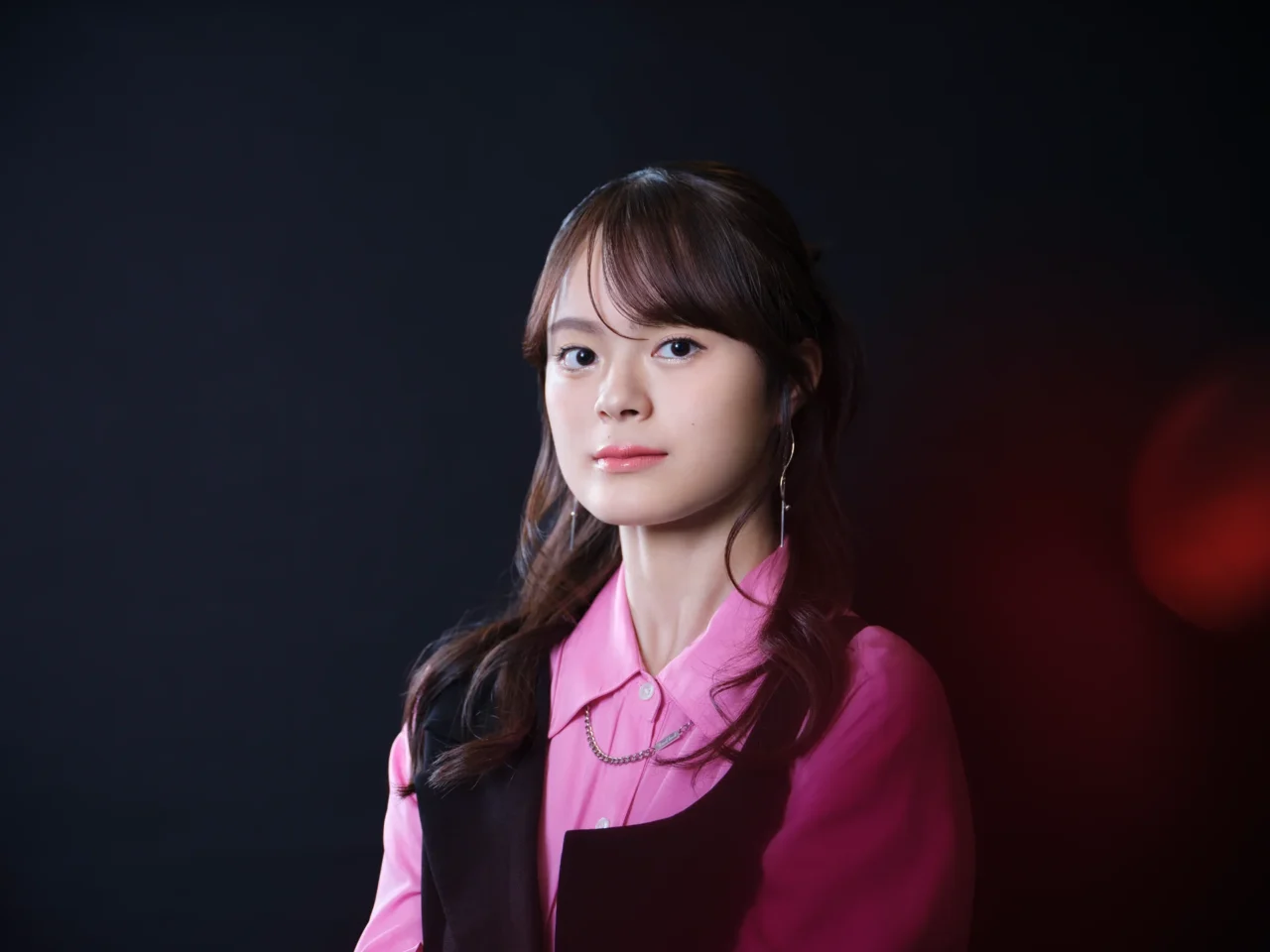
Born on March 31 in Tokyo, Anna Nagase is a voice actor who received the Best New Voice Actor award at the 17th Seiyu Awards in 2022. Her notable roles include Ushio Kofune in Summer Time Rendering, Riko Amanai in Jujutsu Kaisen: Hidden Inventory / Premature Death, and Akane Osaki in Akane banashi.
Was there a moment during your training when you started to feel like you could really do it?
Nagase: Yes. It happened when I was practicing Hatsu Tenjin, a classic rakugo story about a father and son visiting a festival. For some reason, that story just clicked with me. Up until then, I was memorizing the lines and reciting them, but I was really just reading them back in my head. With Hatsu Tenjin, though, the words came naturally. They just flowed. It felt like the story had truly become part of me.
My master would always tell me not to simply recite the story, but to let it come from within. That was the moment I finally understood what he meant, not intellectually, but physically. It was something I could actually feel.
Then came the recording sessions. We heard the rakugo scenes were recorded with an actual koza, the stage used for rakugo performances, recreated in the studio.
Nagase: That’s right. Since you switch between characters by subtly turning your head from side to side, the staff set up three microphones around me to capture those movements. I performed sitting in the traditional kneeling position while holding the script.
Takuya Eguchi, who plays Karashi Renma, actually performed standing up. Every voice actor has their own approach to acting and their own style that feels most natural. The recording team was incredibly flexible and adjusted the setup to suit each performer. I think that’s why every rakugo scene ended up reflecting the individuality of the actor performing it.