Why are Japanese characters in Hollywood films so often portrayed as honorable, loyal and bound by duty?
From Ken Takakura in The Yakuza (1974) and Black Rain (1989) to Hiroyuki Sanada in The Last Samurai (2003) and Shōgun (2024), Hollywood has long favored a particular image of Japanese masculinity.
But what happens when Takashi Miike brings Abel Ferrara’s cult classic Bad Lieutenant to Tokyo in a Japanese-American co-production? Through its lurid colors and recurring images of crows, Miike offers a very different vision of Japan, one that challenges the image Hollywood has spent decades creating.
Spoiler Warning: This article discusses major plot points, including the ending.
INDEX
Hollywood’s Longstanding Image of the Honorable Japanese Man
Drugs, violence and redemption. Abel Ferrara’s Bad Lieutenant (1992) is a brutal portrait of a corrupt New York City cop at rock bottom. More than 30 years later, director Takashi Miike brings that world to the darker side of Tokyo in Bad Lieutenant: Tokyo.
Hollywood has a long history of films exploring Japan’s criminal underworld. From Tokyo Joe (1949), starring Humphrey Bogart, to The Yakuza (1974) and Black Rain (1989), the fascination goes back decades. And it hasn’t faded. More recent examples include Kill Bill: Volume 1 (2003), The Wolverine (2013), the TV series Tokyo Vice (2022) and John Wick: Chapter 4 (2023).
One recurring theme in these stories is the idea of Japan as a place where traditional virtues still survive. In both The Yakuza and Black Rain, Ken Takakura embodied giri and ninjō, a sense of duty and human compassion. His characters offered weary American protagonists a glimpse of honor and integrity they seemed to have lost in their own lives.
Today, Hiroyuki Sanada has arguably inherited that role in Hollywood. From The Last Samurai (2003) to John Wick: Chapter 4 and the Emmy-winning Shōgun (2024), he has repeatedly portrayed Japanese men who live by their principles, even at great personal cost. It’s an image of Japan that Hollywood has returned to time and again.
But the Japanese-American co-production Bad Lieutenant: Tokyo has no interest in following that familiar formula.
INDEX
A Corrupt Cop, a Sushi-Obsessed Heiress, and a Tokyo Without Honor
At the center of the story is Kyoji Yabuki (Shun Oguri), a Japanese detective struggling with drug addiction and crushing debt. Still haunted by the murder of his partner, he’s investigating a string of gruesome killings across Tokyo. Meanwhile, FBI agent Nguyen (Lily James) arrives in Japan to track down Megan (Liv Morgan), the missing daughter of the US president-elect.
In a more conventional Hollywood film, Yabuki and Nguyen would team up to solve their cases. But here, they’re so caught up in their own investigations that they barely work together. Nor does Nguyen find redemption through Yabuki’s honesty or integrity.
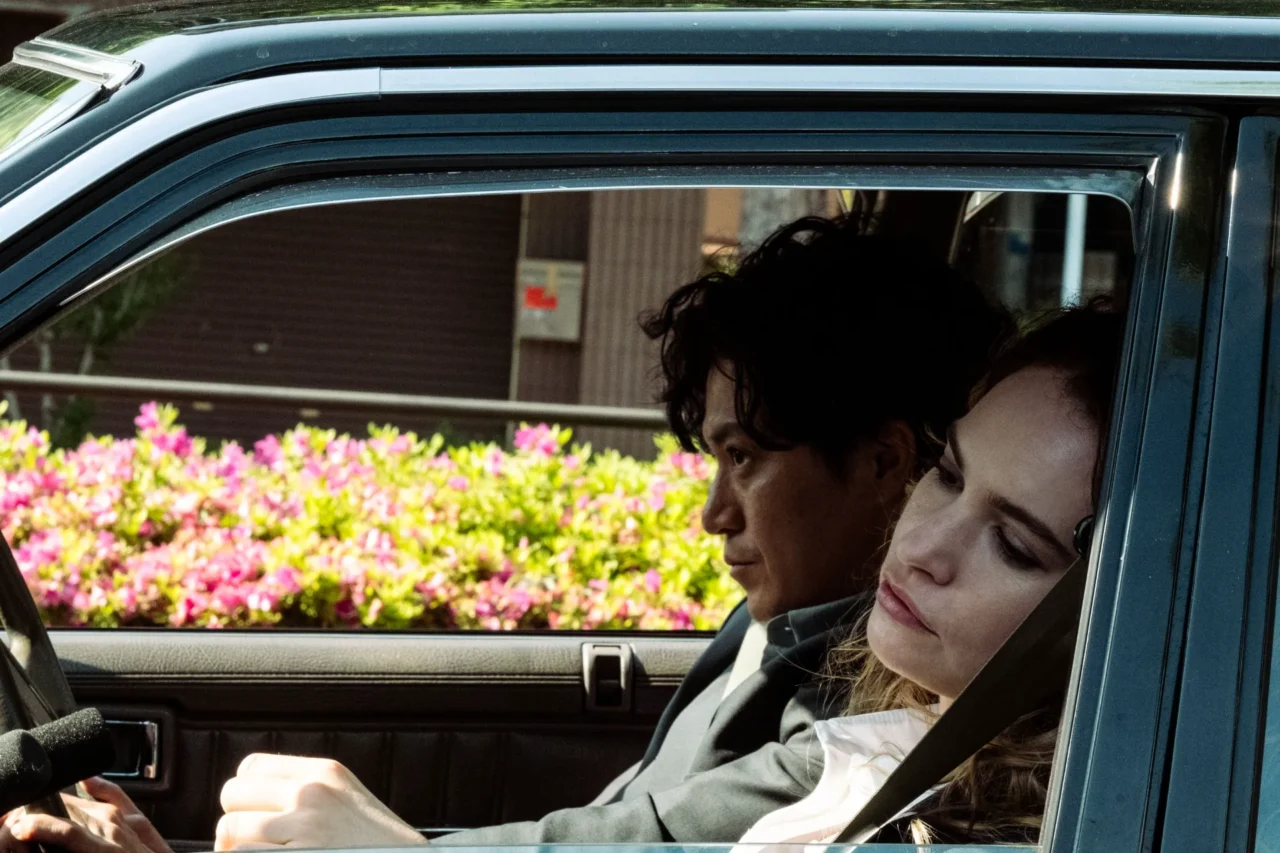
Megan, the woman Nguyen is searching for, is just as unsettling. Obsessed with sushi, she’s no helpless damsel in distress. She’s a violent predator who ties men up in bed and beats them to death. Sushi and Japanese bondage are both familiar exports, eagerly embraced by audiences overseas. Megan devours these exoticized images of Japan with an insatiable appetite for food and sex, consuming everything the country has to offer as though she wants to strip it to the bone.
The honorable Japanese men Hollywood once admired are nowhere to be found. Instead of carrying the weight of duty and loyalty, Yabuki is buried under a mountain of debt. And the man he owes isn’t even a Japanese yakuza boss, but a member of the Chinese diaspora named Liu Dahua (Jun Kunimura). Coincidentally, 1992, the year the original Bad Lieutenant was released, was also the year Japan’s anti-yakuza law came into effect. More than three decades later, the old underworld of tattoos, sake rituals and sworn loyalties has largely faded away.
A Japanese detective pushed around by the daughter of American power, financially trapped by a Chinese man and sinking deeper into despair. It’s a brutally unflattering portrait, but one that begins to look a lot like Japan today.
INDEX
Japan in Artificial Colors: Takashi Miike Turns the Western Gaze Back on Itself
What stands out most is the film’s outrageous use of color. Every frame looks as though it’s been saturated to the point of toxicity. Miike transforms Japan into a city drenched in artificial colors, and that garish excess is exactly what makes the film so striking.
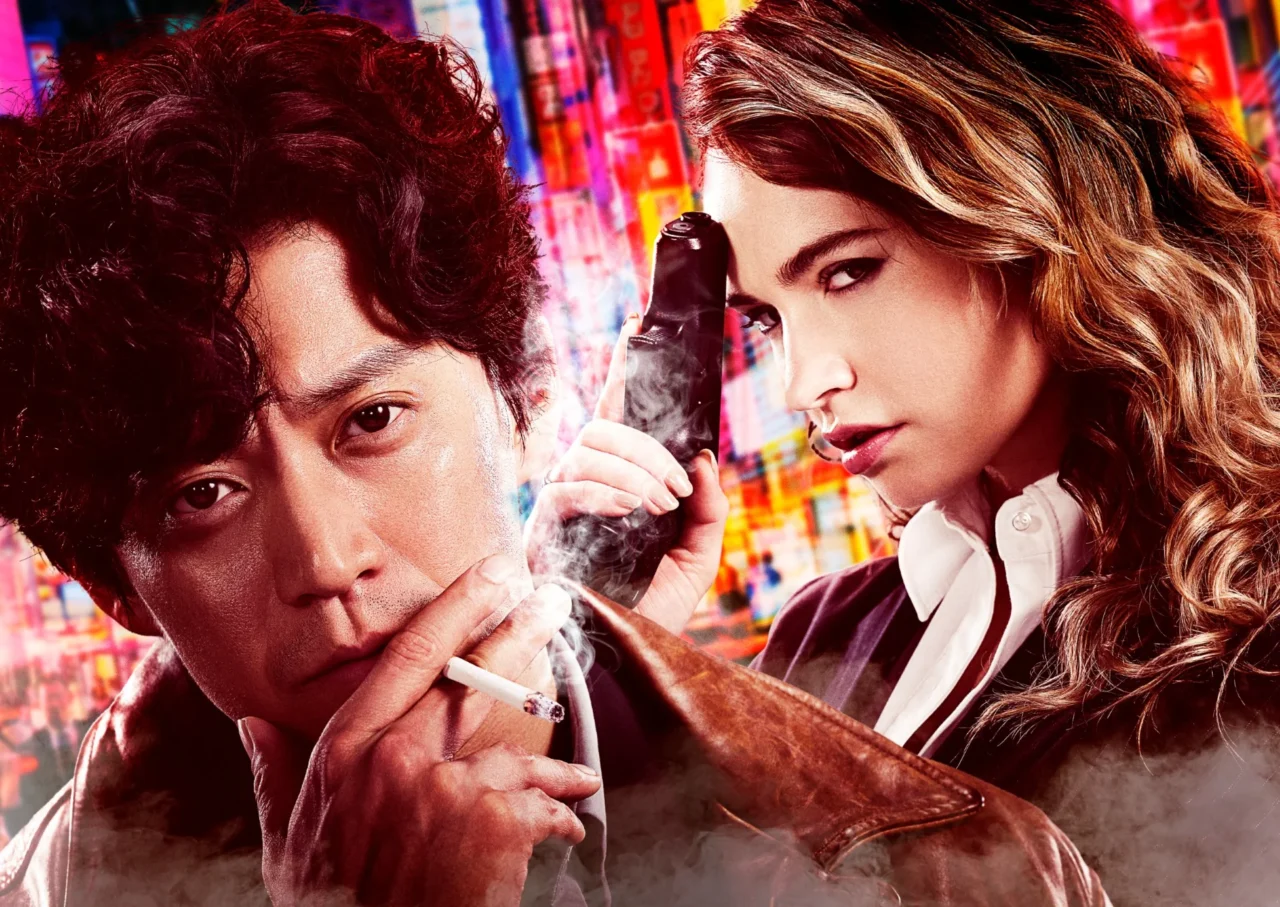
After all, Miike has built much of his reputation on taking the Japan Western audiences want to see and making it more extreme, more outrageous and more blood-soaked. Now, working on a Japanese-American co-production based on an American film, he’s operating within a genre built around Americans looking into Japan. And he pushes the images of both Japan and himself, as defined by outsiders, to absurd extremes.
Megan is the character who brings this idea to life. As she devours sushi, she becomes a Western visitor determined to consume everything Japan has to offer. Miike then has her commit the kind of grotesque violence audiences have come to associate with his own films, tying men up and beating them to death.
In other words, Miike makes an American character act out the very violence Western audiences have long expected from Japanese cinema. The Americans who thought they were simply watching Japan become part of the spectacle themselves. Miike takes the West’s Orientalist view of Japan, exaggerates it until it becomes impossible to ignore, and holds it up like a mirror.
The word lieutenant comes from the French lieu (place) and tenant (holding). Originally, it referred to someone who holds a position on another person’s behalf. Yabuki, driven not by his own choices but by other people’s demands and his mounting debts, is essentially a man acting on behalf of others.
And in a sense, Miike himself is a lieutenant, too. Hollywood has handed him Abel Ferrara’s cult classic, and he’s taken charge of it. Except he’s the kind of lieutenant who takes what he’s been entrusted with and remakes it however he pleases. The title Bad Lieutenant turns out to describe the very structure of the film.