Spitz, a band that has helped shape Japanese pop and rock since the 1990s, released their 18th studio album, kettle, on November 25, 2026. For this review, we turned to Homecomings guitarist and lyricist Yuki Fukutomi, who has spent years listening to the band.
Fukutomi hears kettle as a continuation of what he calls the “music for mending” of their previous album, Himitsu Studio. From the buoyant melodies and the interplay between the four musicians to the evolution of their sound since 99ep, he traces how it all comes together in songs that bring warmth back to a fractured world.
This review was originally written in Japanese by Yuki Fukutomi, guitarist and lyricist of the Japanese indie rock band Homecomings, and has been translated into English for NiEW.
INDEX
As the Cracks Deepen, Spitz Keeps Mending
It’s been three years since Spitz made music for mending in a world where everything seemed to have fallen apart (how lucky are we to get a new Spitz album every three years?). In that time, the cracks in the world haven’t healed. If anything, they’ve only grown wider and deeper.
More than ever, kettle is an album about the here and now. Like kintsugi, the Japanese art of mending broken pottery, it’s about carrying those cracks and all that hell into a slightly better future, rather than pretending the damage never happened. Some creatures worry about not fitting in with the herd, while others feel hopelessly stuck in it. Whether you’ve strayed from what’s considered normal or just can’t seem to break free from it, Spitz sees you and sings for you. They haven’t given up on mending things yet.
INDEX
Playful Melodies and the Unconventional Sound of Spitz
One of the real pleasures of this album is following the little detours that songs like “Yaburu Uta” and “Colorful” take just when you think you know where they’re going, and chasing melodies that bounce around even more freely than usual. There’s the final chorus of “Yume demo Aoune,” with a melody that makes you feel as if your feet have suddenly lifted a few inches off the ground, or the roller-coaster chord changes in the climactic chorus of “Moegiiro.” Every song has little surprises tucked away in it. In those moments, you can almost picture the band members exchanging knowing grins in the studio or onstage. Ever since Samenai (2016), the sheer joy of these four musicians playing together has become increasingly apparent in their music, and this album takes that even further.
Eighteen albums in, and they’re still making songs this wonderfully unusual. As a longtime fan, I can’t help but feel proud. Quirky, poppy, bittersweet, beautiful, wonky, and gentle. As much care as they put into the vocals and melodies, there’s always another little twist waiting for you. And then there are arrangements like the intro to “Mishiranu Ito,” with its crystalline sound and layers of arpeggios bearing the unmistakable signature of Seiji Kameda, the producer and bassist who has co-produced Spitz’s albums since 2002’s Mikazuki Rock. I could listen to a hundred songs like that and still get a little thrill every time. That balance is what defines Spitz today. There really is no other band like them, and this wonderfully strange, warm masterpiece is an album only they could have made.
The more unconventional side of Spitz, which used to peek through on compilations of B-sides and other tracks like Orutana (2012) and Iroirogoromo (2004), has gradually come to the surface over the course of Samenai, Mikke (2019), Himitsu Studio (2023), and now kettle. What’s so quintessentially Spitz about this is that it hasn’t resulted in some wildly experimental record or an album buried beneath layers of noise (though I’d love to hear one of those, too).
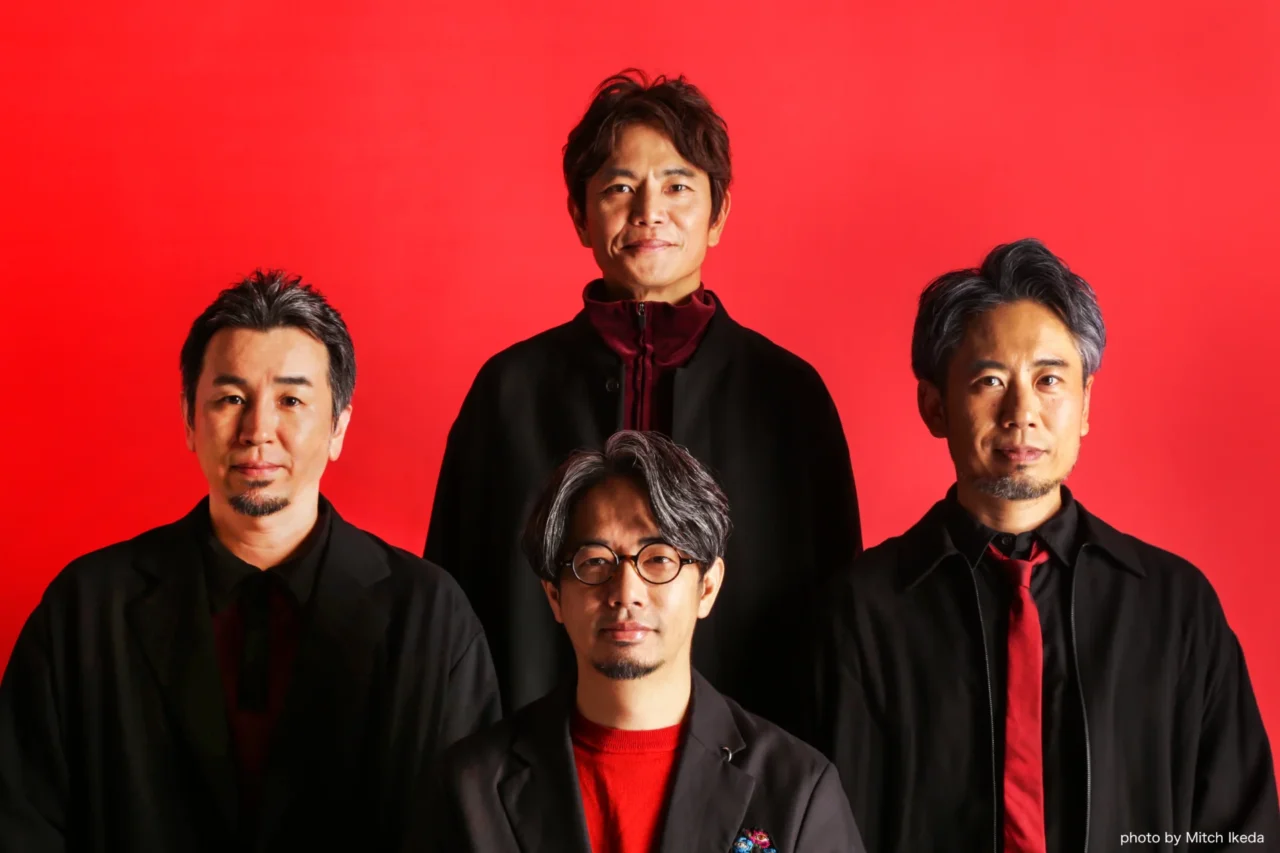
Spitz have always been a wonderfully unconventional band. At the very heart of their music are Masamune Kusano’s melodies, lyrics, and voice. Then there’s Tatsuo Sakiyama’s one-of-a-kind bounce on the drums, Tetsuya Miwa’s guitar with its distinctive distortion and the arpeggios that give Spitz their crystalline sound, and Akihiro Tamura’s bass playing, which is somehow even more unhinged than his onstage antics. Tamura moves all over the fretboard like a basketball player having the time of his life with the ball on the court, and somehow Kusano just keeps singing as if nothing out of the ordinary is happening. How does he do it? It’s so good. Indie rock, hard rock, new wave, kayōkyoku, J-pop — Spitz absorb it all and make something entirely their own. An alternative band in every sense of the word, wonderfully odd and impossible not to love.
INDEX
From 99ep to kettle: How Spitz Found Their Live Sound in the Studio
Spitz’s recent records sound closer than ever to the band you hear live. Even if you focus solely on what sounds like Kusano’s guitar part, the tone and the way he plays rhythm guitar are so familiar that you can almost picture him playing onstage. In a sense, their records are getting closer to who Spitz really are as a band.
Spitz have always been honest with themselves when making records. The enormous success of “Robinson” and its parent album Hachimitsu (both released in 1995) threw the band into a whirlwind they could never have anticipated. Out of those turbulent years came Indigo Chiheisen (1996) and Fake Fur (1998), two albums with a somewhat dusty, muted sound. Had the four of them gotten carried away with their newfound fame, I doubt those records would have sounded the way they did. Whether or not that was what the band intended, that sound is a big part of what makes these two albums so special. As their anniversary editions come out in the years ahead, I’m sure plenty of people will find new things to say about them, and a whole new generation of listeners will discover and celebrate them.
I like to think that 99ep (1999) grew out of a reaction to those records, the feel the band had developed on the Fake Fur tour in 1999, and their meeting with Hiroko Kuji, who remains an integral part of their live lineup to this day. (The EP is now out of print, with all three tracks later appearing on Iroirogoromo.)
“Memories” and Hayabusa (2000) tend to be seen as the turning point in Spitz’s sound, but to me, it’s this three-track EP, particularly “Sakana” and “Seishun Ikinokori Game,” that marks the beginning of Spitz as we know them from the 2000s onward. There’s the clarity of the reverb, a slightly worn, bittersweet quality to the sound, the dynamic use of distortion, and, above all, enough space in the mix for every instrument and the vocals to have a presence of their own. All of this fed into Hayabusa, and what they learned from making that album informed their renewed exploration of what pop music could be on Mikazuki Rock (2002) and beyond.
At first glance, it might seem as though Spitz underwent some sudden transformation at the turn of the millennium with Hayabusa. But before that came 99ep, Fake Fur and its accompanying tour. You can even trace a line from “Fujimi no Venus” to “Grasshopper” and hear glimpses of the musical roots each of the four members had put down long before Spitz came into being.
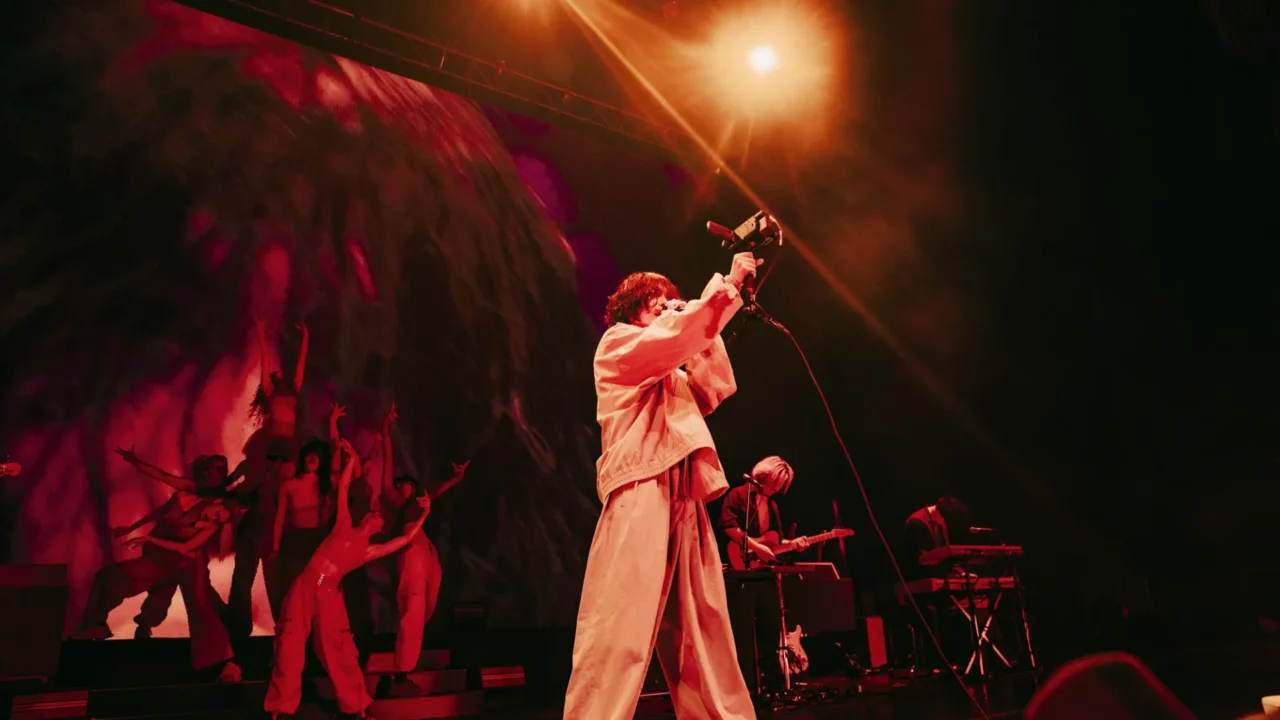
Like a creature slowly shedding its skin, Spitz have evolved one step at a time, taking in whatever was happening around them and whatever music they fell in love with along the way. Growing as a band hasn’t always meant getting bigger. Sometimes, it may have meant getting smaller to hold on to something important. Rather than dazzling audiences with elaborate stage sets or spectacular production, they’ve become a wonderfully straightforward live band, placing more importance on the act of playing live than on putting on a grand concert.
Just as a live show can bring the world of an album to life, Spitz now seem to be making records that reflect the music they play onstage. Maybe it’s this sound, so grounded in the here and now, that has also brought the world around them into their lyrics more than ever before.
INDEX
A World Where Even the Smallest Creatures Can Breathe
“Chicchana Muteki” — there’s a kind of strength in staying innocent. Not the kind that lets you trample over things without a second thought, nor the kind that means stepping forward to protect someone else at the cost of getting hurt yourself. Maybe it’s about staying small and making a world where every creature can breathe a little easier.
And how we get there is something for all of us to figure out together. In a world where even the smallest voices are met with backlash, in an age when everything is brushed aside as a matter of personal responsibility, here are songs that warm things up again, even after they’ve gone cold (or we’ve woken from a dream). Three years, or however many it takes, we’ll keep waiting, tending to your little flame, mine, and someone else’s, each in our own way and together. Waiting for a new, gentler world where we can share our worries with one another.
Spitz “kettle”

Release Date: November 25, 2026
(Vinyl edition: December 23, 2026)
Deluxe Edition (Limited Production) [2 SHM-CDs + Blu-ray + Merchandise]: ¥9,900
Deluxe Edition (Limited Production) [2 SHM-CDs + DVD + Merchandise]: ¥9,350
First Press Limited Edition [SHM-CD + Blu-ray]: ¥6,600
First Press Limited Edition [SHM-CD + DVD]: ¥6,050
Standard Edition [CD]: ¥3,630
Cassette Edition [CT]: ¥3,300
Vinyl Edition (Limited Production) [2 Heavyweight LPs]: ¥5,280
All prices include tax.
Tracklist
- Chicchana Muteki
- Sapeur
- Mishiranu Ito
- Yume demo Aoune
- Hen na Tomodachi
- Colorful
- Yaburu Uta
- Itsudatsu Kibou Survivor
- Kitsune no Botan
- Pangea
- Hi wo Mamoru
- kettle
- Moegiiro
SPITZ JAMBOREE TOUR 2027 “kettle”
2027 Tour Dates
March 6–7 (Sat–Sun) – Yokohama Arena, Kanagawa
March 13–14 (Sat–Sun) – LaLa arena TOKYO-BAY, Chiba
March 20–21 (Sat–Sun, national holiday) – Nagano Big Hat, Nagano
March 27–28 (Sat–Sun) – Marine Messe Fukuoka Hall A, Fukuoka
April 3–4 (Sat–Sun) – Hiroshima Green Arena, Hiroshima
April 10–11 (Sat–Sun) – Hokkai Kitayell, Hokkaido
April 17–18 (Sat–Sun) – Okinawa Suntory Arena, Okinawa
April 24–25 (Sat–Sun) – Shizuoka Ecopa Arena, Shizuoka
May 1–2 (Sat–Sun) – Sekisui Heim Super Arena (Grande 21), Miyagi
May 11–12 (Tue–Wed) – Ariake Arena, Tokyo
May 15–16 (Sat–Sun) – Anabuki Arena Kagawa, Kagawa
May 25–26 (Tue–Wed), June 1–2 (Tue–Wed) – Osaka-jō Hall, Osaka
June 19–20 (Sat–Sun) – Kuroko-kun Hall, Aichi
Doors / Show:
Weekends and national holidays: 5:00 PM / 6:00 PM
Weekdays: 6:00 PM / 7:00 PM
Ticket Prices (tax included):
Saturday shows: ¥13,500
Sunday and national holiday shows: ¥12,000
Weekday shows: ¥10,500
Spitz Official Website
https://spitz-web.com/