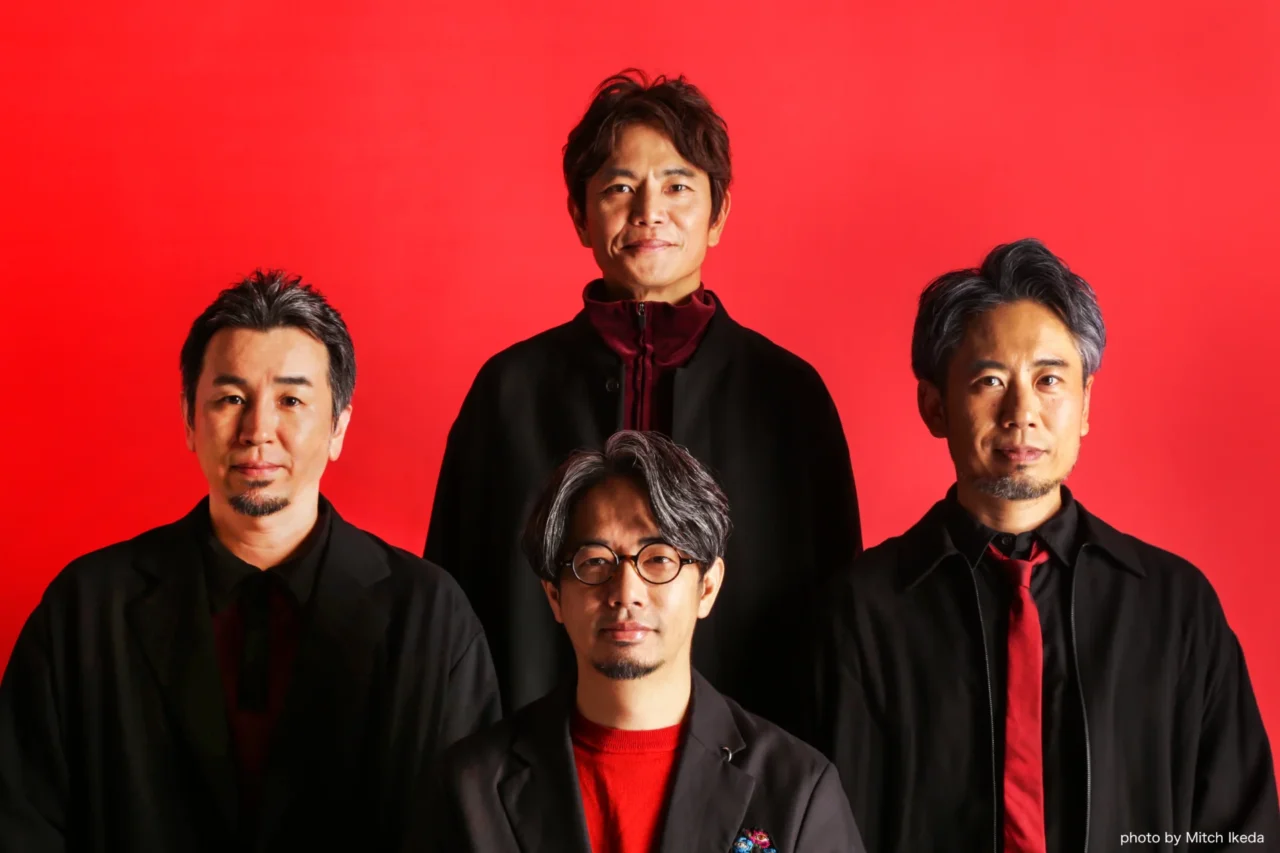
Spitz, a band that has helped shape Japanese pop and rock since the 1990s, released their 18th studio album, kettle, on November 25, 2026. For this review, we turned to Homecomings guitarist and lyricist Yuki Fukutomi, who has spent years listening to the band.
Fukutomi hears kettle as a continuation of what he calls the “music for mending” of their previous album, Himitsu Studio. From the buoyant melodies and the interplay between the four musicians to the evolution of their sound since 99ep, he traces how it all comes together in songs that bring warmth back to a fractured world.
This review was originally written in Japanese by Yuki Fukutomi, guitarist and lyricist of the Japanese indie rock band Homecomings, and has been translated into English for NiEW.
INDEX
As the Cracks Deepen, Spitz Keeps Mending
It’s been three years since Spitz made music for mending in a world where everything seemed to have fallen apart (how lucky are we to get a new Spitz album every three years?). In that time, the cracks in the world haven’t healed. If anything, they’ve only grown wider and deeper.
More than ever, kettle is an album about the here and now. Like kintsugi, the Japanese art of mending broken pottery, it’s about carrying those cracks and all that hell into a slightly better future, rather than pretending the damage never happened. Some creatures worry about not fitting in with the herd, while others feel hopelessly stuck in it. Whether you’ve strayed from what’s considered normal or just can’t seem to break free from it, Spitz sees you and sings for you. They haven’t given up on mending things yet.
INDEX
Playful Melodies and the Unconventional Sound of Spitz
One of the real pleasures of this album is following the little detours that songs like “Yaburu Uta” and “Colorful” take just when you think you know where they’re going, and chasing melodies that bounce around even more freely than usual. There’s the final chorus of “Yume demo Aoune,” with a melody that makes you feel as if your feet have suddenly lifted a few inches off the ground, or the roller-coaster chord changes in the climactic chorus of “Moegiiro.” Every song has little surprises tucked away in it. In those moments, you can almost picture the band members exchanging knowing grins in the studio or onstage. Ever since Samenai (2016), the sheer joy of these four musicians playing together has become increasingly apparent in their music, and this album takes that even further.
Eighteen albums in, and they’re still making songs this wonderfully unusual. As a longtime fan, I can’t help but feel proud. Quirky, poppy, bittersweet, beautiful, wonky, and gentle. As much care as they put into the vocals and melodies, there’s always another little twist waiting for you. And then there are arrangements like the intro to “Mishiranu Ito,” with its crystalline sound and layers of arpeggios bearing the unmistakable signature of Seiji Kameda, the producer and bassist who has co-produced Spitz’s albums since 2002’s Mikazuki Rock. I could listen to a hundred songs like that and still get a little thrill every time. That balance is what defines Spitz today. There really is no other band like them, and this wonderfully strange, warm masterpiece is an album only they could have made.
The more unconventional side of Spitz, which used to peek through on compilations of B-sides and other tracks like Orutana (2012) and Iroirogoromo (2004), has gradually come to the surface over the course of Samenai, Mikke (2019), Himitsu Studio (2023), and now kettle. What’s so quintessentially Spitz about this is that it hasn’t resulted in some wildly experimental record or an album buried beneath layers of noise (though I’d love to hear one of those, too).
Spitz have always been a wonderfully unconventional band. At the very heart of their music are Masamune Kusano’s melodies, lyrics, and voice. Then there’s Tatsuo Sakiyama’s one-of-a-kind bounce on the drums, Tetsuya Miwa’s guitar with its distinctive distortion and the arpeggios that give Spitz their crystalline sound, and Akihiro Tamura’s bass playing, which is somehow even more unhinged than his onstage antics. Tamura moves all over the fretboard like a basketball player having the time of his life with the ball on the court, and somehow Kusano just keeps singing as if nothing out of the ordinary is happening. How does he do it? It’s so good. Indie rock, hard rock, new wave, kayōkyoku, J-pop — Spitz absorb it all and make something entirely their own. An alternative band in every sense of the word, wonderfully odd and impossible not to love.