Mariko Mori burst onto the art scene in the 1990s in the guise of a cyborg. Today, she speaks of the Jōmon period, the cosmos, and light.
Walking through Mariko Mori: All That Shines, her first major solo exhibition in Japan in 24 years, a common thread emerges among seemingly disparate works: an exploration of the boundaries of what it means to be human. What accounts for the sense of reassurance that lingers after viewing the exhibition, and the unease that accompanies it?
INDEX
Thirty Years On, the Future Still Looks Familiar
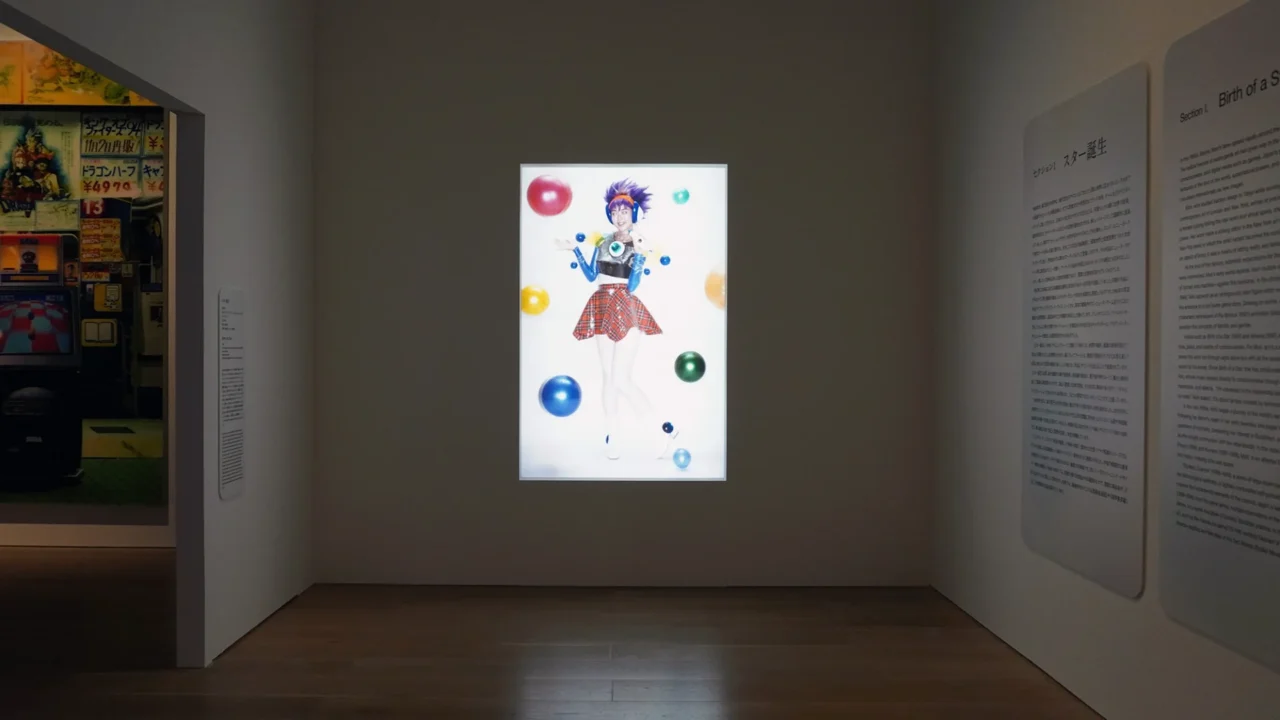
Step into the dimly lit galleries of the Mori Art Museum, and figures resembling anime characters or cyborgs emerge against a vibrant, pop-inspired backdrop. This is Birth of a Star (1995), glowing from within the wall as electronic music by Ken Ikeda plays softly in the background.
Mariko Mori: All That Shines marks the artist’s first major solo exhibition in Japan in 24 years, following Mariko Mori: Pure Land at the Museum of Contemporary Art Tokyo in 2002. Bringing together 40 works from the mid-1990s to the present, the exhibition traces more than three decades of Mori’s artistic practice.
Born in Tokyo in 1967, Mori studied fashion design before pursuing contemporary art in London and New York. She quickly rose to prominence with works such as Birth of a Star and her “Cyborg” series, gaining further international recognition with an honorable mention at the Venice Biennale in 1997. Her early works drew acclaim for their engagement with anime and video game culture, as well as their critical examination of how women are commodified in Japanese society.
Up close, Birth of a Star takes on an almost three-dimensional quality, its figures seemingly suspended in white light. The effect is achieved through 3D Duratrans, a photographic technique used in advertising to bring images to life through backlighting. Seen today, the effect feels somewhat nostalgic. Throughout her career, Mori has worked with the cutting-edge technologies of each era.
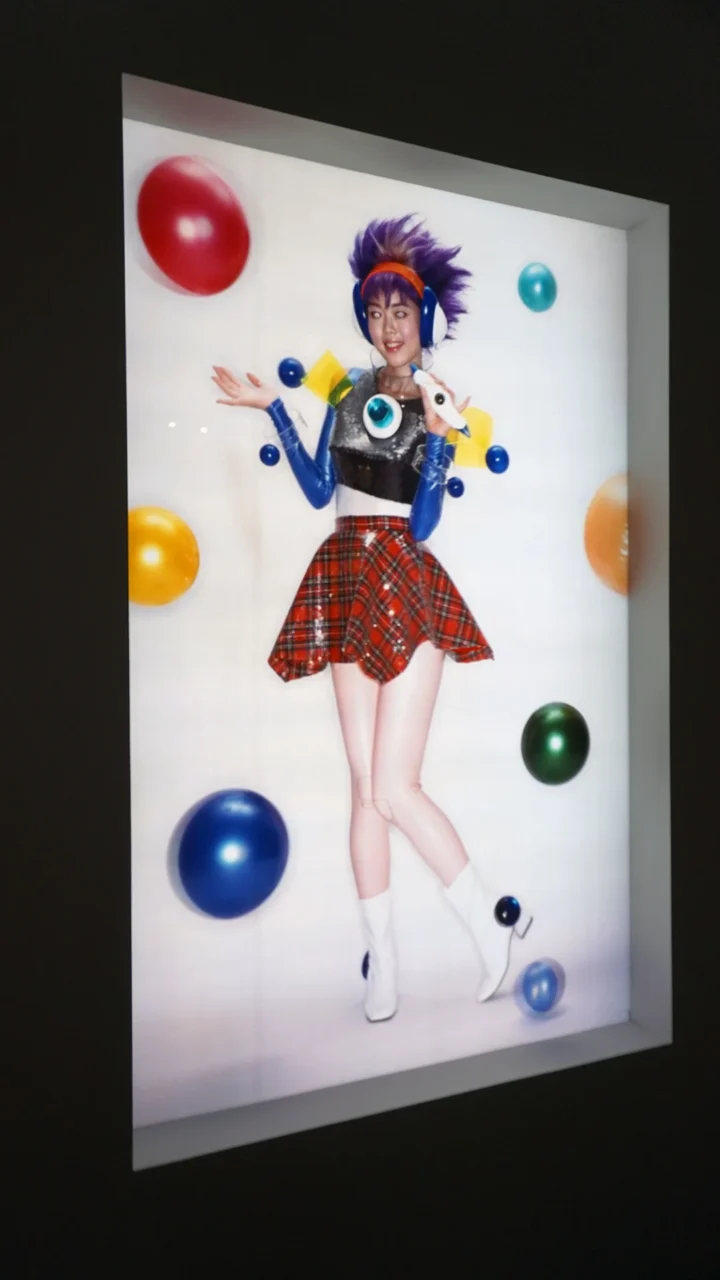
Alexandra Munroe, a curator at the Solomon R. Guggenheim Museum and Foundation who co-curated the exhibition with Mori Art Museum Director Mami Kataoka, notes that Mori already presents herself as a pop icon in Birth of a Star, portraying herself as a being beyond the human. She is both a woman and something akin to a cyborg. A decade earlier, in 1985, Donna Haraway had published her essay “A Cyborg Manifesto,” amid growing discussions about the boundaries between humans and machines, among others. The image of a body extended through technology could be seen as the starting point of Mori’s artistic practice.
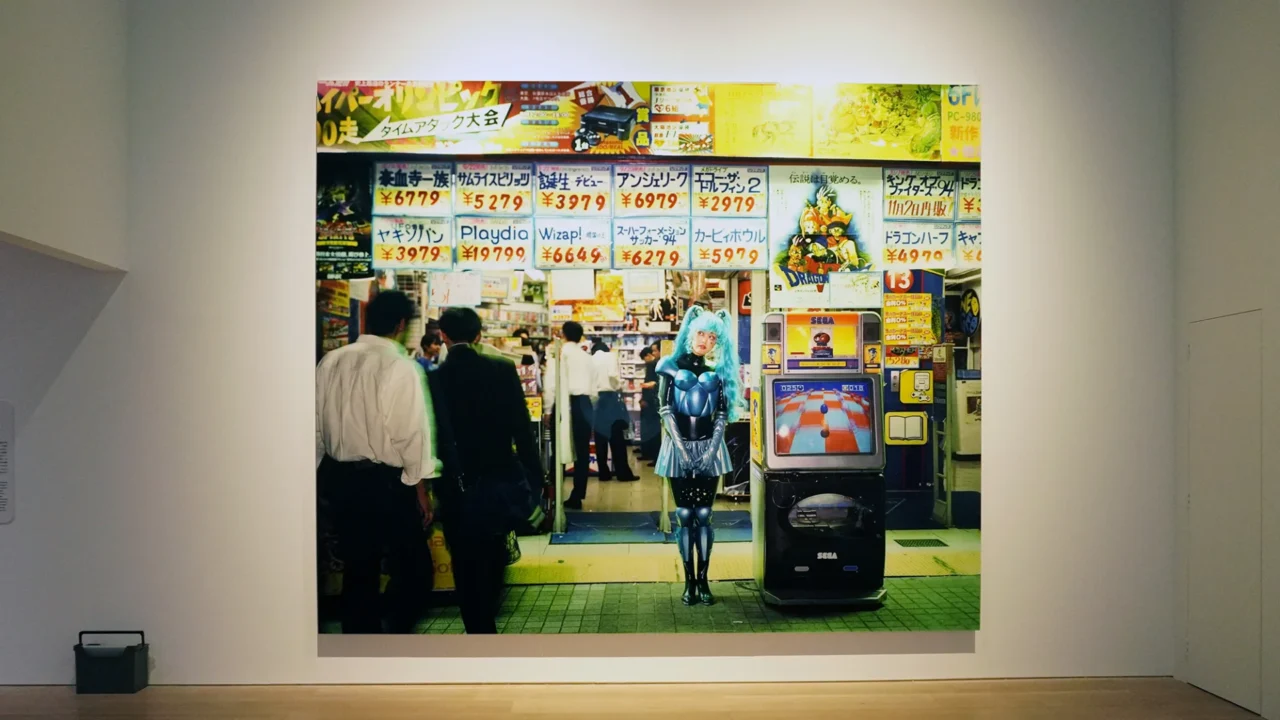
The exhibition unfolds in roughly chronological order. In Play with Me (1994), Mori stands outside a video game store in a sci-fi costume of her own design. Encountering these works from the 1990s brings a sense of nostalgia, but also raises a question: how different are they from the visual culture of today? Perhaps the imagery surrounding anime, video games, and cosplay has changed remarkably little over the past three decades. It is as though we have come full circle—or perhaps we have been standing still all along.