INDEX
Photography’s Path Toward Extinction, After an Era at the Forefront of Art
Photography is said to be going extinct. And when it comes to gelatin silver photography, which relies on chemical materials and optical processes, that claim does not feel far-fetched. The cost of everything from film and photographic paper to darkroom chemicals has soared, while many of these materials are becoming increasingly difficult to obtain.
I studied photography at art school in the early 2000s, just as photography and moving-image practices were transitioning from analog to digital. Even then, there was already a sense that gelatin silver photography was beginning to fade. Still, photographers had a range of papers to choose from, including Ilford, Fujifilm, Kodak, Agfa, and Mitsubishi’s GEKKO. When making work for exhibition, it was almost taken for granted that fiber-based paper, with its richer tonal range, was preferable to the more convenient resin-coated paper.
Color darkroom printing was considerably more demanding than black-and-white, but it was still something you could manage on your own. You could order photographic paper directly from manufacturers and even hand-print photographs well over a meter wide.
There were also prominent platforms for emerging photographers, such as Canon’s New Cosmos of Photography and the Hitotsubo Exhibition, a competition for emerging artists held at Guardian Garden and later renamed 1_WALL. Guardian Garden itself has since been relaunched as BUG. These competitions were widely recognized as launching pads for young artists, with HIROMIX, Rika Noguchi, Mika Ninagawa, and many others getting their start through these platforms and going on to build major careers. There really was a time when photography stood at the forefront of contemporary art.
Personally, though, I found large-format cameras such as 4×5 and 8×10 models cumbersome compared with the speed and flexibility of digital photography. Back then, I couldn’t wait for digital cameras to take over. I even thought photographers much older than me who remained attached to gelatin silver photography were being overly nostalgic. It was also around this time that several photography manufacturers came together to launch the Gelatin Silver Session, a project aimed at preserving and passing on the culture and techniques of gelatin silver photography.
Looking back, those frustrations now seem like an incredible luxury. With that not-so-distant past in mind, perhaps photography really is going extinct.
INDEX
Capturing Time Through a Critical Lens: Why Dioramas and Theaters Are Masterpieces
For his current exhibition HIROSHI SUGIMOTO: EXTINCTION at The National Museum of Modern Art, Tokyo, Sugimoto offered the following statement:
When I came into this world, gelatin silver photography was flourishing; now that I am about to leave this world, the curtain is coming down on it. Looking back, I can see that my life as a photographer began when I moved to New York with the ambition to restore photography’s reputation and elevate it to first-class citizen status from the second-class position it was then laboring under in the art world.
It is difficult to pinpoint exactly where an artist’s journey begins. According to Sugimoto, he first started taking photographs as a child after his father gave him a Mamiya-6. There is something both telling of the era and remarkably precocious about the fact that his first camera used medium-format film rather than 35mm. But as an artist, Sugimoto’s true starting point should probably be traced to his Dioramas and Theaters series, which he began creating in New York in the late 1970s.
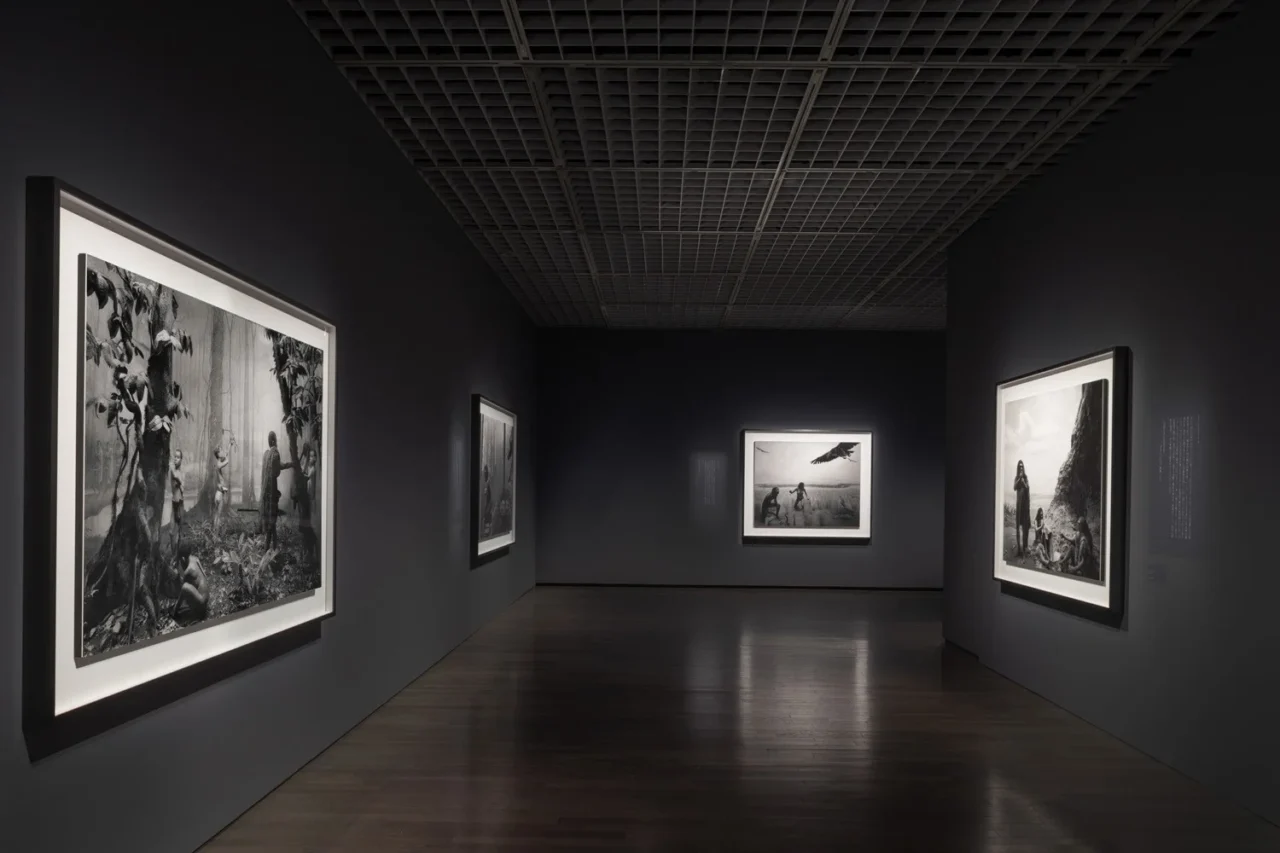
Sugimoto’s exhibitions in recent years have often combined photography with his interest in antiques and installation. This exhibition, however, is his first in 21 years to consist exclusively of photographic works. The two series featured here are indisputable masterpieces, works that truly helped elevate photography’s status as an art form.
What makes them so remarkable is Sugimoto’s distinctive approach to time.
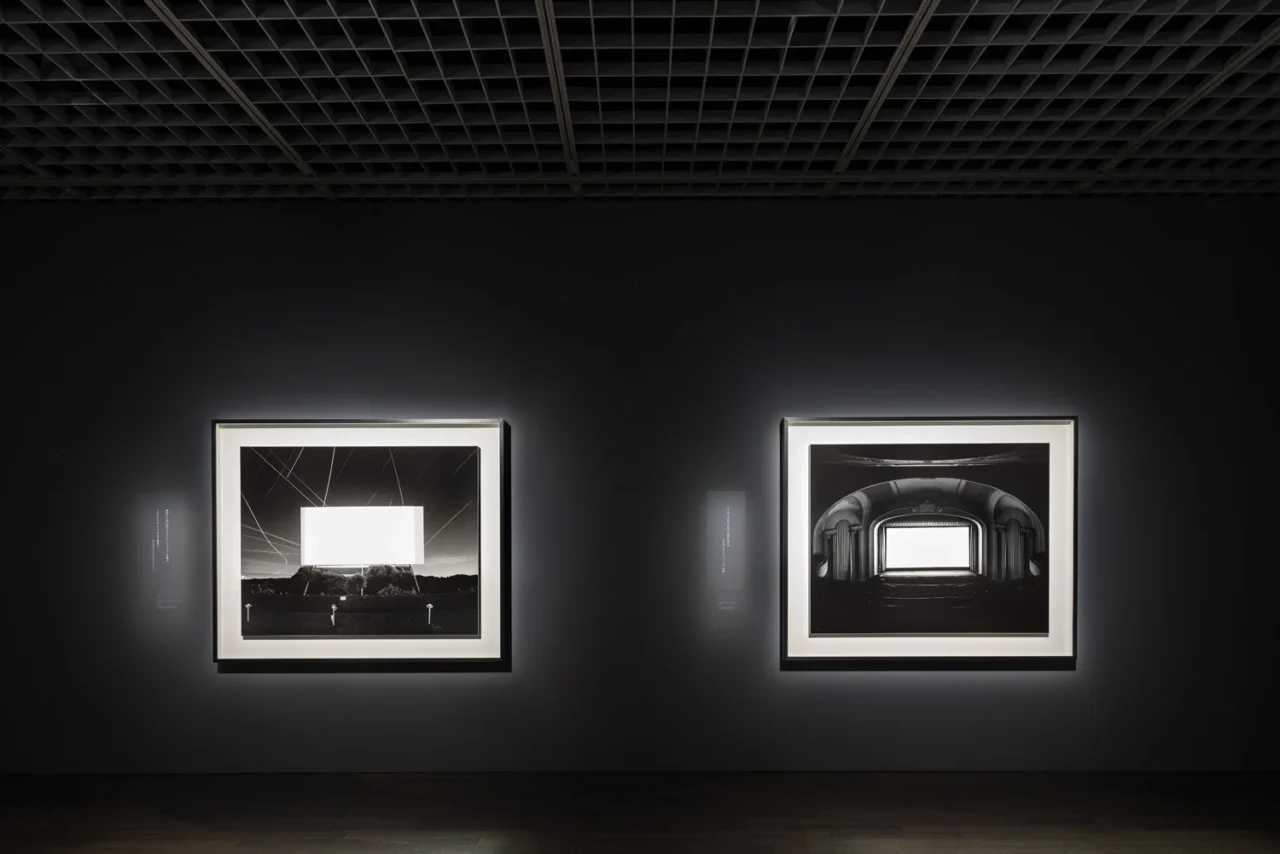
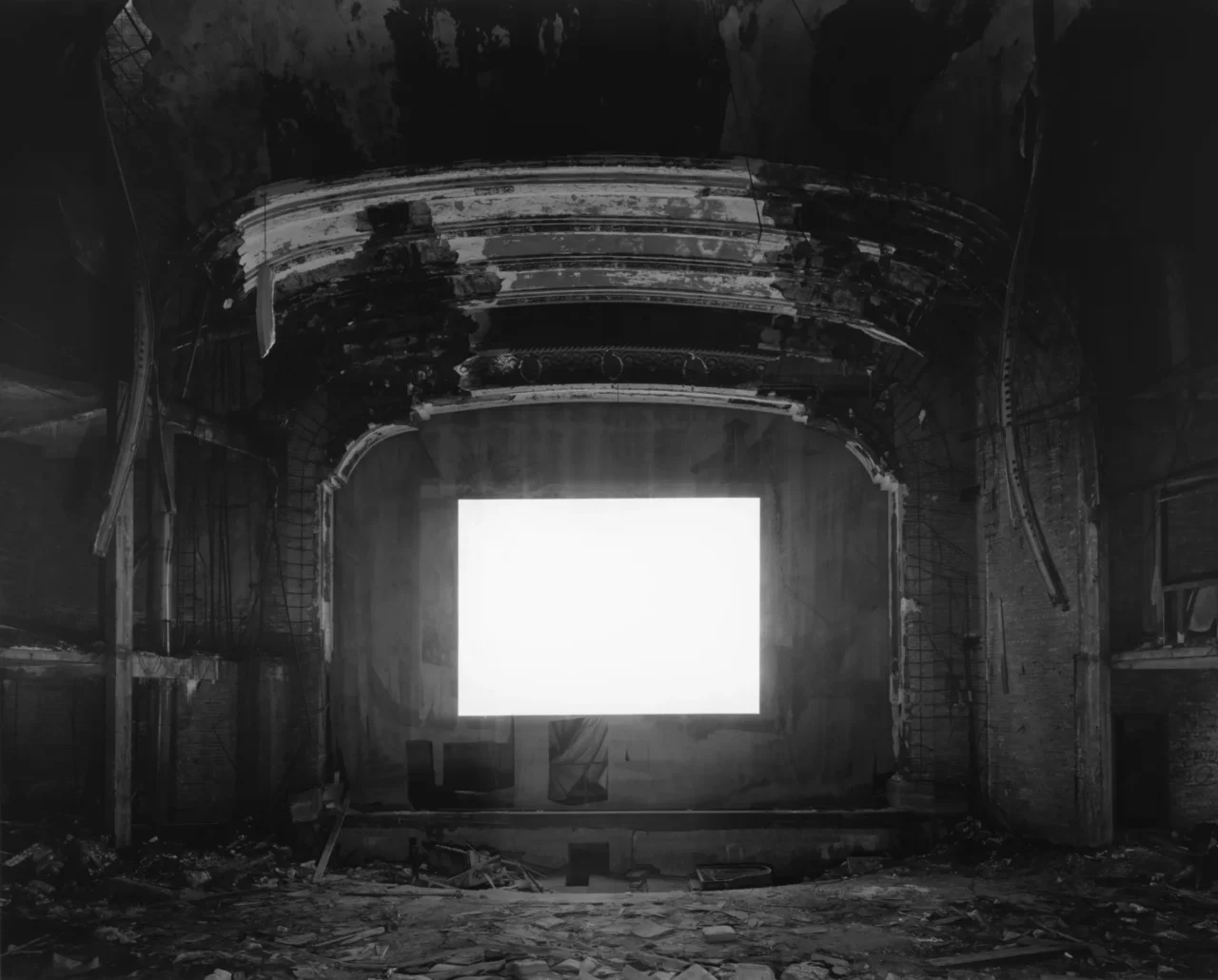
In the Theaters series, Sugimoto used long exposures lasting from the beginning of a film until its end, effectively giving physical form to the abstract concept of time. He carefully calibrated his technique so that the ornate interiors of theaters, some already well over a century old when photographed, would remain just barely visible, while the exposure itself corresponded almost exactly to the duration of the film being screened. Drawing on the full precision of photographic technique, Sugimoto captured the film and the time and space surrounding it on a single negative, and ultimately in a single print.
Our experience of moving images, cinema being the obvious example, always unfolds through time. Individual frames can be extracted as still images, but the experience itself remains a dynamic flow of time. The story or conceptual image, meanwhile, takes shape as an imagined picture only within each viewer’s individual memory.
Sugimoto, however, embraces photography’s particular capacity as a contemporary art form to say everything through a single print. He traps the entire experience of a film inside a screen glowing so completely white that it appears to contain nothing at all.
What makes this especially thrilling is that it goes beyond an intellectual concept. The shutter remained open for the entire duration of the film, meaning the photographic film physically received all of the projected light reflected from the screen. We may not be capable of perceiving it ourselves, but there on the print, the film’s time really does remain, held in place.
INDEX
A Sense of Truth in Fabricated Images
What, then, of Sugimoto’s other masterpiece, Dioramas? The series, which photographs taxidermy displays at the American Museum of Natural History, is also known for the story of how it caught the eye of John Szarkowski, the legendary curator at The Museum of Modern Art (MoMA) in New York, leading to Sugimoto’s work entering the museum’s collection.
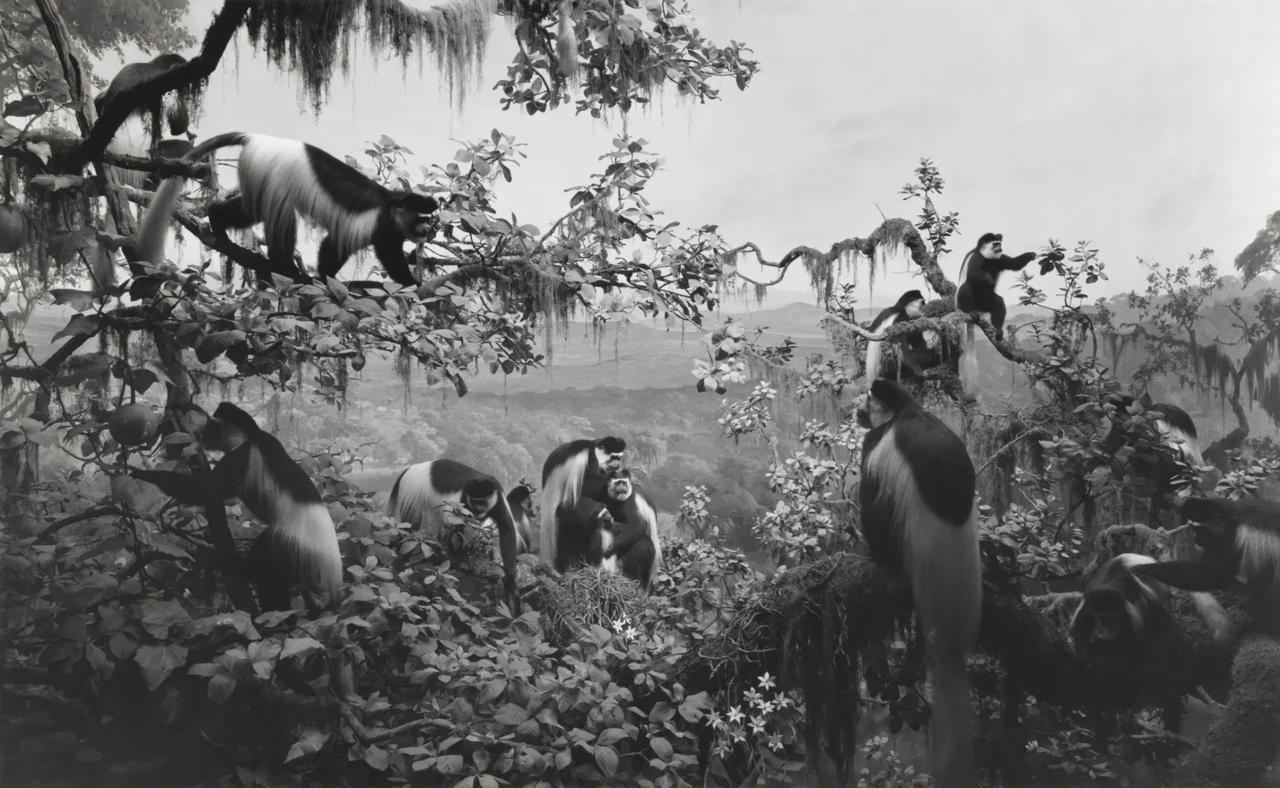
Three-dimensional scenes designed to be viewed with the naked eye, usually with two eyes, tend to appear flat when seen through the single eye of a camera. Yet what makes these photographs so compelling is that they never feel obviously artificial. Their meticulously composed scenes, reminiscent of The Coronation of Napoleon by Jacques-Louis David, the Neoclassical painter who served as Napoleon’s principal painter, create the impossible sensation that we are witnessing a moment from the distant past firsthand. A fabricated moment in time emerges before us, yet it feels almost entirely real.
This misperception is possible because we have become accustomed to countless images of history through textbooks and films. We have, of course, never seen dinosaur-like reptiles or shaggy early humans with our own eyes. Yet films such as Jurassic Park and Planet of the Apes have shown us these kinds of images over and over again. Throughout the 20th century, often described as the age of the image, and into the early 21st, we have grown up surrounded by representations of every kind. Perhaps it is this experience that gives the Dioramas series its peculiar sense of truth.
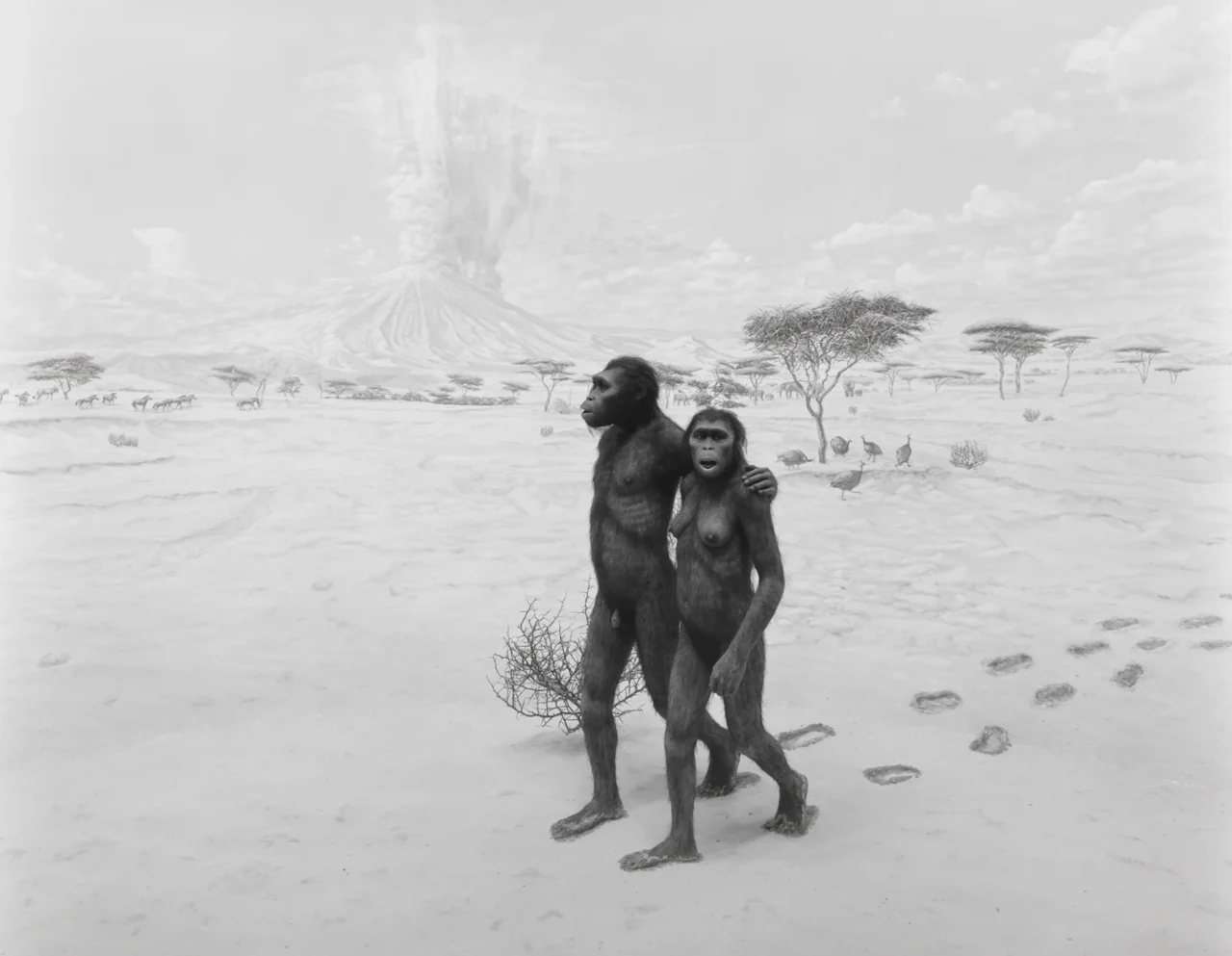
In this manipulation of visual representation, I see Sugimoto’s oblique perspective on time and history. Neither time nor history remains fixed forever. Both can be distorted or even fabricated according to the social and political circumstances of a given moment. We live within this malleable sense of time. One aspect of contemporary art is its engagement with the visual representations through which we understand that experience, dealing with images of the here and now. Sugimoto, I believe, is an artist acutely aware of this.
INDEX
Where Does Truth Lie in the Digital Age?
Let us return once more to Sugimoto’s statement:
I pondered the truthfulness of photography. What was captured in a photograph existed; it was proof of the existence of reality, photographic evidence like an ID photo. When a criminal at the police station has damning photographic evidence thrust into his face, his only option is to give up and make a full confession. I decided to turn the evidentiary properties of photography on their head and take photographs that prove there are also things that photography cannot capture.
At the beginning of the same statement, Sugimoto succinctly explains what he means by extinction: What has disappeared from photography is its ability to serve as evidence. Photography rapidly became digital in the 21st century, and digital images can be manipulated in virtually any way. Yet, as the passage above makes clear, Sugimoto also acknowledges that throughout his career he has sought to turn photography’s claim to truth on its head.
In his remarks upon receiving the Praemium Imperiale in the painting category, he also writes:
Painting is a medium for the depiction of pie-in-the-sky fictions, photography a medium for the depiction of reality. I wanted to protest the mischaracterization. Photography, it seems, has now been downgraded to a mere stand-in or substitute for painting.
Truth and fiction. Where does Sugimoto stand between the two?
It is understandable that Sugimoto, whose commitment to gelatin silver photography stems in part from technical qualities that digital technology cannot reproduce, would lament the loss of familiar techniques amid dramatic shifts in the structure of the photography industry. In that sense, photography is indeed facing extinction.
At the same time, digital technologies such as AI are opening up entirely new ways of seeing. Many generative images built from vast datasets tend toward vaguely anime-style images of beautiful young women, while AI image generators often place whatever subject a prompt requests squarely in the center of the frame, a composition known in Japan as hinomaru composition and often regarded by artists as a hallmark of an unsophisticated image. In uncritically reproducing both the visual banality of mass consumer society and the gender biases embedded within it, AI may itself offer a critical visualization of how images function in the here and now.
Sugimoto did not respond to my questions on this subject in an email interview, but I am left wondering what might interest him in this new visual landscape of the present day. The question only becomes more intriguing.
INDEX
Hiroshi Sugimoto Today: Where Authenticity Meets a Sense of Humor
So while gelatin silver photography rooted in a particular aesthetic may indeed be heading toward extinction, the questions of representation that photography has long grappled with are now resurfacing in entirely different forms.
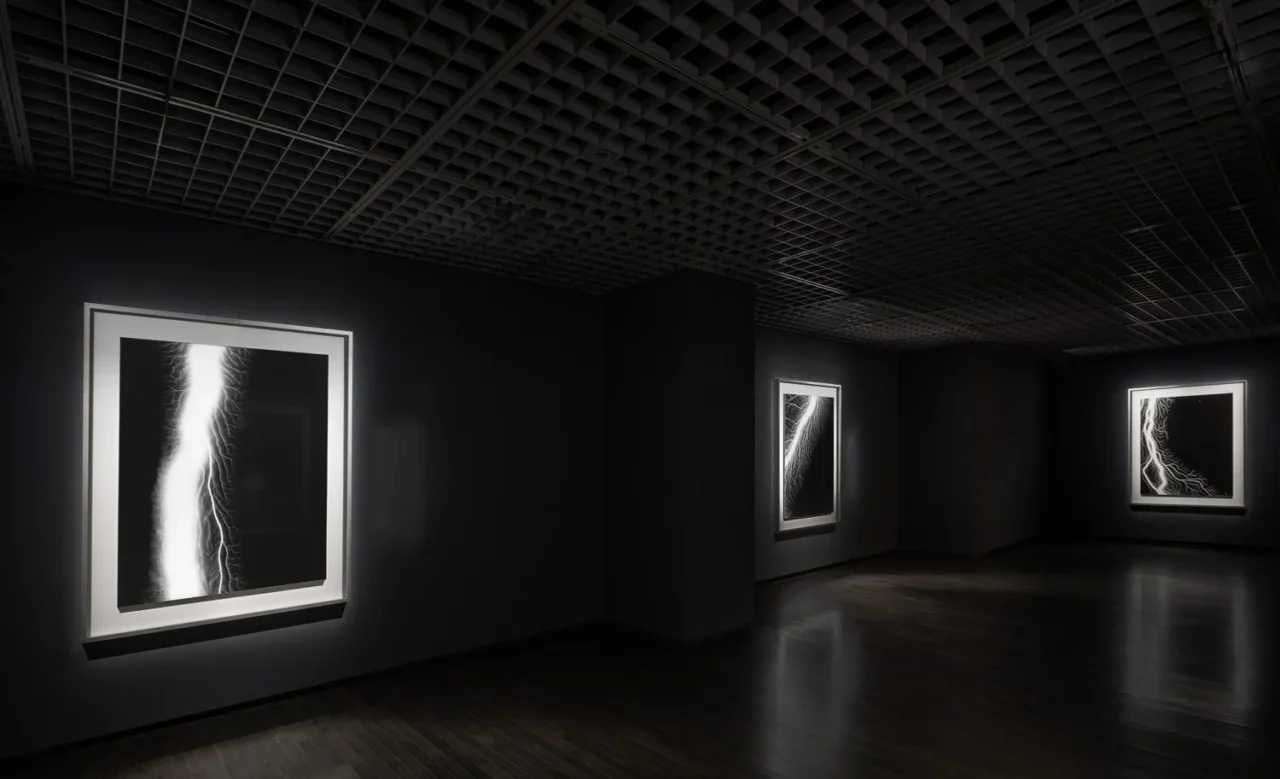
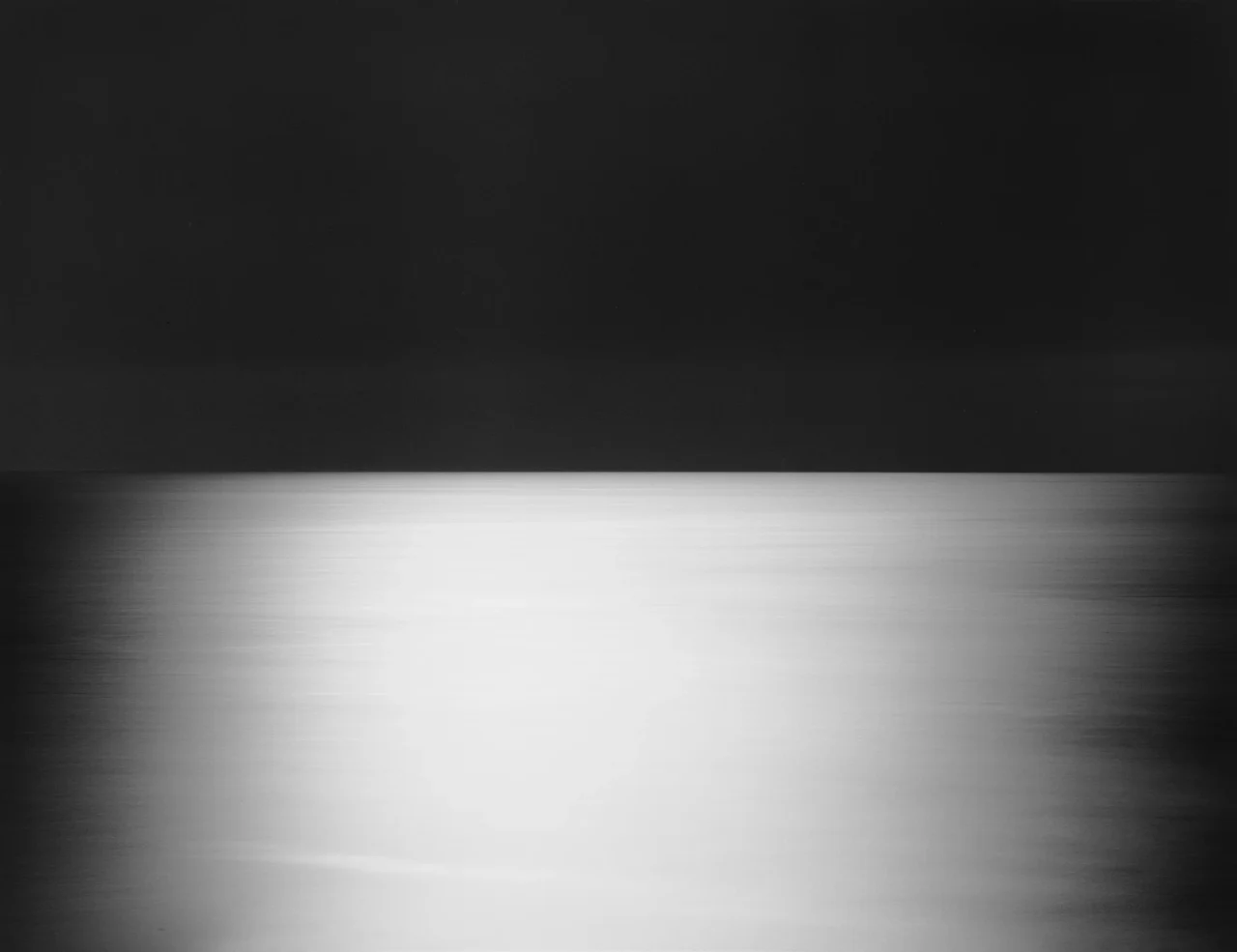
HIROSHI SUGIMOTO: EXTINCTION begins with iconic works from the early years of Sugimoto’s career, moves through series engaging with images of architecture and fashion that symbolize 20th-century modern society, and ends with recent works that seem to return to photography’s origins, even exploring phenomena such as the three primary colors of light. Every work is painstakingly produced through highly refined craftsmanship, with none of the apparent ease of AI image generation or vibe coding. Yet modern art itself has a history of emerging and evolving through precisely this kind of lightness, impulsiveness, and play.
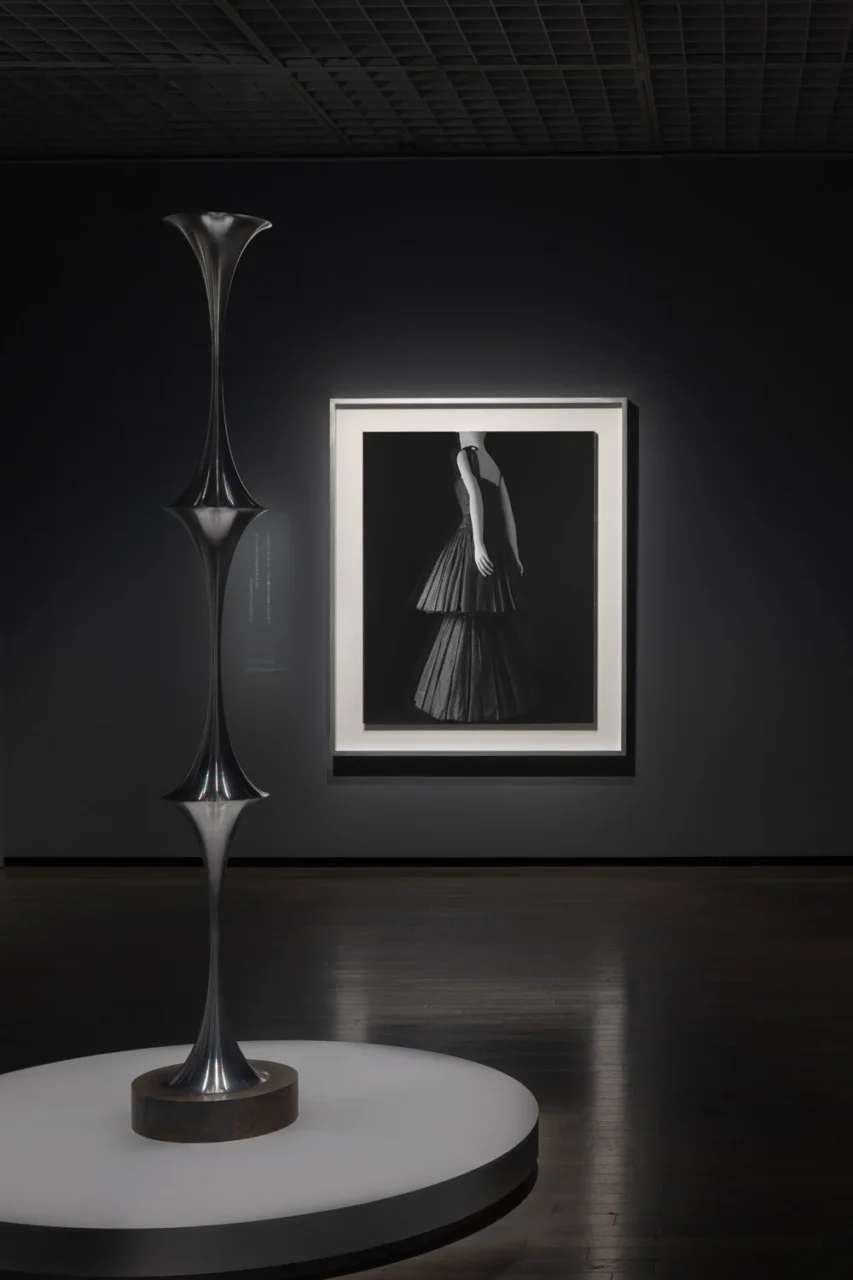
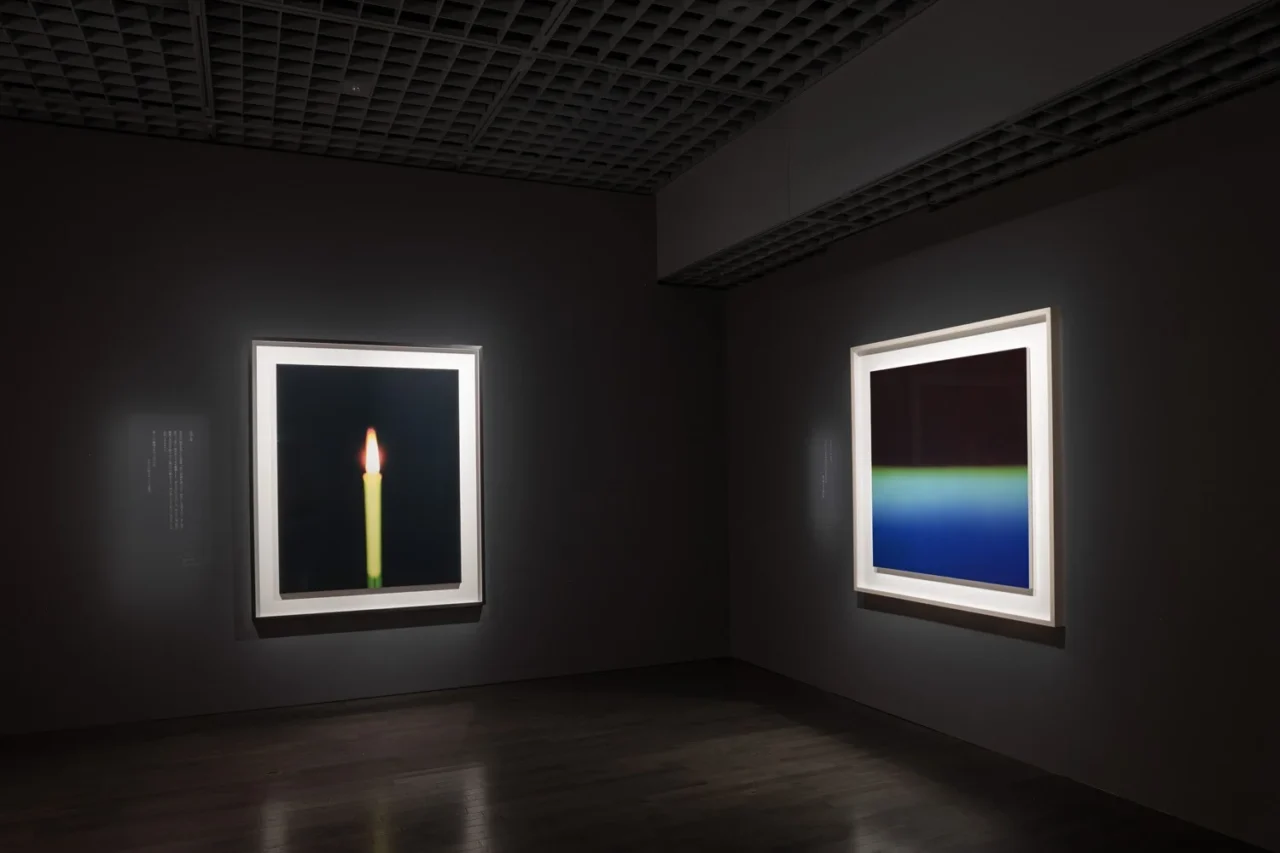
Sugimoto’s way with words offers a glimpse of his own fascination with irreverence. In his statement, for example, he renders PHOTOGRAPHY in Japanese as batsureiga, a term of his own invention suggesting a picture that extracts the soul of its subject. The same sensibility comes through in the kyōka, or comic Japanese poems, written by Sugimoto and displayed throughout the exhibition. In fact, Sugimoto’s work almost always seems to contain two impulses at once: an intensely ambitious drive toward authenticity, and a punkish urge to dress that seriousness down and poke fun at it himself, rather like Vivienne Westwood.
The kyōka dutifully attached to each work in this exhibition can, to someone like me who is still very much a novice at life, be almost embarrassing enough to make you think, Did he really have to? And yet there is something distinctly contemporary about the sense of humor that compelled him to include them anyway.
There is nothing eternal about art. There is no such thing as purity in art, let alone some unbroken lineage stretching back through the ages. I would not go so far as to say Sugimoto is consciously resisting an era in which increasingly absurd political claims run rampant. But perhaps we can find something distinctly contemporary in the grand gesture of wearing an MA-1 bomber jacket with the two Japanese characters for extinction boldly embroidered across the back. I like that jacket, by the way.
Or maybe that’s just the kind of thing I would say.
HIROSHI SUGIMOTO: EXTINCTION
Exhibition Period: June 16 (Tue) – September 13 (Sun), 2026
Opening Hours: 10:00 AM–5:00 PM (Fridays and Saturdays: 10:00 AM–8:00 PM)
Last admission is 30 minutes before closing.
Closed: Mondays
Venue: Special Exhibition Gallery, 1F, The National Museum of Modern Art, Tokyo
Access: The National Museum of Modern Art, Tokyo – Access
Organized by: The National Museum of Modern Art, Tokyo; Nikkei Inc.
Special Sponsor: DIOR
Sponsors: Seiko Group Corporation; SunM Color
Special Cooperation: Odawara Art Foundation; Gallery Koyanagi
Admission:
Adults: ¥2,300 (¥2,100)
University students: ¥1,200 (¥1,000)
High school students: ¥700 (¥500)
All prices include tax. Prices in parentheses are group rates for 20 or more visitors. Admission is free for junior high school students and younger, as well as visitors with disability certificates and one accompanying person.
An exhibition ticket also includes same-day admission to the MOMAT Collection (2F–4F). As a satellite presentation of this exhibition, the third floor of the Collection Gallery features 13 works from the museum’s collection drawn from Sugimoto’s Theaters and Seascapes series, along with Sugimoto Notebooks containing notes on his photography and darkroom processes.
Inquiries: 050-5541-8600 (Hello Dial)
Official Exhibition Website:
HIROSHI SUGIMOTO: EXTINCTION