INDEX
Photography’s Path Toward Extinction, After an Era at the Forefront of Art
Photography is said to be going extinct. And when it comes to gelatin silver photography, which relies on chemical materials and optical processes, that claim does not feel far-fetched. The cost of everything from film and photographic paper to darkroom chemicals has soared, while many of these materials are becoming increasingly difficult to obtain.
I studied photography at art school in the early 2000s, just as photography and moving-image practices were transitioning from analog to digital. Even then, there was already a sense that gelatin silver photography was beginning to fade. Still, photographers had a range of papers to choose from, including Ilford, Fujifilm, Kodak, Agfa, and Mitsubishi’s GEKKO. When making work for exhibition, it was almost taken for granted that fiber-based paper, with its richer tonal range, was preferable to the more convenient resin-coated paper.
Color darkroom printing was considerably more demanding than black-and-white, but it was still something you could manage on your own. You could order photographic paper directly from manufacturers and even hand-print photographs well over a meter wide.
There were also prominent platforms for emerging photographers, such as Canon’s New Cosmos of Photography and the Hitotsubo Exhibition, a competition for emerging artists held at Guardian Garden and later renamed 1_WALL. Guardian Garden itself has since been relaunched as BUG. These competitions were widely recognized as launching pads for young artists, with HIROMIX, Rika Noguchi, Mika Ninagawa, and many others getting their start through these platforms and going on to build major careers. There really was a time when photography stood at the forefront of contemporary art.
Personally, though, I found large-format cameras such as 4×5 and 8×10 models cumbersome compared with the speed and flexibility of digital photography. Back then, I couldn’t wait for digital cameras to take over. I even thought photographers much older than me who remained attached to gelatin silver photography were being overly nostalgic. It was also around this time that several photography manufacturers came together to launch the Gelatin Silver Session, a project aimed at preserving and passing on the culture and techniques of gelatin silver photography.
Looking back, those frustrations now seem like an incredible luxury. With that not-so-distant past in mind, perhaps photography really is going extinct.
INDEX
Capturing Time Through a Critical Lens: Why Dioramas and Theaters Are Masterpieces
For his current exhibition HIROSHI SUGIMOTO: EXTINCTION at The National Museum of Modern Art, Tokyo, Sugimoto offered the following statement:
When I came into this world, gelatin silver photography was flourishing; now that I am about to leave this world, the curtain is coming down on it. Looking back, I can see that my life as a photographer began when I moved to New York with the ambition to restore photography’s reputation and elevate it to first-class citizen status from the second-class position it was then laboring under in the art world.
It is difficult to pinpoint exactly where an artist’s journey begins. According to Sugimoto, he first started taking photographs as a child after his father gave him a Mamiya-6. There is something both telling of the era and remarkably precocious about the fact that his first camera used medium-format film rather than 35mm. But as an artist, Sugimoto’s true starting point should probably be traced to his Dioramas and Theaters series, which he began creating in New York in the late 1970s.
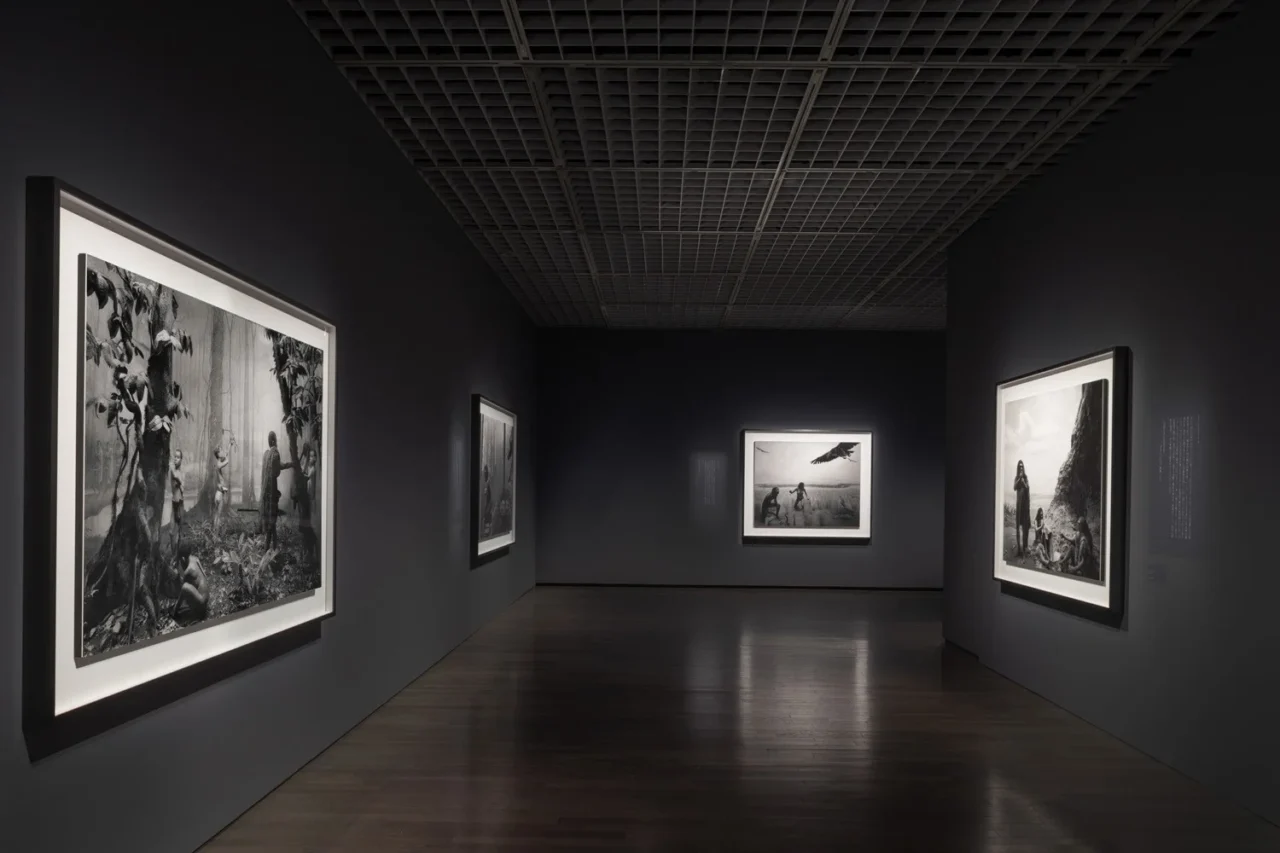
Sugimoto’s exhibitions in recent years have often combined photography with his interest in antiques and installation. This exhibition, however, is his first in 21 years to consist exclusively of photographic works. The two series featured here are indisputable masterpieces, works that truly helped elevate photography’s status as an art form.
What makes them so remarkable is Sugimoto’s distinctive approach to time.
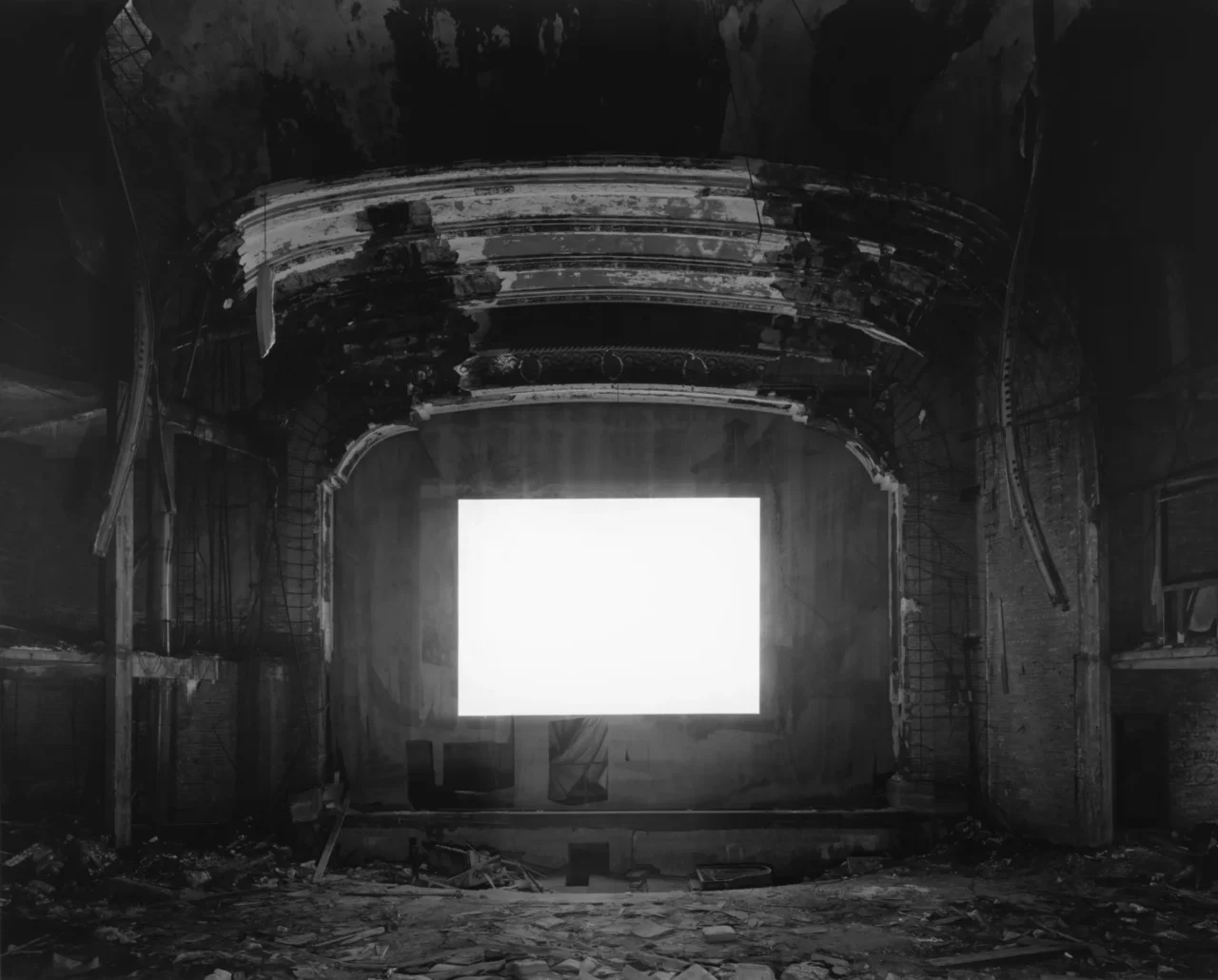
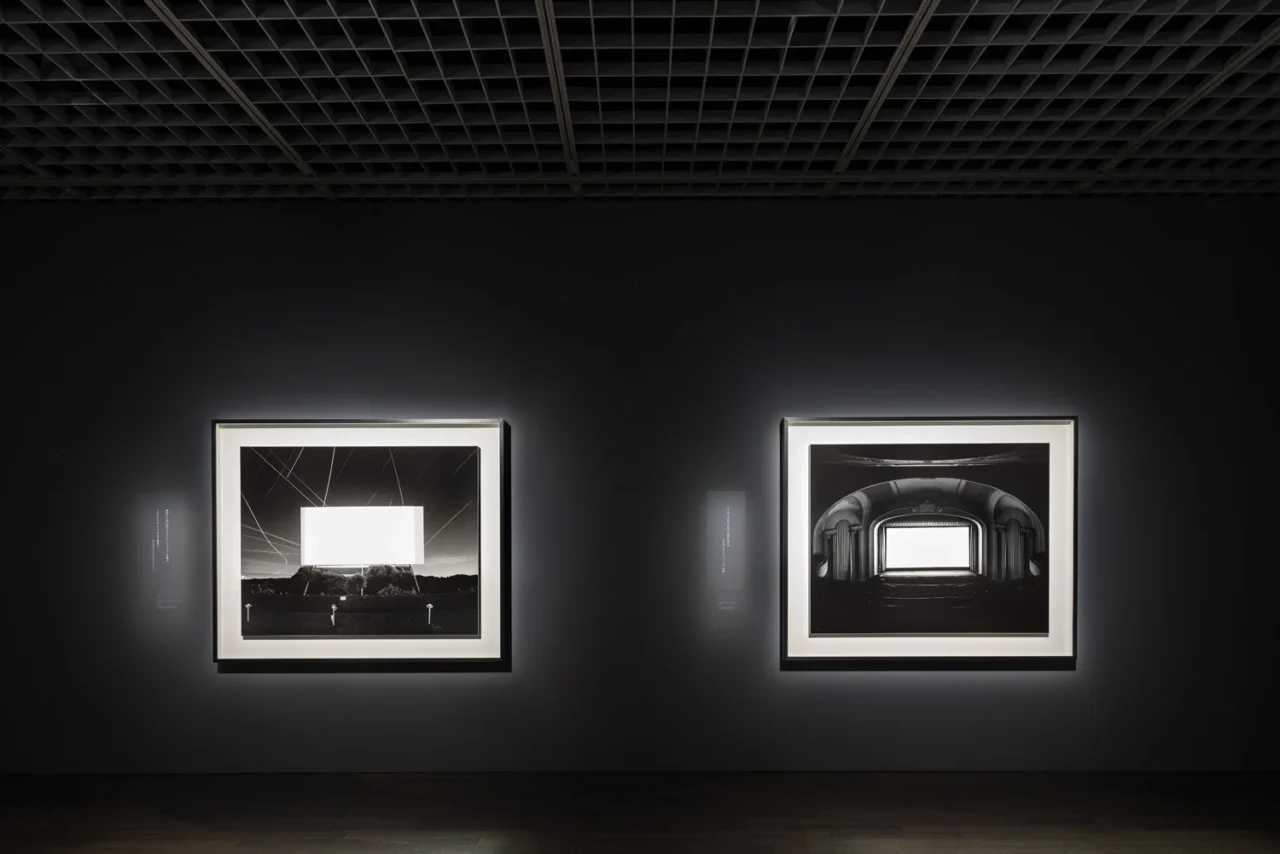
In the Theaters series, Sugimoto used long exposures lasting from the beginning of a film until its end, effectively giving physical form to the abstract concept of time. He carefully calibrated his technique so that the ornate interiors of theaters, some already well over a century old when photographed, would remain just barely visible, while the exposure itself corresponded almost exactly to the duration of the film being screened. Drawing on the full precision of photographic technique, Sugimoto captured the film and the time and space surrounding it on a single negative, and ultimately in a single print.
Our experience of moving images, cinema being the obvious example, always unfolds through time. Individual frames can be extracted as still images, but the experience itself remains a dynamic flow of time. The story or conceptual image, meanwhile, takes shape as an imagined picture only within each viewer’s individual memory.
Sugimoto, however, embraces photography’s particular capacity as a contemporary art form to say everything through a single print. He traps the entire experience of a film inside a screen glowing so completely white that it appears to contain nothing at all.
What makes this especially thrilling is that it goes beyond an intellectual concept. The shutter remained open for the entire duration of the film, meaning the photographic film physically received all of the projected light reflected from the screen. We may not be capable of perceiving it ourselves, but there on the print, the film’s time really does remain, held in place.