Set in postwar Japan, Godzilla Minus One delivered a powerful message: choosing to live is an act of courage. In its sequel, Godzilla Minus Zero, released in Japan on November 3, director Takashi Yamazaki once again brings the values of postwar Japan into conflict with those of the present day.
When faced with the idea of sacrificing themselves “for the sake of the next generation,” what should adults choose? How does such self-sacrifice look through the eyes of the children left behind? And how does Godzilla, a franchise embraced with equal enthusiasm in the United States, confront the complicated history between Japan and America?
Drawing on the film’s official screening and stage appearance at the Tokyo International Film Festival, this review explores how Yamazaki’s Godzilla films approach the question of responsibility toward the next generation.
Spoiler Warning: This article discusses events from the film. All interpretations expressed are the author’s own.
INDEX
Godzilla Returns to the Tokyo International Film Festival
n Godzilla Minus One, director Takashi Yamazaki depicted the devastating destruction of Tokyo’s Ginza district and its surrounding streets by Godzilla. The film was selected as the closing film of the 36th Tokyo International Film Festival in 2023, drawing particular attention for the strange coincidence of being screened just a short distance from the very streets destroyed on screen.
The film went on to earn widespread acclaim in Japan and overseas, becoming the first Asian film to win the Academy Award for Best Visual Effects at the 96th Academy Awards. It was a powerful demonstration that Japanese monster movies could hold their own on the world stage.
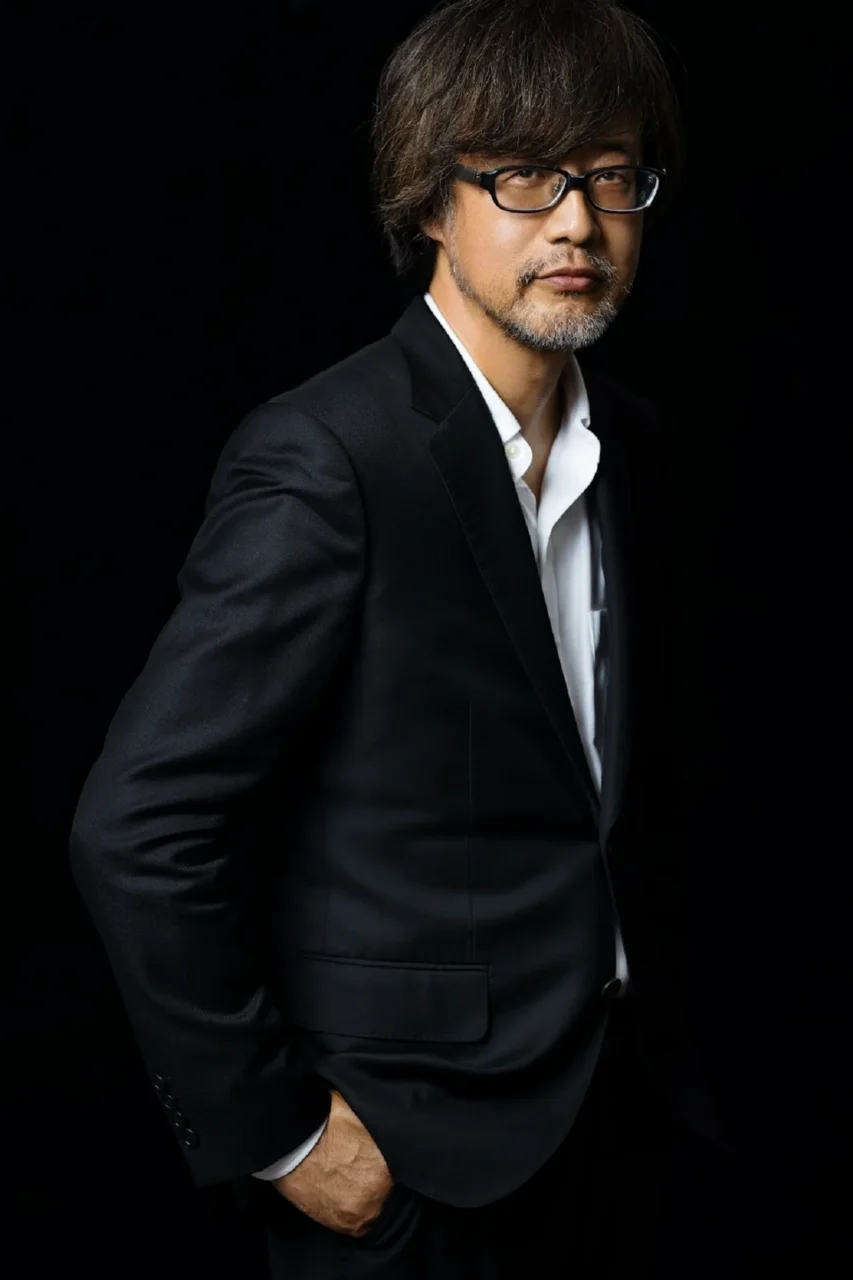
Building on that success, Yamazaki’s latest film, Godzilla Minus Zero, was selected as the centerpiece of the 39th Tokyo International Film Festival, where it received an official advance screening. Having closed the festival three years earlier, Godzilla returned to take center stage, this time with international success behind it.
INDEX
Hollywood Cheers for Takashi Yamazaki as Young Star Makes Her First Red Carpet Appearance
Ryunosuke Kamiki and Minami Hamabe were joined by six-year-old Sae Nagatani at the Tokyo International Film Festival screening of Godzilla Minus Zero. Nagatani returns as Akiko, the daughter of Kamiki and Hamabe’s characters, Koichi Shikishima and Noriko.
The two lead actors had recently returned from Los Angeles, where the film premiered at the TCL Chinese Theatre on October 28, ahead of its Japanese release. Kamiki recalled the overwhelming reception, particularly the enthusiasm for director Takashi Yamazaki.
“People were chanting ‘Takashi!’ as we walked the red carpet,” he said. “That’s when it really hit me just how famous he’s become around the world.”
Hamabe, who wore a kimono to the premiere, spoke about the standing ovation and the chance to hear directly from fans at the after-party. Their accounts reflected the anticipation surrounding the sequel following the international success of Godzilla Minus One.
Back in Tokyo, much of the attention turned to Nagatani, who was making her first appearance at a film premiere event. Kamiki described it as a special occasion for the young actor, while Hamabe encouraged the audience to give her a warm welcome. Having had only a handful of lines in the previous film, Nagatani takes on a larger speaking role as an older Akiko in the sequel.
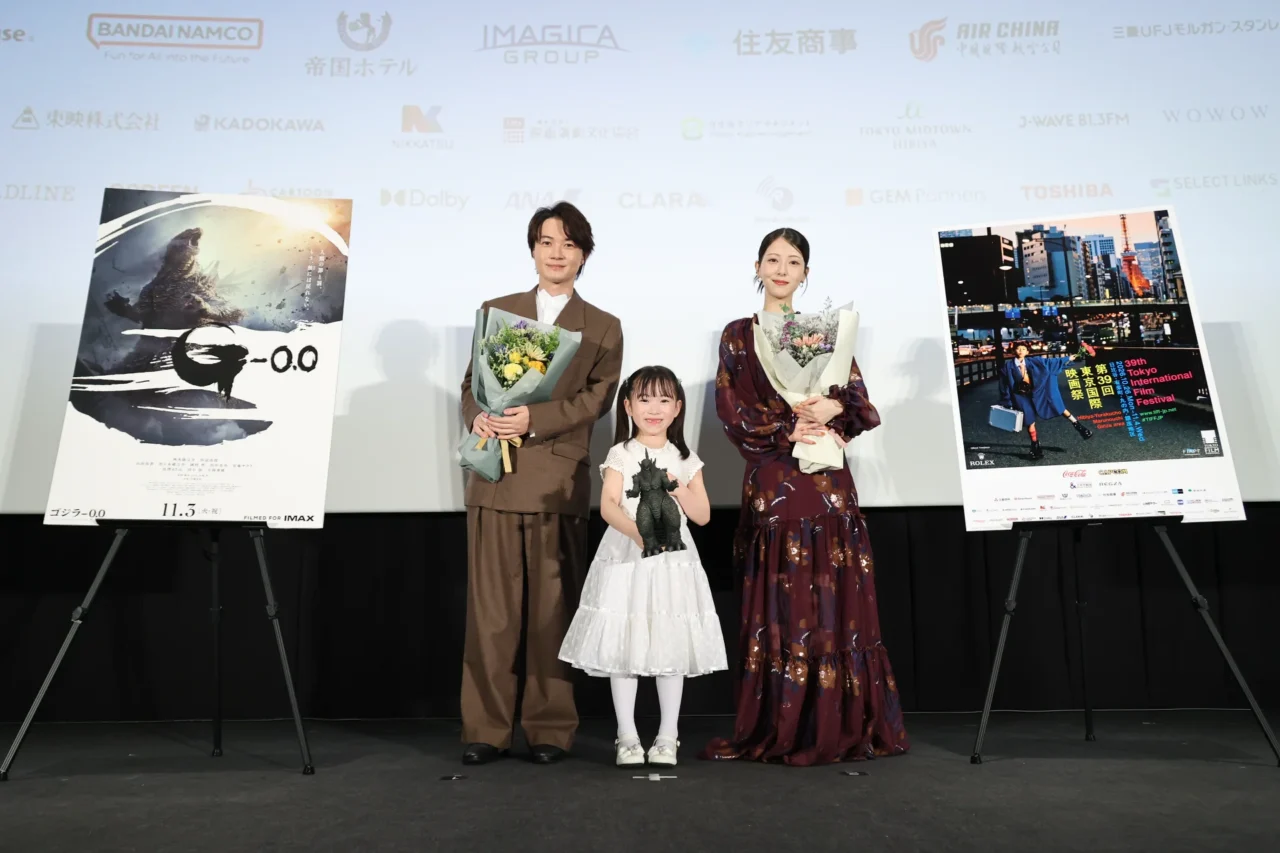
When Nagatani asked Kamiki how she could become an actor like him, he assured her she was already doing wonderfully before jokingly passing the question to Hamabe, a former winner of the Toho Cinderella talent competition.
“You have such a beautiful heart, Sae,” Hamabe told her. “I hope you never lose that.”
The affectionate exchange between the three, who portray a family on screen, offered a fitting glimpse of the sequel’s central themes.
INDEX
From the Right to Live to the Duty to Survive
In Godzilla Minus One, Takashi Yamazaki challenged the values of wartime Japan, where an honorable death was celebrated and survival could be seen as shameful. Against that backdrop, the film made a distinctly modern argument: choosing to live is not an act of cowardice, but one of courage.
The tension between Japan’s wartime values and contemporary morality remains at the heart of Yamazaki’s Godzilla films, and Godzilla Minus Zero brings it into even sharper focus.
This time, the question of survival is closely tied to the responsibilities of adulthood. The characters repeatedly face impossible choices in the name of protecting “the children’s future” or “Japan’s future.” At several points, the circumstances seem so desperate that sacrifice feels inevitable. Yet the film refuses to abandon the conviction established in its predecessor: survival matters, even when death appears to be the more heroic choice.
Admittedly, Yamazaki returns to this idea so often that the message occasionally feels heavy-handed. But the repetition also seems deliberate. By placing his characters in a period when dying for one’s country or future generations was considered noble, he challenges the very notion that self-sacrifice is inherently virtuous.
Godzilla Minus One argued that those haunted by the guilt of surviving deserved to live. Its sequel takes that idea a step further, suggesting that survival is not merely a personal choice but a responsibility to those who depend on us, particularly children. Where the first film defended the right to live, the second asks what we owe to the people who need us to stay alive.
INDEX
What Self-Sacrifice Leaves Behind: A Look at Yamazaki’s Earlier Films
Why, then, does staying alive matter so much? One film that comes to mind is Miwa Nishikawa’s Watashi no Shiranai Kodomotachi (2026), which explores the harsh realities faced by children orphaned by war. These children had no say in the circumstances that shaped their lives. They lost their homes and families to a war started by adults, only to be left dealing with its consequences.
What adults believe they are doing for the sake of children does not necessarily serve those children’s interests. Even sacrificing one’s life to protect the next generation takes on a different meaning when viewed through the eyes of the children left behind.
This is not to dismiss the courage of risking one’s life to save someone else. But celebrating such sacrifice without considering the grief and hardship it may leave a child to endure is troubling. Taken to its extreme, even a parent’s decision to die for their child’s future can become an act of selfishness if it disregards what the child actually wants.
The same problem arises when childhood suffering is romanticized as a necessary step toward becoming stronger. Children can grow up without their parents, and some emerge from extraordinarily difficult circumstances as resilient, capable adults. But their resilience is a response to circumstances they had no choice but to endure. It does not mean losing a parent was somehow good for them. Admiring someone for overcoming hardship is one thing; justifying the conditions that caused it is quite another.
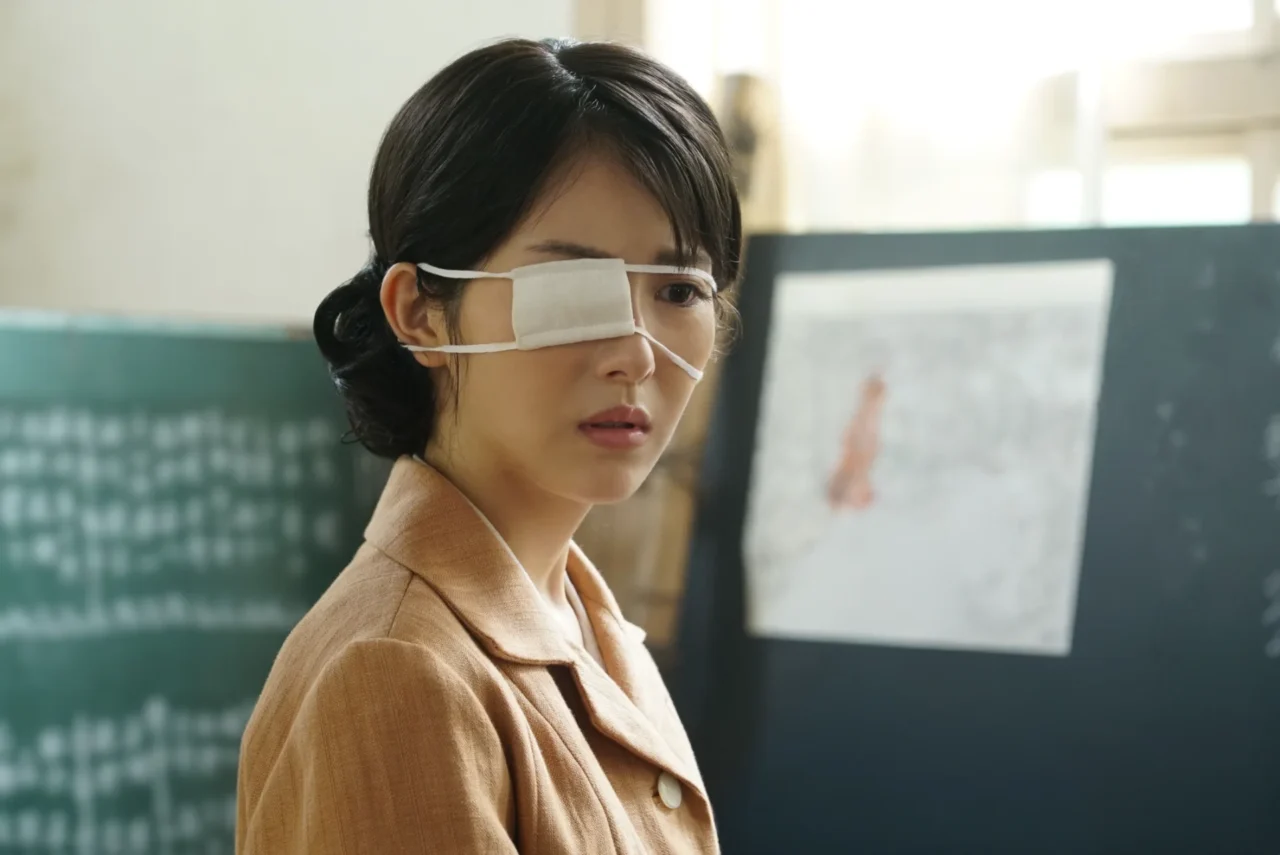
Yamazaki has explored similar questions before. In his Always: Sunset on Third Street series, which began in 2005, he portrayed children whose lives were shaped by adult decisions, alongside parent-child relationships that extended beyond biological ties. Those films suggested that even without their birth parents, children could find security and happiness through the care of other adults.
The point, then, is not that children necessarily need their biological parents beside them. What matters is having adults who take responsibility for their well-being and are willing to protect them. Losing a parent does not mean a child has no future, but neither does a child’s ability to carry on absolve adults of responsibility for their absence. Seen this way, Godzilla Minus Zero takes Yamazaki’s longstanding interest in parenthood and pushes it toward a more fundamental question.
What does it actually mean to protect a child’s future? It is not simply a matter of achieving something extraordinary on their behalf or leaving behind a heroic legacy. It can also mean being present in their everyday lives, supporting them as they grow and helping them through difficult moments. Continuing to fulfil those ordinary responsibilities is itself a way of protecting the future.
Does a child really need a hero willing to die for them? Or do they need an imperfect adult who stays alive and remains by their side?
By revisiting postwar Japan, Yamazaki challenges the idealization of self-sacrifice that persists even today. His Godzilla films are about more than monsters or the tragedies of war. They ask what adults owe the generations that follow, and what it means to fulfil that responsibility.
What makes Yamazaki’s approach feel particularly contemporary is his insistence on seeing the future through the lives of children themselves, rather than through the ideals or heroic narratives adults construct on their behalf.