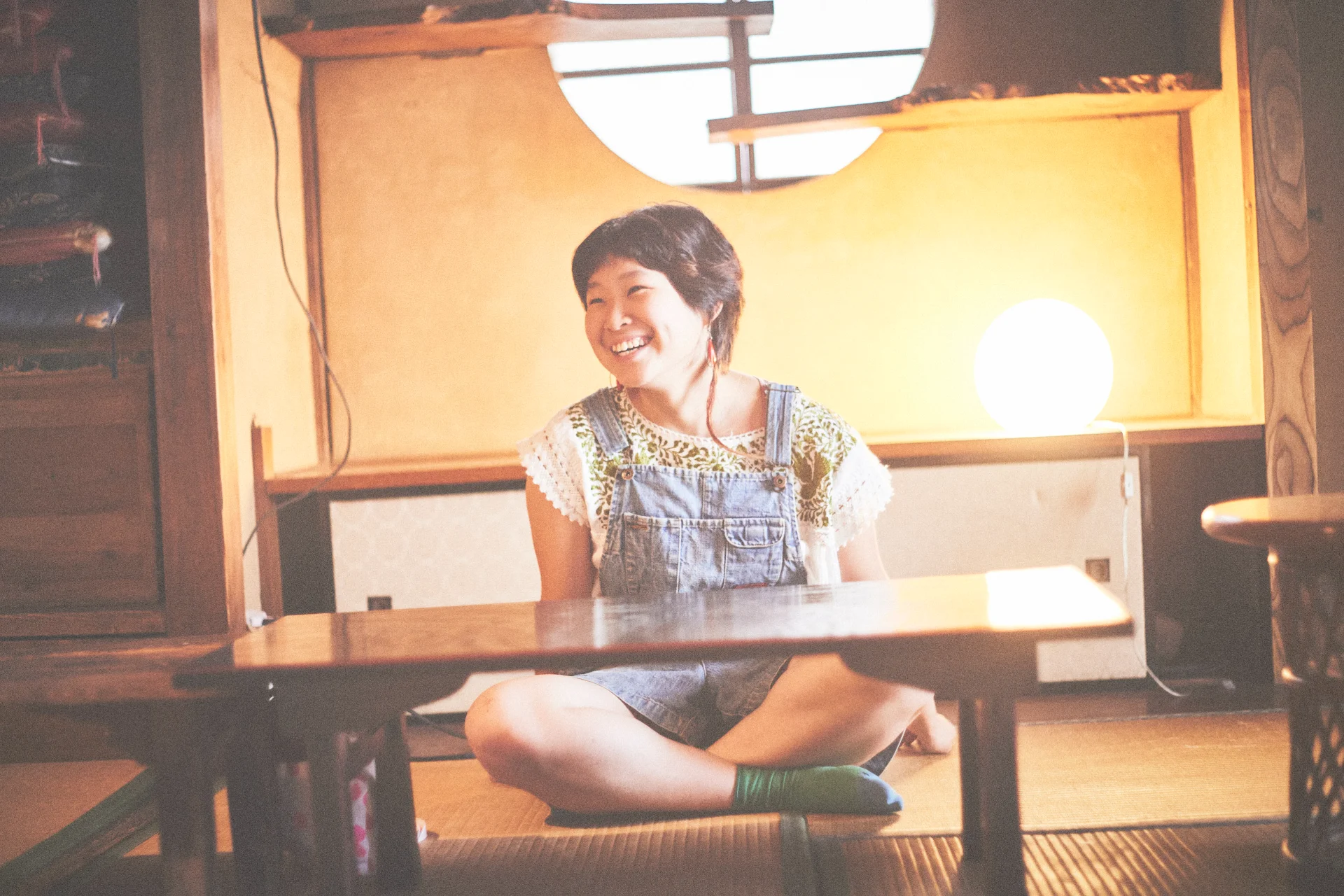
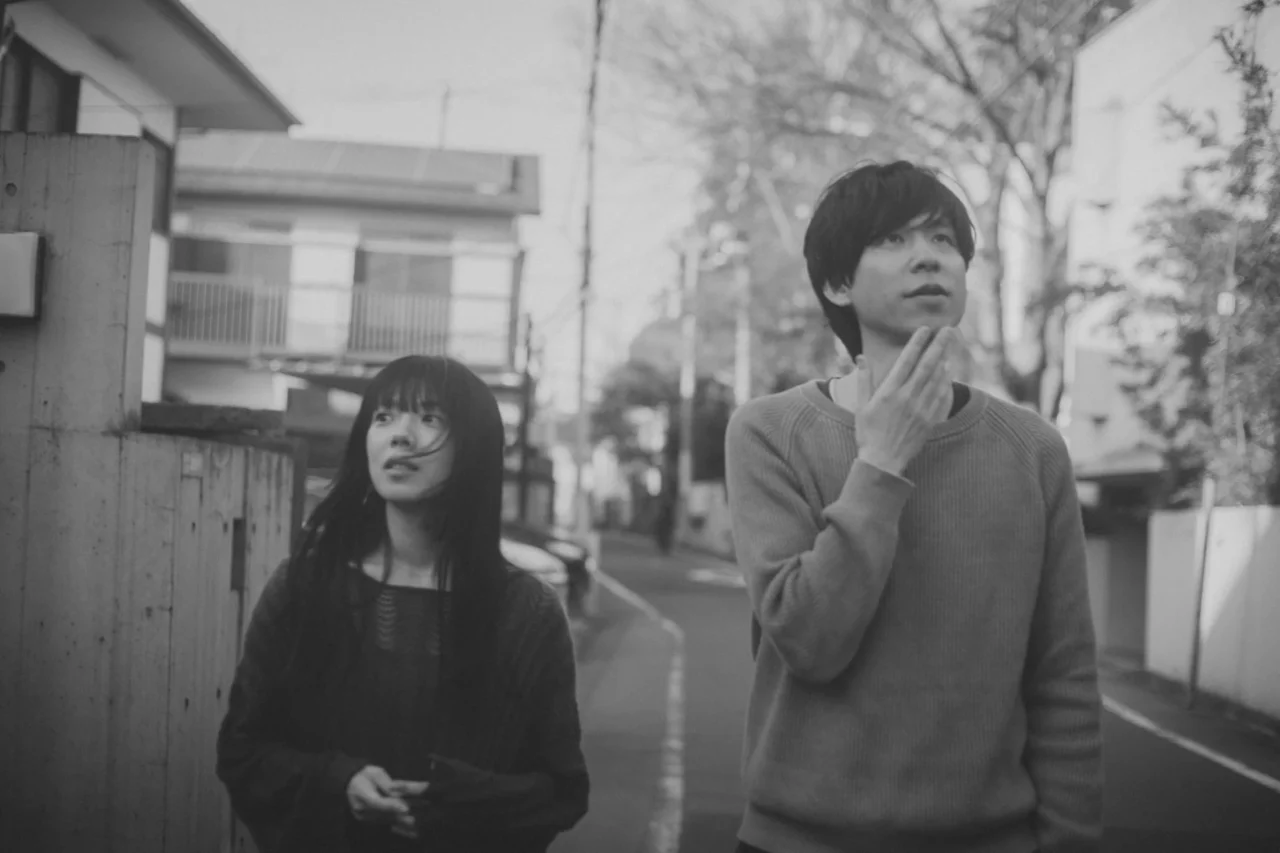
“People often tell me I’m free,” Suzu Toyama says. “But honestly, hearing that makes me feel a little lonely.”
It isn’t the response I expected. We’d been talking about how her music is often described as instinctive and unconstrained, as if she simply follows wherever inspiration takes her. But her answer suggested something more complicated. It offered a glimpse beneath the surface of songs that feel at once graceful, intuitive, and quietly fragile.
I first discovered Toyama through her 2024 debut album, Swim, after Takaaki Kandori of Hiroshima’s Stereo Records recommended it to me. Before I even pressed play, I already knew a few things about her: she was the daughter of musician Takeo Toyama; she’d spent part of her teenage years studying on her own at an alternative school in England; and she had returned to her hometown of Onomichi, where she was making music before she’d even turned twenty.
Listening to Swim, those facts suddenly made sense. Her songs are understated, almost whisper-quiet, yet there’s an unmistakable confidence running through them. For someone so young, the music feels remarkably lived-in, shaped by experiences far beyond her years. It also explained why she’d already been invited to perform at FUJI ROCK FESTIVAL ’24.
In 2025, Toyama relocated to Tokyo. These days, she splits her time between making music and working at places like HoiPoi, a community-oriented venue in Koenji. Her second album, Spin, released in May 2026, marks another turning point. It’s the first time she’s collaborated with guest musicians, and the record reflects both the life she’s left behind and the one she’s begun building in the city, its songs constantly shifting and pulling in new directions.
Remarkably, despite already releasing two albums, this is Toyama’s first interview. She speaks candidly about growing up between cultures, moving to Tokyo, discovering songwriting at a young age, and how performing as the opening act for Mei Semones deepened her awareness of the different emotional spaces that English and Japanese occupy in her music.
INDEX
Leaving Home at Ten
One of the first things people notice about your story is that you moved to England by yourself at the age of ten. Do you remember much about your life before that?
Suzu: I do, though it’s all a bit fragmented. I lived in Osaka until I was about seven, and the clearest memory I have is the tall, narrow house we lived in. I was born with severe eczema, so my body reacted to all kinds of things. At school, I always had to bring my own lunch because of food restrictions.
I think that made me pretty self-conscious around other kids. But the moment I got home, I completely let loose.
Because of my dad—he’s a musician—we always had people from the music world staying at our house. I’d go to concerts with him too. I loved being around adults who lived so freely. Looking back, I probably found it harder to relate to people my own age.
After we moved to Onomichi, I spent about a year at an alternative school while I was in fourth grade, but I eventually left. There was a period when I was mostly staying at home without much to do, and that’s when I first heard about Summerhill School.
How did you come across it?
Suzu: A girl who had graduated from Summerhill happened to move to Onomichi, where I was living, so I got to hear about it from her. At first I thought, There’s no way I’d ever go somewhere that far away. But then I started reading books about the school, and it gradually began to feel real.
She had gone there when she was ten, and I was ten too. So apparently I told my parents, “I want to go.” Apparently because I honestly don’t remember saying it. (Laughs.)
Later I found out that my mum had wanted to study in England when she was younger, but her parents wouldn’t let her. Maybe that’s why she wanted me to have the opportunity she never had.
Even though it meant going completely on your own?
Suzu: Yeah. The school isn’t in London—it’s in rural Suffolk, and it’s fully residential. It felt less like a school and more like a small village.
Not everyone spoke English fluently, myself included. There were students from all over the world, all speaking with different accents, so even the English you heard around campus wasn’t just one kind of English.
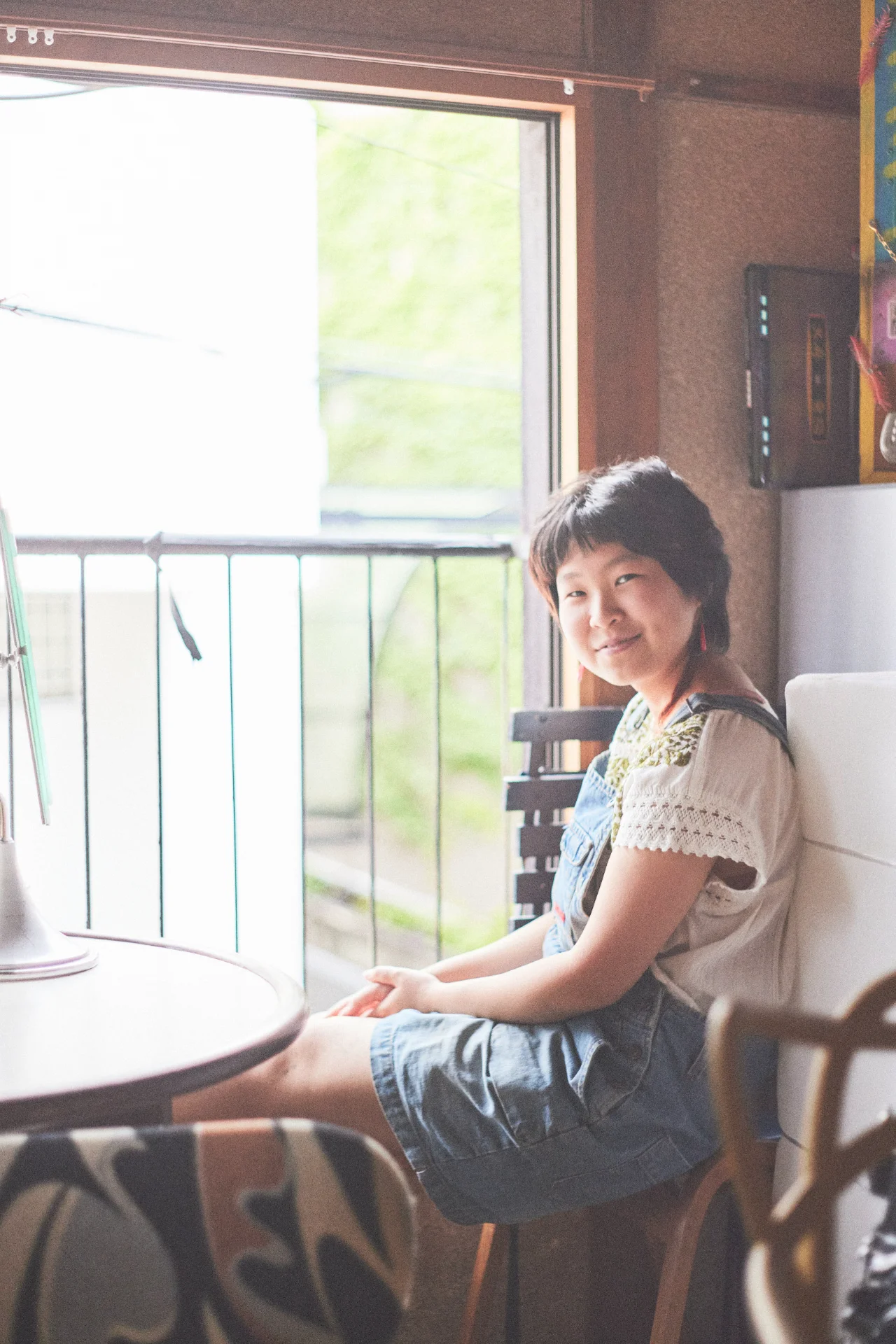
Alongside her music, Toyama creates self-directed performance pieces and visual works, which she shares on YouTube. She independently released her self-produced albums 16 sixteen and black hole on Bandcamp in 2022, followed by the home-recorded sun in 2023 and swim in 2024. That same year, she made her debut at FUJI ROCK FESTIVAL.
In January 2026, she opened for Mei Semones on the artist’s Japan tour. After returning to her hometown of Onomichi to record her next project, Toyama released her latest album, Spin, in May 2026.
What do you remember most about your first few months at Summerhill?
Suzu: At first, I was just excited. But it didn’t take long before I became incredibly homesick, and I ended up returning to Japan after my first year.
Looking back, I think everything I thought I knew about myself fell apart the moment I arrived.
Growing up in Osaka and later Onomichi, I was always surrounded by interesting adults. Whatever I did, people praised me. I was a kid who felt loved and encouraged.
Then I got to Summerhill, where there were children from all over the world, each with completely different backgrounds. Suddenly I wasn’t in an environment where adults were looking after me all the time. There were so many things outside my control, and that uncertainty made me retreat into myself. I stopped being the outgoing person I’d always been.
That was also when I developed an eating disorder. It gradually became more serious, and eventually I returned to Japan.
The year I spent back home was… pretty dark. (Laughs.)
People probably imagine your years in England as this incredible adventure, but it sounds like it was much more complicated than that.
Suzu: Definitely. But about a year later, when I was twelve, I went back to England.
What changed? What made you decide to go back?
Suzu: During that year, my family took a trip to England, and we stopped by the school. Everyone came up to me saying, “Suzu, when are you coming back?”
That really surprised me.
Until then, I’d never really felt like I belonged anywhere. I always assumed that once you left a place, that chapter of your life was over. So realizing there was somewhere I could return to—and that people genuinely wanted me back—felt completely new.
When we got home, I was the one who told my mum, “I want to go back.”
I think that was the first time it truly felt like my own decision. Once I’d chosen it for myself, I figured I might as well embrace it.