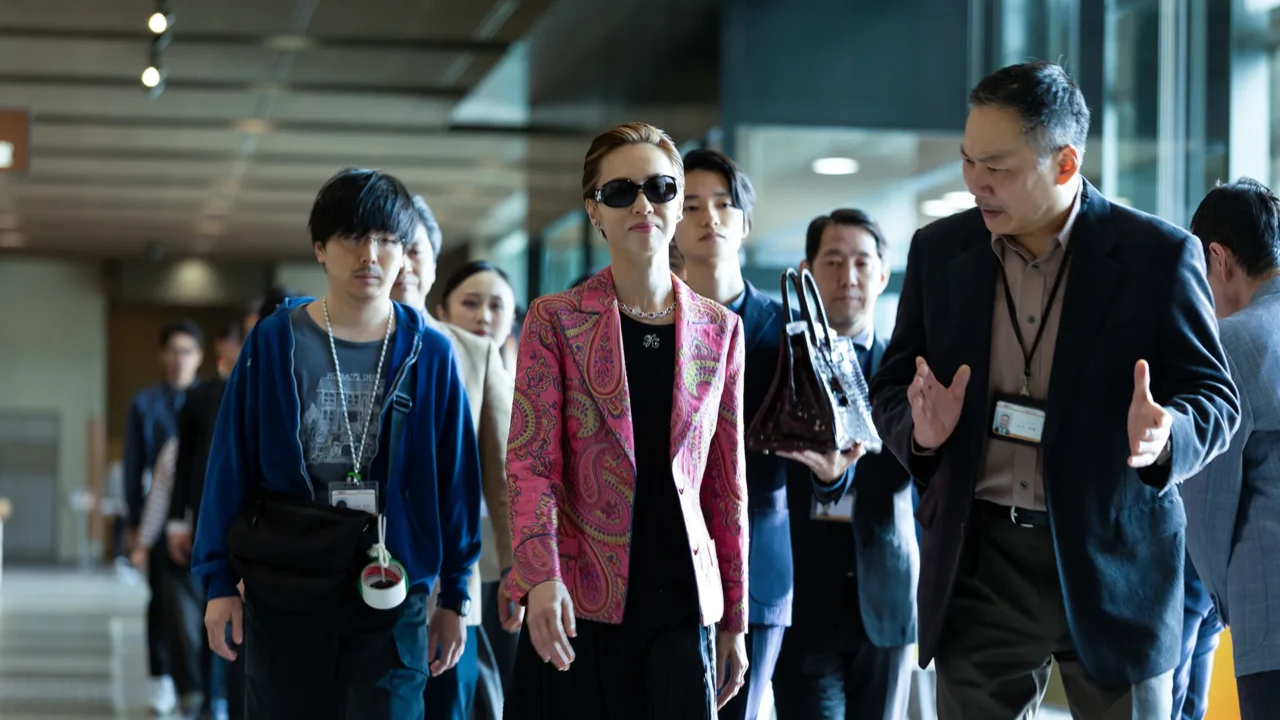
Netflix series Human Vapor began streaming exclusively on July 2.
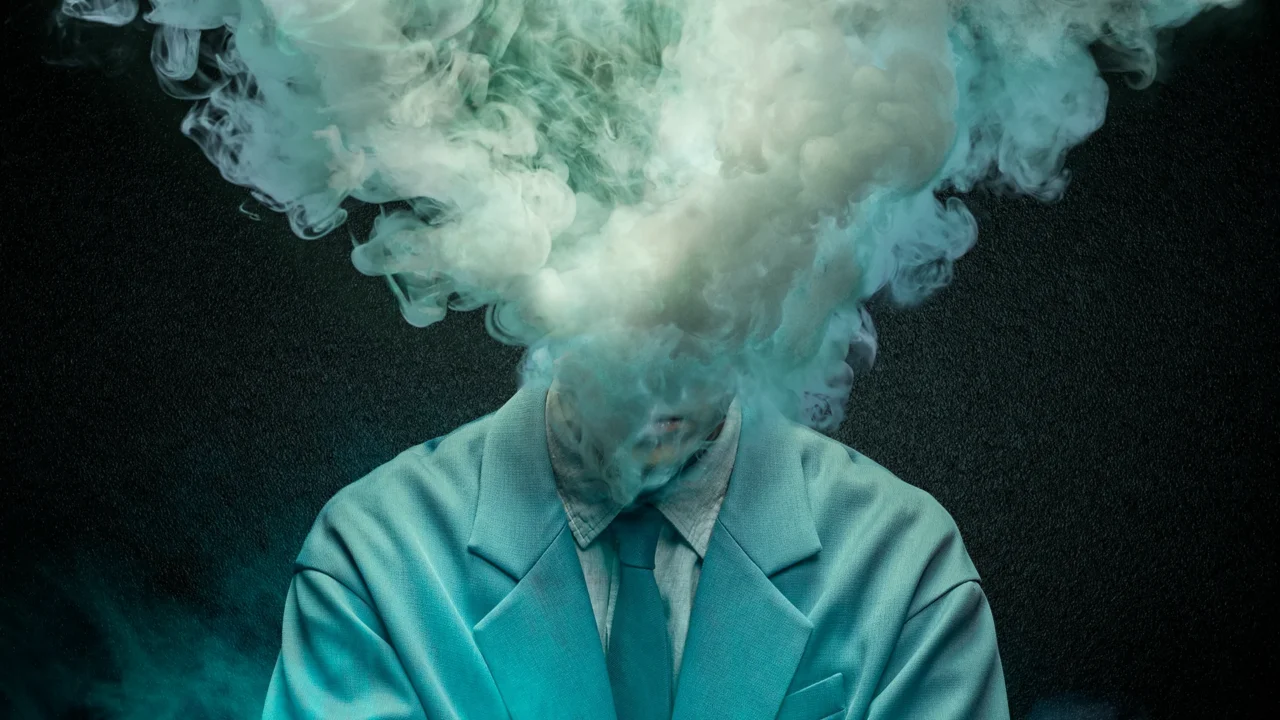
Set in present-day Japan, the series reimagines the 1960 Toho film The Human Vapor, directed by Ishiro Honda, one of the creators behind Godzilla, as a completely original story. Here, we take a closer look at Netflix’s new interpretation of the Japanese sci-fi classic.
INDEX
From Toho’s “Transforming Human” Series to a Modern Reimagining
The foundation of Human Vapor lies in The Human Vapor, a 1960 sci-fi film that was part of Toho’s “Transforming Human” series, a collection of movies centered on humans whose bodies are altered through science. The series followed The Invisible Man and later expanded with films including The H-Man (1958) and The Secret of the Telegian.
The original The Human Vapor was born from Toho’s ambition to create science fiction in the vein of writers such as H.G. Wells and Ray Bradbury while giving it a distinctly Japanese identity. Inspired by a story treatment by American screenwriter John Meredith Lucas, the film was ultimately adapted into a screenplay by Takeshi Kimura, who wrote under the pen name Kaoru Mabuchi.
However, few details of Lucas’s original concept survive today beyond the premise of “a man made of gas commits a series of crimes.” Rather than adapting that lost treatment directly, Netflix’s Human Vapor is better understood as a modern reimagining of The Human Vapor, reworking the classic film into an entirely new story for contemporary audiences.
INDEX
Reimagining a Classic Through Modern Anxieties(
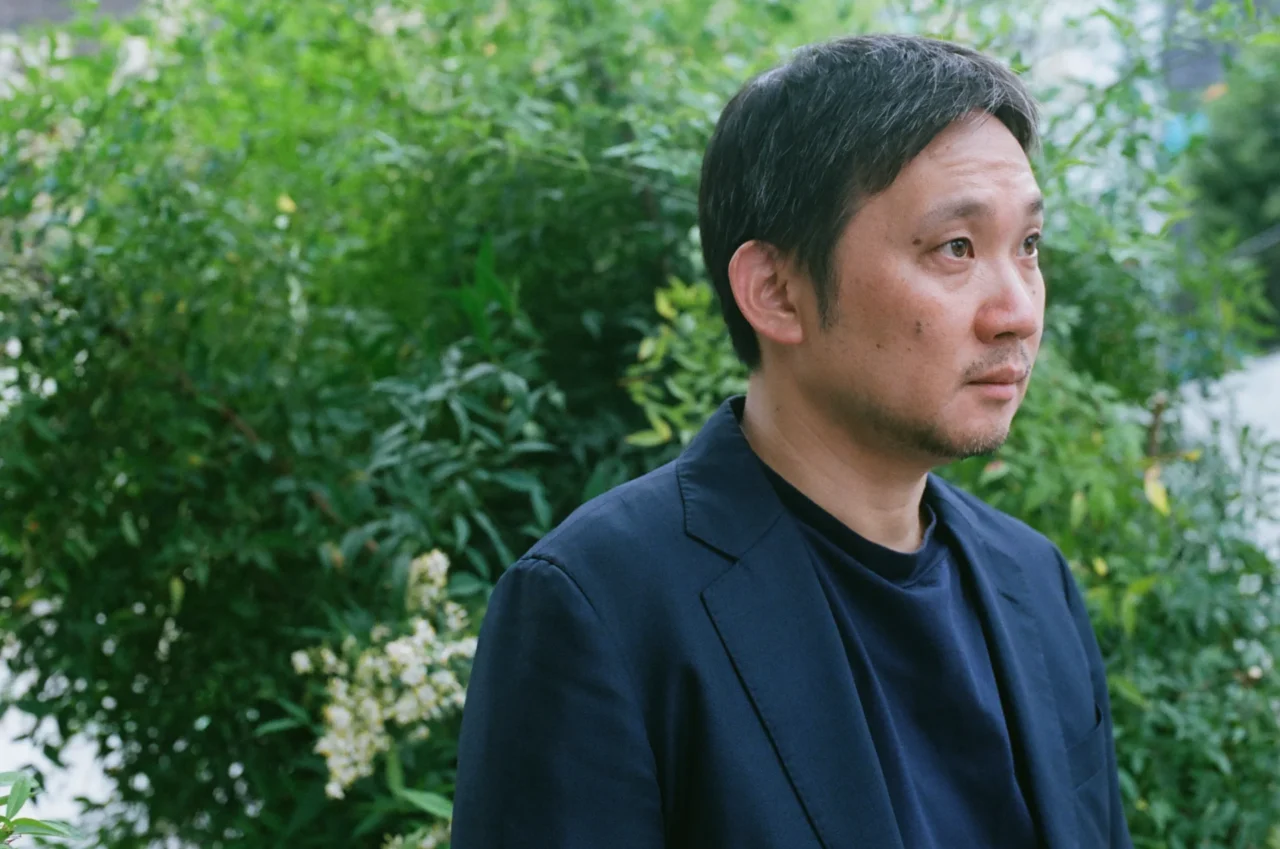
Director Shinzo Katayama, who previously worked as an assistant director to Bong Joon Ho, has built a reputation for weaving sharp social commentary into films such as Missing (2022) and Siblings of the Cape (2019). That sensibility is very much present in Human Vapor. The series also benefits from the involvement of South Korean screenwriters Yeon Sang Ho and Ryu Yong Jae, whose perspective adds another layer to the story beyond what audiences might typically expect from a Japanese production.
Given the creative team behind it, Human Vapor was never going to be a straightforward remake of the 1960 film. The story, setting, and point of view are all entirely different. What the two works do share, however, is their central tragedy: an ordinary person transformed into something inhuman by science. Rather than simply retelling the original, the Netflix series expands on one of its core ideas—social anxiety—and reinterprets it for contemporary Japan. The phrase itself becomes a recurring motif throughout the series, which unfolds across two timelines: the late 1990s and the present day.


INDEX
From Cult Terror to Social Media: Japan’s Evolving Anxieties
When it comes to the social anxieties of late-1990s Japan, two defining cultural touchstones stand out: the 1995 sarin gas attacks carried out by the cult Aum Shinrikyo and the widespread panic surrounding Nostradamus’s prophecy that the world would end in 1999. Human Vapor clearly draws on both.
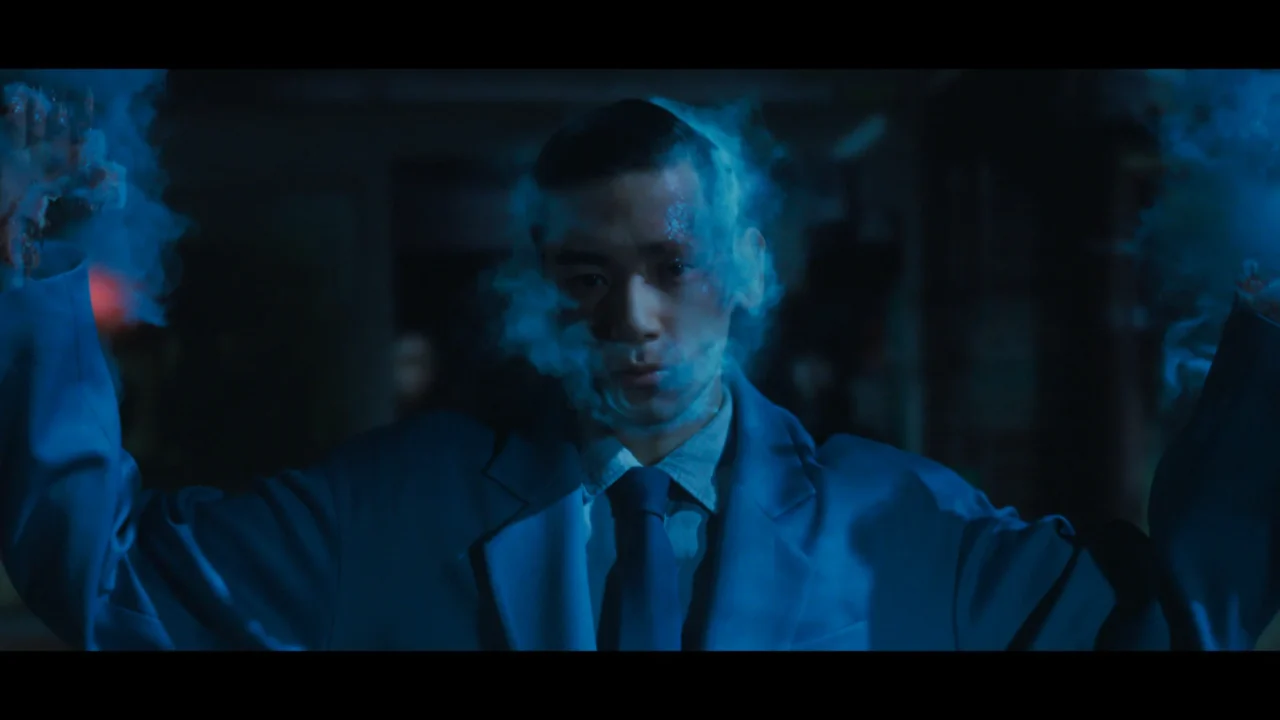
In this interpretation, the “Human Vapor” can be read as a metaphor for victims of chemical weapons such as sarin and VX gas. The series is filled with references that reinforce this reading. The “White Center” facility in Yamanashi strongly recalls Aum Shinrikyo’s infamous Seventh Satian compound, while the recurring meteor imagery evokes Nostradamus’s “King of Angolmois.” Other details—including the involvement of organized crime in acquiring chemical weapons, the murder of investigating police officers, and the cult-like appearance of certain followers—further echo the Aum Shinrikyo case. Although Japanese film and television have occasionally explored the cult before, few works have incorporated its legacy this directly into mainstream entertainment.
The contemporary storyline, meanwhile, shifts its attention to post-pandemic Japan, where the balance of influence between traditional media and social media has dramatically changed. Rather than focusing solely on the press and its fear of public backlash, the series suggests that online creators who amplify fear and social anxiety now wield even greater influence over public opinion.
The show also touches on broader political trends. Its portrayal of personal tragedy being transformed into heroic public imagery inevitably recalls the political image-making that followed the assassination attempt on Donald Trump. Likewise, its depiction of election campaigns driven more by attacks on political opponents than by policy proposals reflects a style of politics increasingly visible in Japan as well.
This outsider’s perspective on contemporary Japanese society feels especially distinctive given the involvement of South Korean screenwriters Yeon Sang Ho and Ryu Yong Jae. They approach subjects that are often considered politically or culturally sensitive in Japan with a degree of distance that allows the series to examine them more directly.
Netflix series Human Vapor

Release Date: July 2, 2026 (Worldwide on Netflix)
Episodes: 8 (All episodes available at launch)
Based on: The Human Vapor (1960), directed by Ishiro Honda and written by Takeshi Kimura
Director: Shinzo Katayama
Screenwriters: Yeon Sang Ho, Ryu Yong Jae
Executive Producers: Yeon Sang Ho, Mina Ichikawa, Keiji Ota, Hisashi Usui, Yoshihiro Sato (Netflix)
Planning & Producers: Feng Nian, Wu Liangci
Producers: Sokichi Onoda, Yang Yumin
Planning: Akihiro Yamauchi
VFX: Shirogumi
VFX Supervisors: Masaki Takahashi, Takumi Niibori
Produced by: Toho
Co-Produced by: WOWPOINT
Production: TOHO Studios
Streaming on: Netflix
Cast: Shun Oguri, Yu Aoi, Suzu Hirose, Kento Hayashi, UTA, Haruka Imou, Sora Ijima, Motoki Kobayashi, Kanji Furutachi, Yota Kawase, Shuhei Nomura, Ayumu Nakajima, Yuzuna Saito, Hinata Hiiragi, Yusa Mikawa, Yuya Matsuura, Morrie Robertson, Mitsuo Yoshihara, Kotono Mitsuishi, Yoshimasa Kondo, Misa Wada, Masahiro Takashima, Kento Kaku, Aoi Morikawa, Hideko Hara, Hideo Nakano, Yuki Natsukawa, Kaoru Sakaguchi, Pierre Taki, Takashi Okabe, Munetaka Aoki, and Yutaka Takenouchi