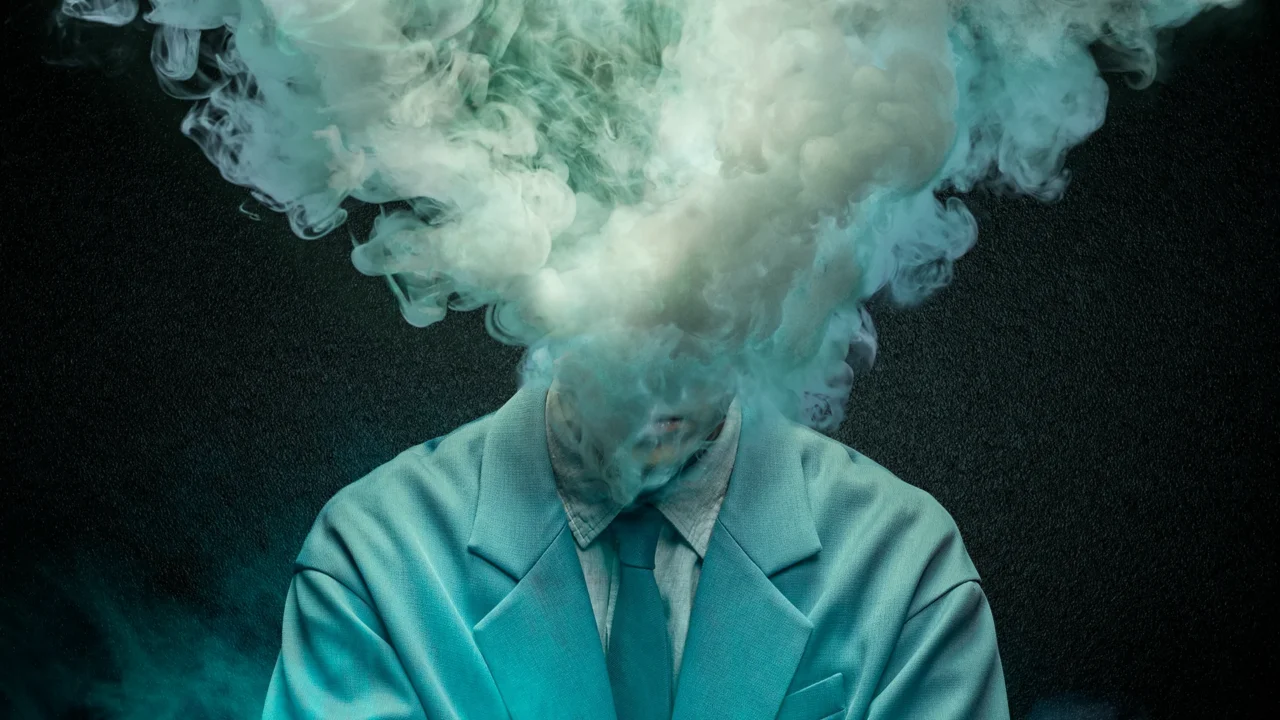
Netflix series Human Vapor began streaming exclusively on July 2.
Set in present-day Japan, the series reimagines the 1960 Toho film The Human Vapor, directed by Ishiro Honda, one of the creators behind Godzilla, as a completely original story. Here, we take a closer look at Netflix’s new interpretation of the Japanese sci-fi classic.
INDEX
From Toho’s “Transforming Human” Series to a Modern Reimagining
The foundation of Human Vapor lies in The Human Vapor, a 1960 sci-fi film that was part of Toho’s “Transforming Human” series, a collection of movies centered on humans whose bodies are altered through science. The series followed The Invisible Man and later expanded with films including The H-Man (1958) and The Secret of the Telegian.
The original The Human Vapor was born from Toho’s ambition to create science fiction in the vein of writers such as H.G. Wells and Ray Bradbury while giving it a distinctly Japanese identity. Inspired by a story treatment by American screenwriter John Meredith Lucas, the film was ultimately adapted into a screenplay by Takeshi Kimura, who wrote under the pen name Kaoru Mabuchi.
However, few details of Lucas’s original concept survive today beyond the premise of “a man made of gas commits a series of crimes.” Rather than adapting that lost treatment directly, Netflix’s Human Vapor is better understood as a modern reimagining of The Human Vapor, reworking the classic film into an entirely new story for contemporary audiences.