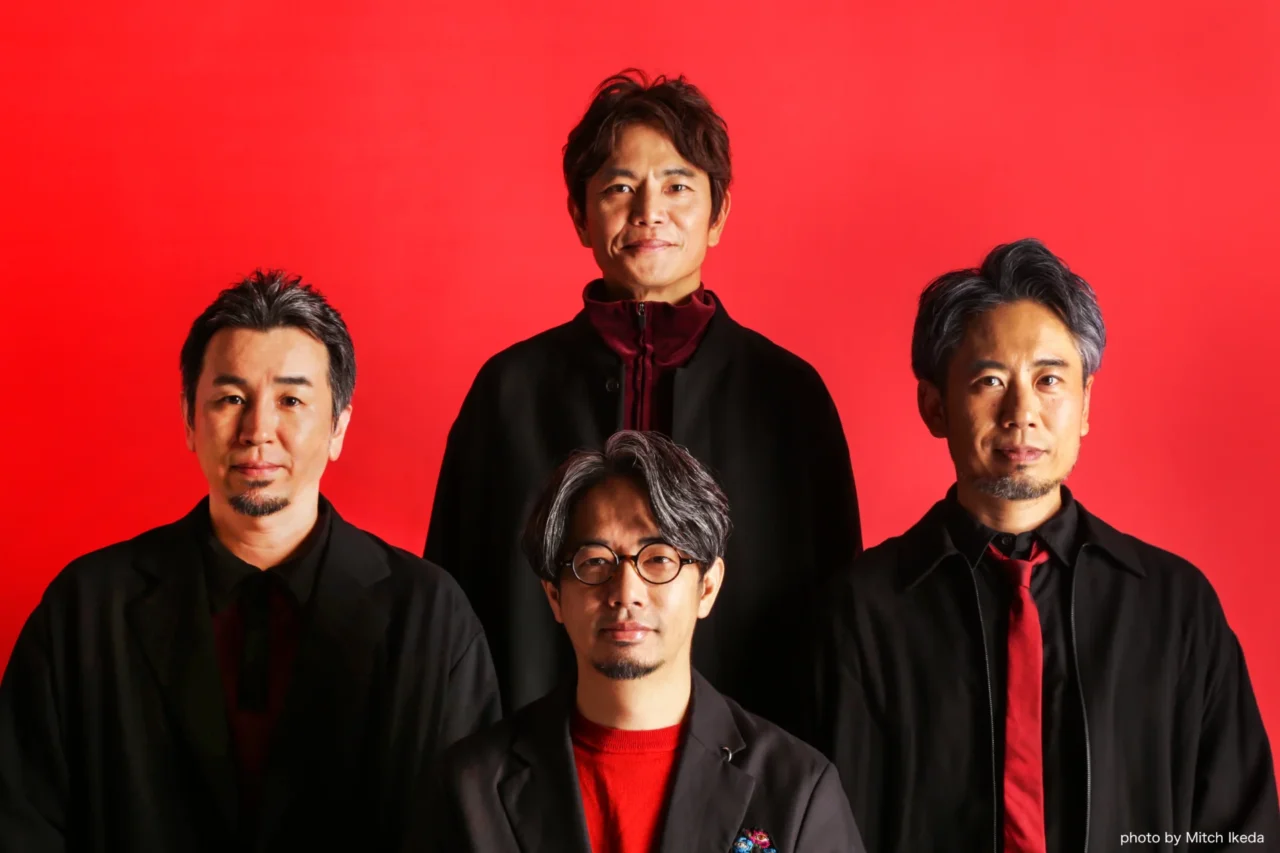
The film adaptation of Mieko Kawakami’s first novel centered on romantic love, All the Lovers in the Night, was released in Japanese theaters on November 13, 2026.
The story follows Fuyuko, a socially withdrawn proofreader in her thirties, played by Yukino Kishii, whose life begins to change when she meets Mitsutsuka, a physics teacher played by Tadanobu Asano.
How does someone who has spent years keeping others at a distance begin to connect with people again? The film explores this question through the recurring motif of light, examining how Kawakami’s novel translates to the screen and whether even the faintest glimmer in the darkness can offer hope.
Here, we take a closer look at how director Daishi Sode brings Kawakami’s story to the screen.
Editor’s Note: This article is an English translation of a review originally published in Japanese.
INDEX
Mieko Kawakami and the Complexities of Sisterhood
In the introduction to a special women’s issue of the literary magazine Waseda Bungaku, which she guest-edited, Mieko Kawakami urged women to speak up about the issues that matter to them, even when others dismiss their concerns or suggest they should have moved on.
Kawakami has long explored women’s bodies, social expectations and power dynamics, while acknowledging the complexities of writing about women as a collective. Rather than presenting stereotypical female characters, her fiction gives voice to a wide range of women, from introspective figures who struggle to take action to those who confront life with raw emotion and determination. Through her distinctive, fast-paced prose, Kawakami brings their inner lives into sharp focus.
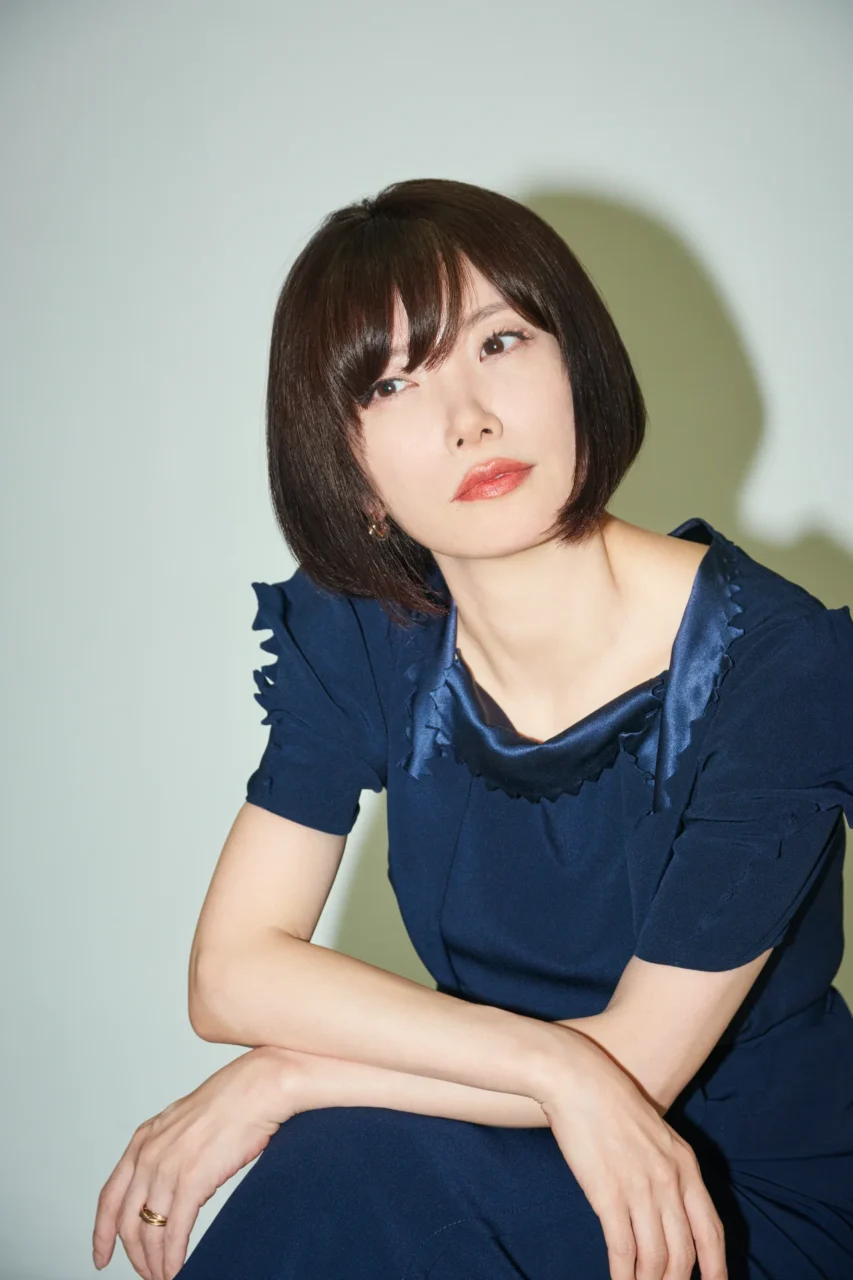
Kawakami is now one of the most widely read Japanese authors internationally. Her novel Breasts and Eggs has been published in more than 40 countries, following attention from The New York Times. In 2022, Heaven was shortlisted for the International Booker Prize, while All the Lovers in the Night was a finalist for the National Book Critics Circle Award. Her more recent novel Sisters in Yellow is being translated in more than 20 countries, while its German edition, Das gelbe Haus, placed fifth in the 2025 SPIEGEL Book Prize.
In her Akutagawa Prize-winning novella Chichi to Ran, which later formed the basis of Breasts and Eggs, Kawakami portrays conflicts between sisters and between mothers and daughters that challenge idealized notions of family love. In Sisters in Yellow, she traces how a group of women struggle to support one another, only to see their relationships unravel.
These portrayals resist the comforting idea that relationships between women must always be defined by solidarity and mutual understanding. A similar perspective can be found in the work of director Yukiko Sode, who brings All the Lovers in the Night to the screen as the first film adaptation of a Kawakami novel.
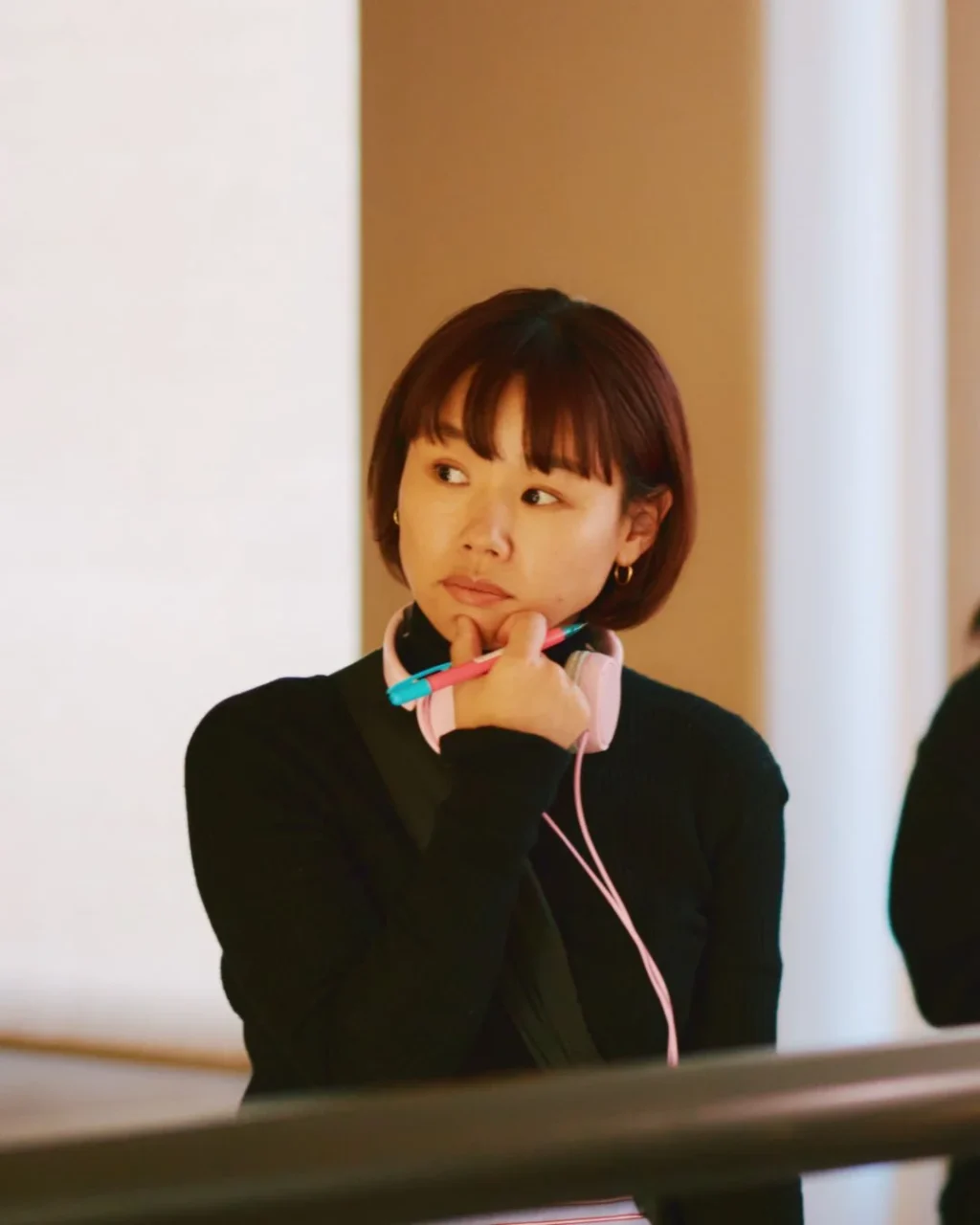
In Sode’s earlier film Aristocrats, a character named Itsuko, played by Shizuka Ishibashi, brings together Hanako (Mugi Kadowaki) and Miki (Kiko Mizuhara), two women from very different social backgrounds. Itsuko points out how Japanese society often encourages women to see one another as rivals, reinforcing prejudices against single women and stereotypes about conflict among mothers. She argues that women have no reason to undermine one another or sacrifice their self-worth to meet these expectations.
The film suggests that women need not compete against one another, even when their circumstances and experiences differ. Hanako and Miki do not suddenly become close friends, but their gradual recognition and acceptance of each other offers a sense of encouragement and possibility.
It is this nuanced understanding of relationships between women that connects Sode’s filmmaking with Kawakami’s fiction.
INDEX
How Love and Friendship Challenge Fuyuko’s Isolated World
Like Hanako in Aristocrats, Fuyuko Irie (Yukino Kishii), the protagonist of All the Lovers in the Night, keeps her interactions with others to a minimum, staying within the safety of her familiar, solitary life.
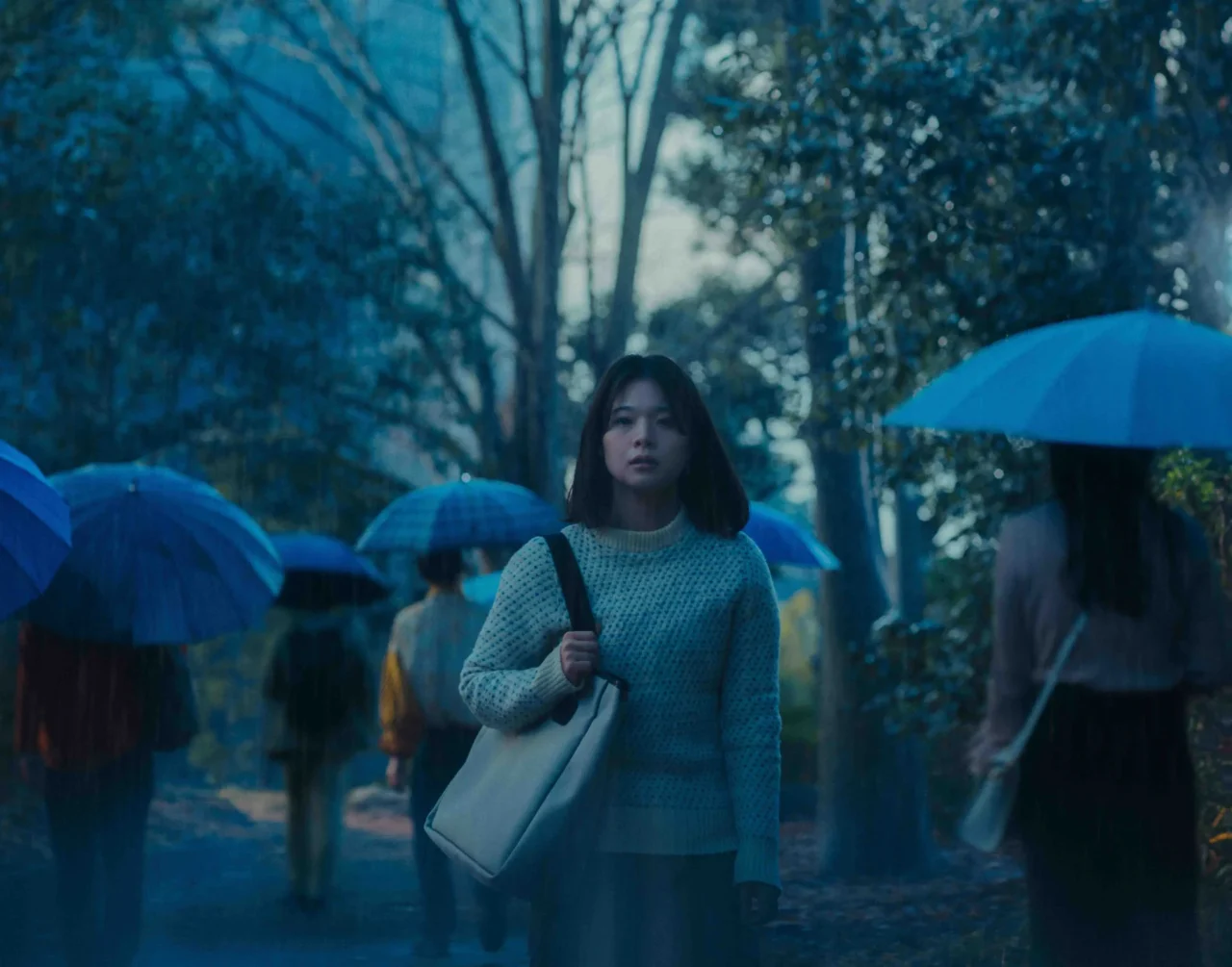
Working as a freelance proofreader, Fuyuko struggles with social interaction and spends her days quietly correcting manuscripts alone in her apartment. Her routine begins to change when she meets Mitsutsuka (Tadanobu Asano), an older physics teacher. Having spent years protecting herself from others because of her insecurities and past emotional wounds, Fuyuko is so afraid of human interaction that she cannot bring herself to meet him without drinking alcohol. Even so, she continues to reach for a glass of clear sake, finding the courage to see him again.
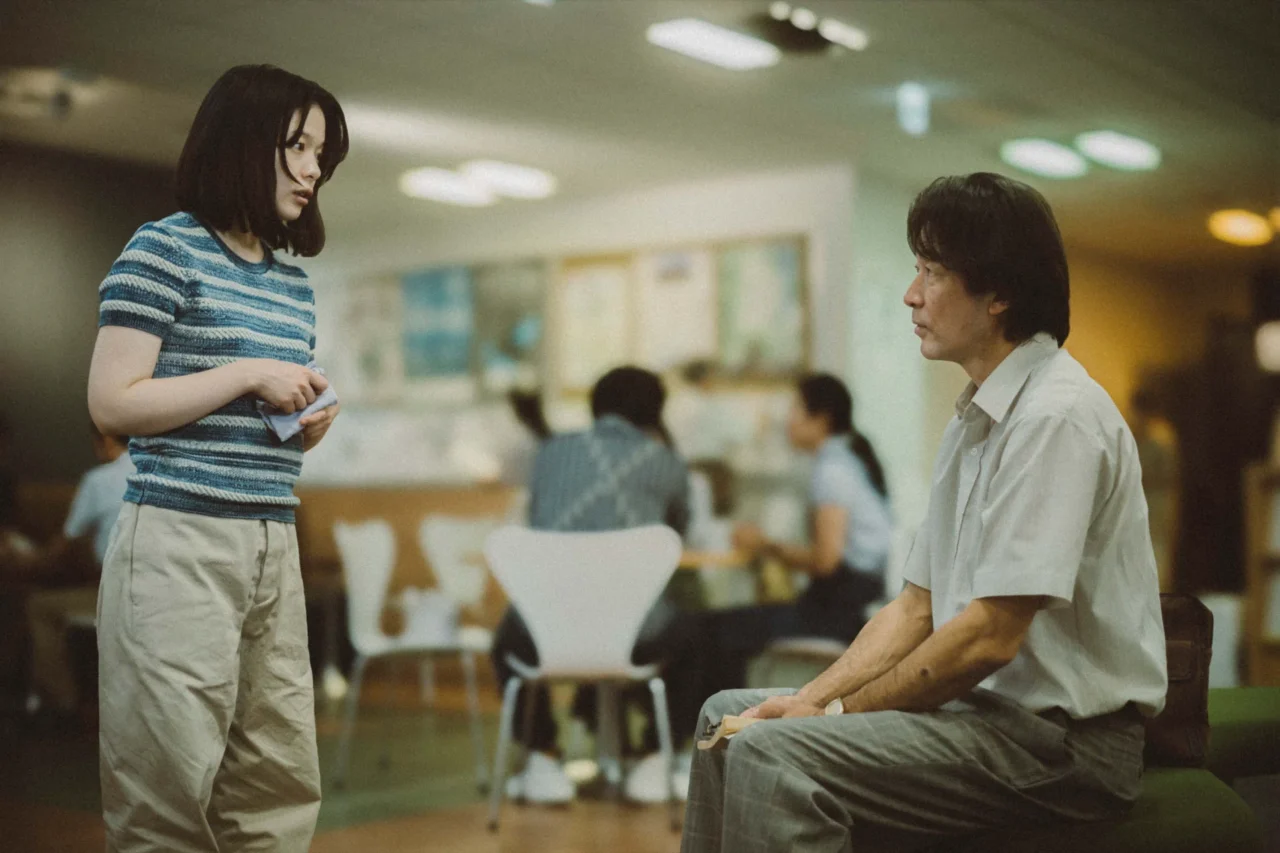
This is a love story marked by the particular pain and vulnerability of adulthood, rather than the romance of one’s twenties. It explores not only the exhilaration of falling in love but also the hurt and loneliness that can arise when another person enters a life that has already taken shape. In your thirties, when your sense of self has begun to solidify, meeting someone new and opening yourself up to them can feel almost like learning how to live all over again.
But romance is not the only force that unsettles Fuyuko’s carefully controlled world. Equally important is Hijiri (Misato Morita), a woman whose approach to life could hardly be more different from her own.
Hijiri is both a professional contact and a friend, and the only person who calls Fuyuko. Where Fuyuko is quiet, reserved and has a limited social circle, Hijiri is outspoken, has strong opinions of her own and is unafraid to challenge her superiors. She is also uninhibited about sex and stands out wherever she goes. The two seem like opposites, one still and the other constantly in motion, yet they respect each other’s work and have developed a mutual understanding.
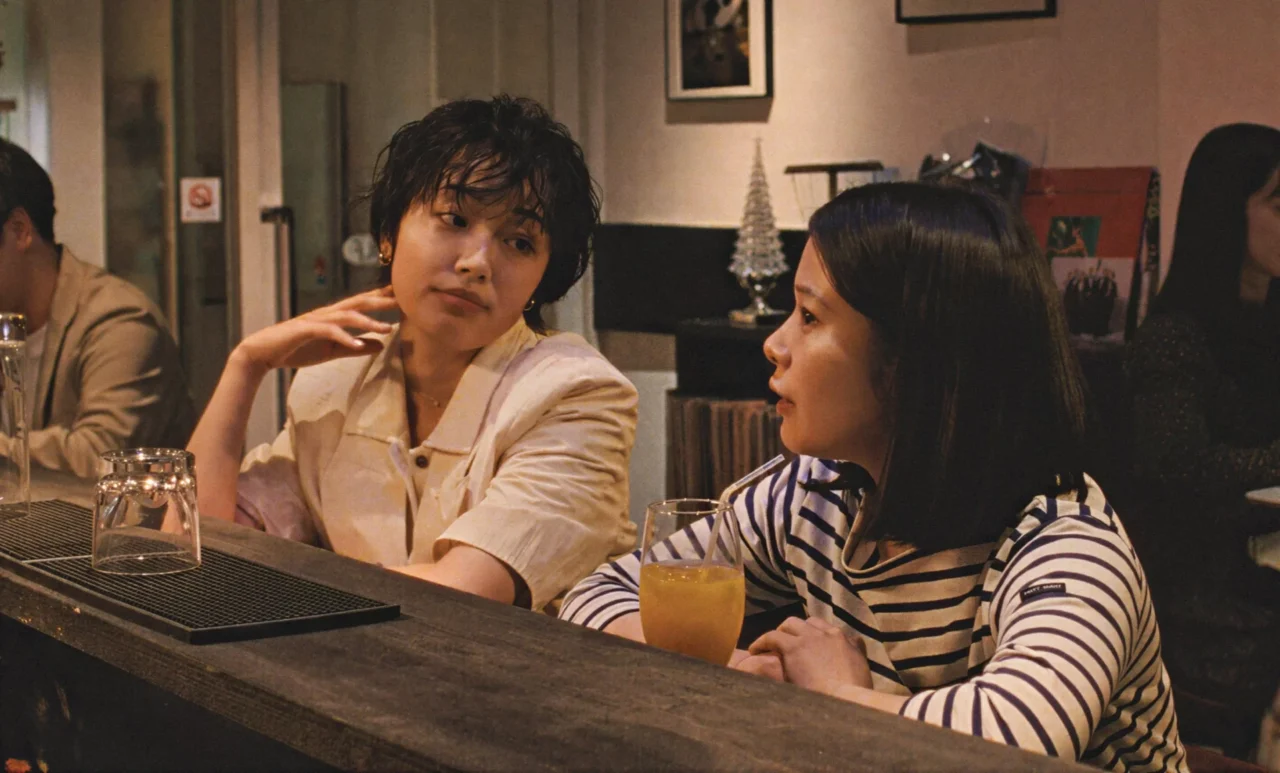
What makes their relationship feel like a particularly adult form of friendship is that it is not idealized as a bond in which two people understand everything about each other. Instead, they remain distinct individuals who nevertheless recognize each other’s pain.
Director Yukiko Sode also places particular emphasis on Hijiri’s role in Fuyuko’s gradual willingness to open herself up to others. All the Lovers in the Night is as much a story about discovering the irreplaceable value of friendship as it is about Fuyuko’s relationship with Mitsutsuka. Despite their seemingly opposite personalities, Fuyuko and Hijiri make mistakes and find ways to reconnect. Their evolving relationship offers a glimpse of what lies beyond Fuyuko’s fear of forming connections with other people.
INDEX
Light as Both Salvation and Pain in All the Lovers in the Night
At the Japan premiere of All the Lovers in the Night during the 39th Tokyo International Film Festival, Mieko Kawakami was asked how she felt about seeing her work adapted for the screen for the first time. She described the adaptation as a beautiful form of translation, reflecting on how the experiences and perspectives of everyone involved had helped bring the story toward the light.
In director Yukiko Sode’s cinematic interpretation, light, a central motif in the novel, is brought to life through striking cinematography. Kawakami’s prose captures light with extraordinary precision, almost down to its individual particles. The film translates this attention to detail into images rich in texture, warmth and color, while preserving the novel’s underlying stillness. Light takes many forms throughout the film, from streetlights and indoor lighting to sunlight filtering through the gaps of a taxi and the dawn sky viewed from a balcony.
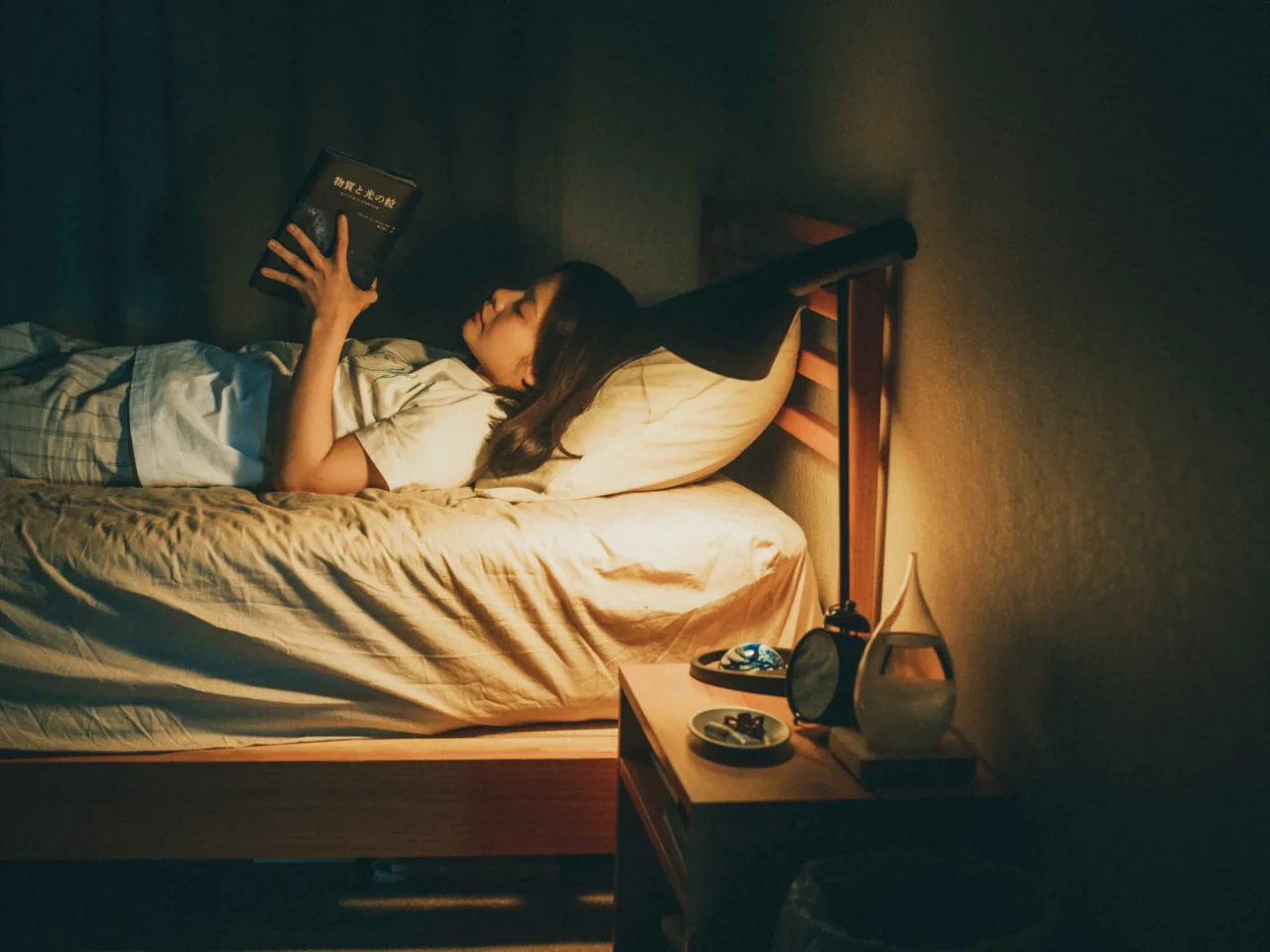
It is, in many ways, a film about light. Yet the images that linger are not necessarily bright or dazzling. Instead, they possess the delicacy of a single ray breaking through the darkness.
In an interview reflecting on her own writing, Kawakami once suggested that literature might belong to the realm of shadows and night, occasionally revealing flashes of light. All the Lovers in the Night embodies this idea, unfolding in the hours around midnight and offering a sense of companionship to those who feel isolated, as though the rest of the world has left them behind.
Fuyuko becomes fascinated by Mitsutsuka’s explanation of how the world is reduced by half at midnight, a phenomenon he relates to the nature of light. Gradually, the two begin exchanging thoughts about winter evenings and the lights of the city. In one scene, Fuyuko moves her hands back and forth, catching and reflecting the light. Having spent so long wandering through darkness, she seems, for a moment, to step into the spotlight and become the heroine of her own story.
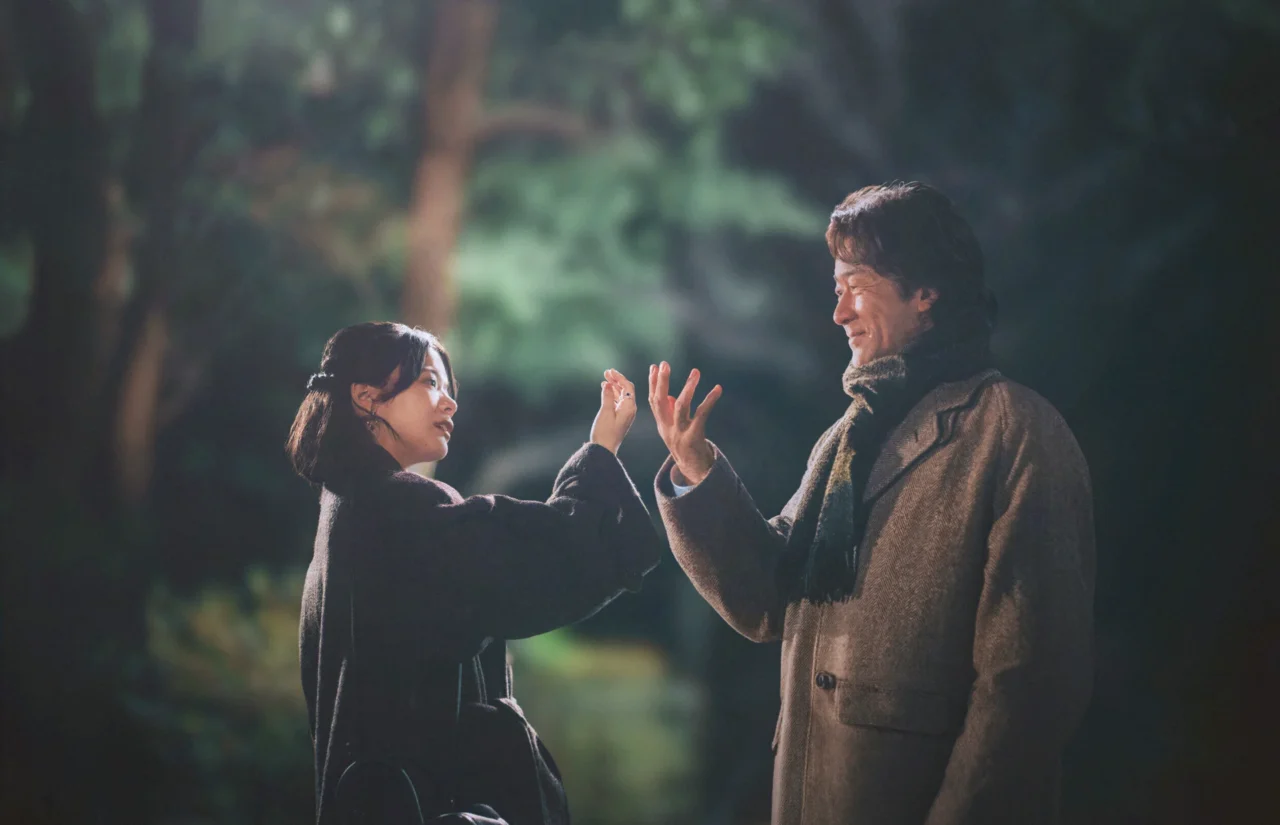
Fuyuko, who once could not drink even a drop of alcohol, gradually begins to rely on it. She seems to find comfort in the blurred boundaries between reality and her sense of self, becoming intoxicated by that uncertainty while projecting her growing emotions onto the dazzling light around her.
Mitsutsuka himself can also be seen as a source of light in Fuyuko’s life. Bathed in its beauty, she finds reassurance, excitement and a growing sense of emotional fulfillment. Yet light also illuminates things she would rather not see, reminding her of the pain and vulnerability that come with allowing another person into her life.
Throughout the film, light is portrayed as something that both saves Fuyuko and causes her pain, offering comfort while also exposing her to a harsh reality. Sode’s visual language captures these contrasting qualities with remarkable subtlety, giving each appearance of light its own emotional weight.