Few figures in modern Japanese pop culture inspired as much fascination, fear, and controversy as Kazuko Hosoki. To some, she was an all powerful fortune teller whose books sold in record breaking numbers and whose sharp tongued appearances dominated television throughout the 2000s. To others, she represented something far darker: a woman shadowed by allegations of organized crime ties, spiritual scams, extortion, and the murky world of “second wife business” schemes.
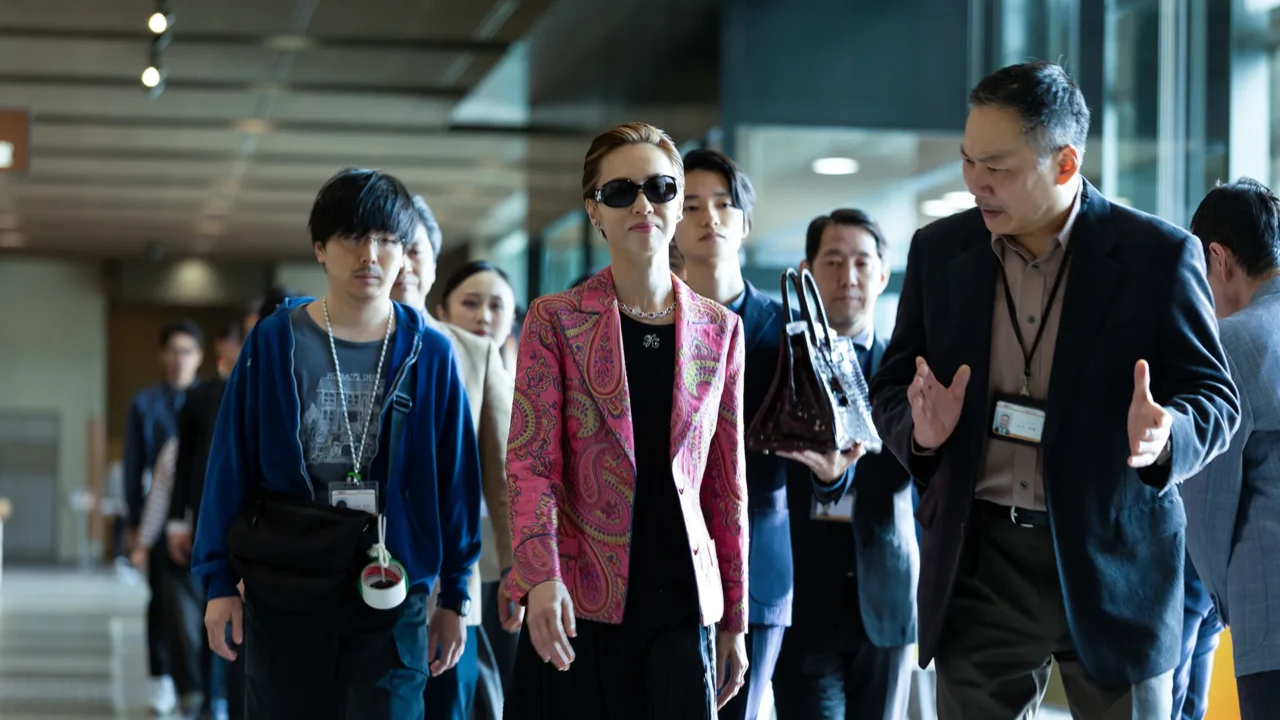
Now, that turbulent and deeply polarizing life has been transformed into drama in Netflix’s “Straight To Hell,” with Erika Toda taking on the role of Hosoki herself.
But beyond the tabloid headlines and larger than life persona, what kind of story does the series ultimately tell? We asked Kenichi Yasuda (Rock Manpitsu) to watch the series and respond freely in his own words.
Warning: This article contains spoilers for the drama series.
INDEX
Netflix’s signature blend of real life biography and true crime drama.
Netflix’s latest Japanese original series “Straight To Hell,” inspired by the life of Kazuko Hosoki (1938–2021), is the kind of show that practically demands to be binge watched. Clocking in at nine episodes averaging just over 53 minutes each, I ended up watching the entire thing in one sitting.
Over the years, Netflix has built a strong track record in Japan with dramatizations of larger than life real world figures, from “The Naked Director” to “The Queen of Villains.” At the same time, the platform has also leaned heavily into gritty crime stories rooted in reality, including “Tokyo Swindlers” and “The Forest of Love.” “Straight To Hell” essentially merges those two Netflix obsessions into one sprawling series.
Playing Hosoki is Erika Toda, whose casting alone signals the scale of the production. In fact, she even appeared as a special guest during Netflix’s exclusive broadcast of the Japan vs. Korea WBC game at Tokyo Dome on March 7, 2026, underscoring just how heavily the company was pushing the drama.
When people hear the name Kazuko Hosoki, what probably comes to mind are the imposing covers of her “Rokusei Senjutsu” fortune telling books stacked in bookstores, her brutally blunt remarks on variety television, or the endless scandals that seemed to follow her everywhere. Still, it has already been nearly two decades since her regular television appearances came to an end in 2008. In many ways, that distance in time is precisely what makes a dramatization like this possible.
At the same time, there is also a closing window for a project like “Straight To Hell” to resonate on an instinctive level. The title alone still immediately evokes Hosoki for a certain generation of viewers. But cultural memory does not last forever.
INDEX
Fortune Telling as a Mirror for Human Desire
I have never liked fortune telling to begin with. Episode five of “Straight To Hell” finally gave me the reason why, through a single line: “Fortune telling gives direction to people’s desires.” It is not really a question of belief or disbelief. More than anything, I simply do not want to step into spaces where people unknowingly expose their deepest wants. That, to me, is what RC Succession’s debut song “Takarakuji wa Kawanai” (“I Don’t Buy Lottery Tickets”) was really about.
In that sense, portraying Kazuko Hosoki ultimately becomes a way of portraying desire itself.
The series traces her rise from extreme poverty in the burned out ruins of postwar Tokyo, where she spent her childhood so hungry she would eat worms off the street. Desperate to escape that life, she found work at a cabaret club and quickly became its number one hostess, only to be betrayed by the manager to whom she had given her virginity, leading to a suicide attempt with rat poison. Reinventing herself once again, she launched a rice ball shop that became a success, then opened her own club in Ginza. She later married the heir to a prestigious family, but fled from a household obsessed with producing children to continue the bloodline. Returning yet again to Ginza, she opened another club that flourished amid the economic boom surrounding the Tokyo Olympics. As Japan surged through its era of rapid economic growth, Hosoki’s life repeatedly rose and collapsed, only to climb ever higher each time.
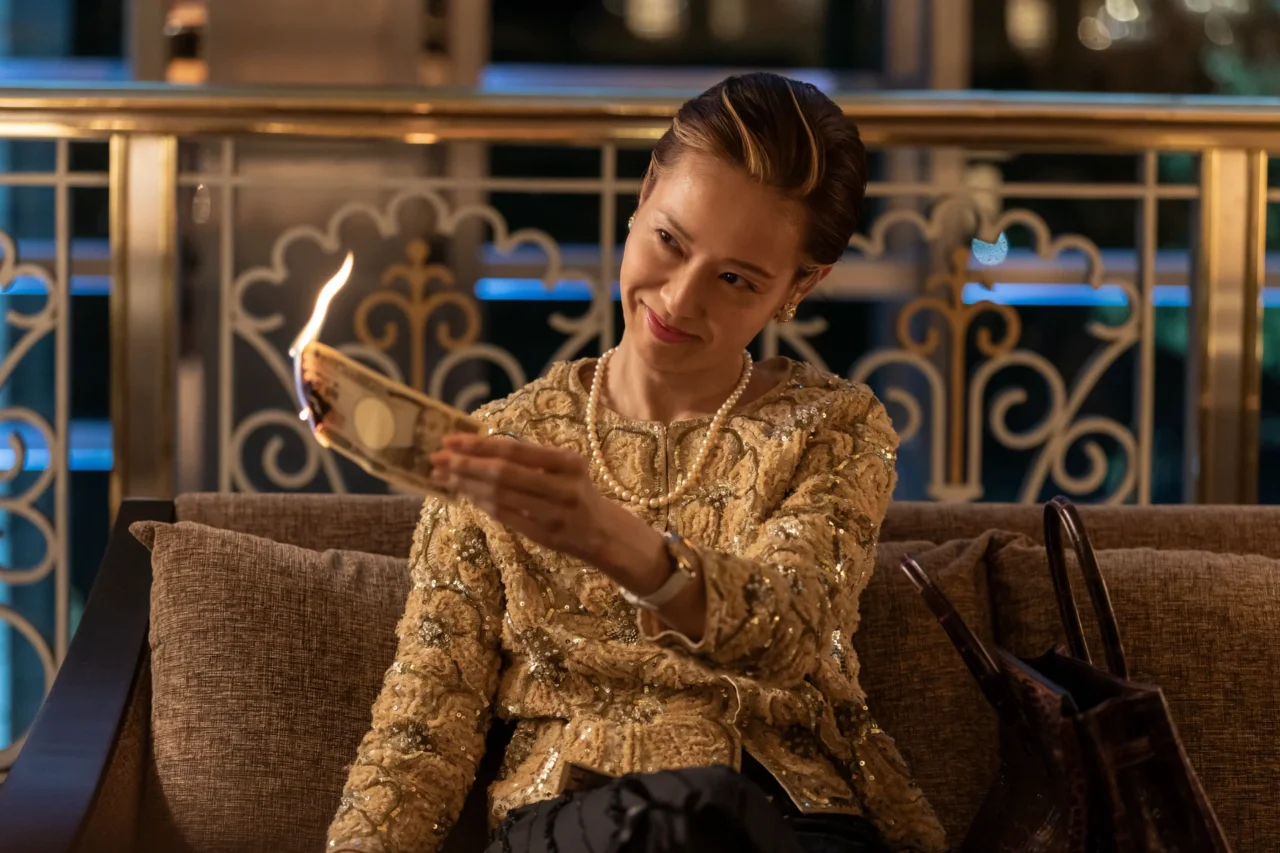
Netflix pours enormous resources into recreating each era in painstaking detail, from sprawling sets and location shoots to the costumes worn by every character on screen. Again and again, I found myself stunned by just how much money had clearly been spent on worlds that appear only briefly before disappearing into the next chapter of Hosoki’s life.
Much like how historical dramas became central to NHK’s long running taiga tradition, Netflix now seems increasingly committed to dramatizing modern Japan, especially the chaos and transformation of the postwar years. If the platform continues down this path, then stories on the scale of the Lockheed bribery scandals — or even larger dramas involving the tangled intersections of religion, money, and politics — will inevitably follow someday.
I suppose that means I need to stay alive long enough to watch them.
INDEX
Revisiting the Chiyoko Shimakura Scandal Through “Straight To Hell”
When I first heard Netflix was making a drama inspired by Kazuko Hosoki, the thing I was most curious about was how it would portray Chiyoko Shimakura.
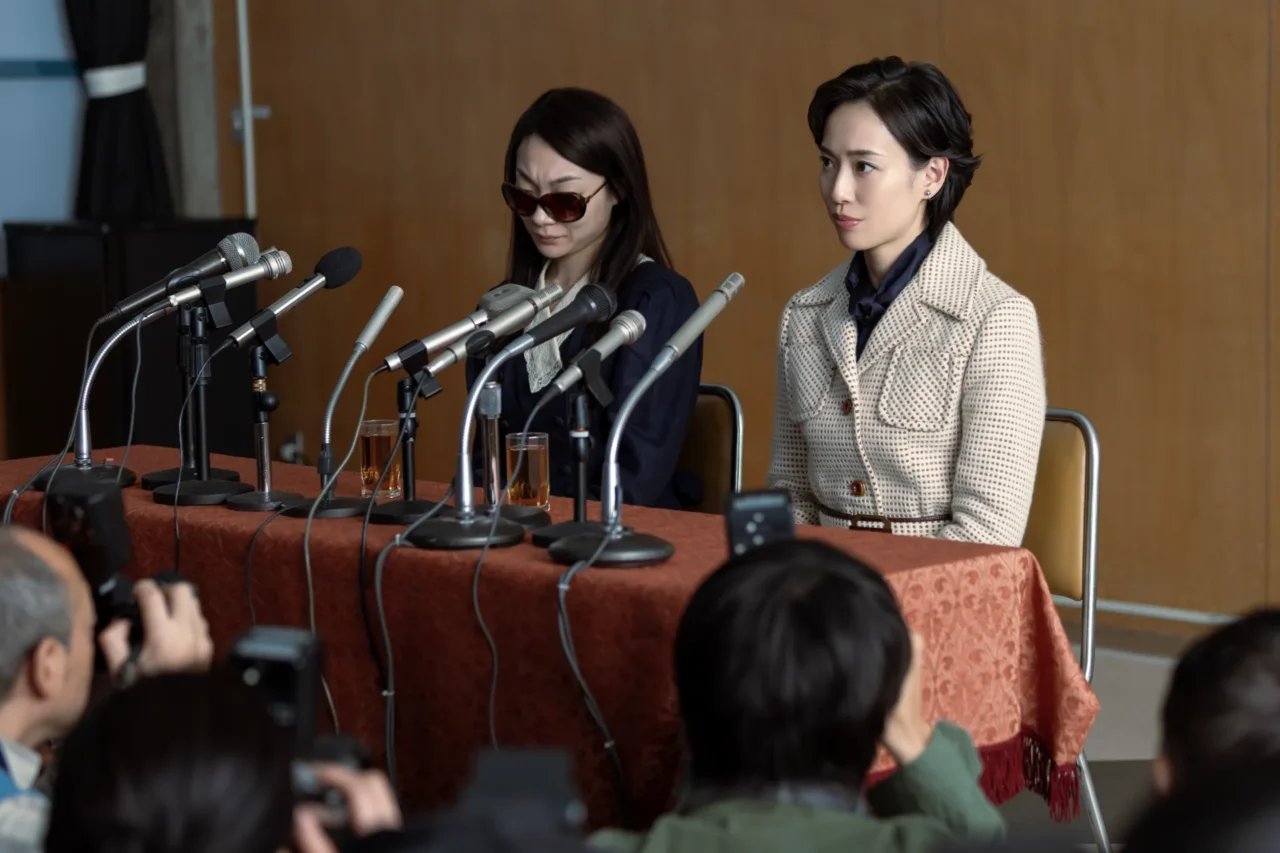
Hosoki played a major role in Shimakura’s comeback after the singer was left carrying debts reportedly exceeding 400 million yen in 1975. Depending on who you ask, she was either the woman who saved Shimakura’s life and career or someone who exploited the beloved enka star for her own gain. “Straight To Hell” understands the weight of that contradiction and confronts it directly.
Shimakura finally appears toward the end of episode six, and from there, the series noticeably shifts gears. The story suddenly becomes richer, stranger, and far more emotionally gripping. In many ways, this feels like the true climax of the drama.
Toko Miura is outstanding as Shimakura, capturing her gentle speaking voice and fragile warmth with remarkable precision. The fact that Miura can sing herself gives the scenes even greater power. “Jinsei Iroiro,” especially its unforgettable opening line “Sometimes I think I’d rather die,” and “Ai no Sazanami,” with the lyric “If there truly is a god in this world” — both written by Kuranosuke Hamaguchi — become deeply intertwined with the emotional core of the series.
Oldies pop songs are used deliberately throughout “Straight To Hell,” almost as emotional signposts marking each passing era. It also leaves me wondering what kind of music Kazuko Hosoki herself actually loved. Even the name “ENKA,” given to the massive entertainment complex built to rival Akasaka’s legendary New Latin Quarter, feels loaded with intention. You cannot help but wonder what the screenwriters were trying to suggest through that choice alone.
One particularly striking scene comes early on, when the manager of the cabaret where Hosoki first works lies in bed after sex reading Anna Karenina. Hosoki grabs the book and asks, “What’s it about?” The man replies, “In simple terms? A story about an upper class woman falling into hell.”
I have never actually read it myself, but hearing that explanation made me think: so it is basically a bit like Like a Rolling Stone by Bob Dylan. In that sense, “Straight To Hell” almost feels like a story running in reverse against “Anna Karenina.”
And then there is the sound of the title itself. Whenever I hear “Anna Karenina,” my brain automatically transforms it into something that sounds oddly like an enka lyric: “Anna…” as in the opening line of Mou Ichido Aitai by Aki Yashiro. Maybe that is just where my mind goes.