Solitary Gourmet Season 11 has reached its final episode, marking the series’ first full television season in about three and a half years, following Season 10 in October 2022.
The premise could hardly be simpler: Goro Inogashira, played by Yutaka Matsushige, eats alone and looks perfectly happy doing it. Yet that simplicity is precisely what made the series resonate far beyond Japan. It reframed eating alone not as loneliness, but as a moment of freedom, pleasure, and complete absorption in food.
In recent years, the show’s New Year’s Eve specials have become something of an annual tradition. But the joy of discovering a new neighborhood and a new restaurant each week belongs to the weekly drama format. Even now, roughly 14 years after Season 1, the series continues to lead viewers to places such as Kamiida, Hasuda, and Yokoshibahikari, locations that are neither famous destinations nor obvious tourist spots, but feel perfectly chosen.
Please note: this article contains discussion of the series’ content.
INDEX
The Recipe for Staying Fresh
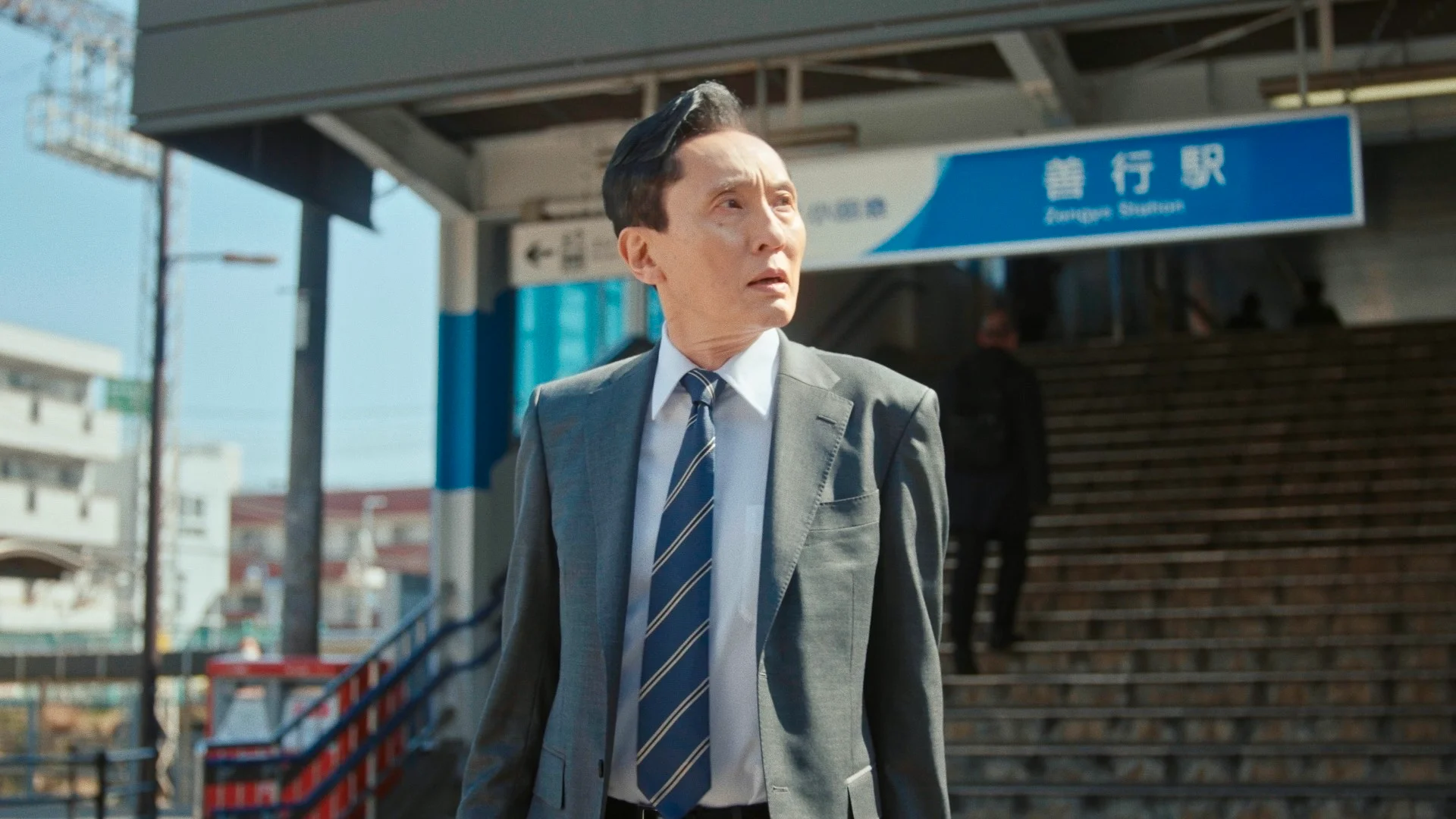
Solitary Gourmet Season 11 concluded after another memorable run. Based on the manga by Masayuki Kusumi and Jiro Taniguchi, the television adaptation had reached its 14th year since premiering in 2012. In 2025, Yutaka Matsushige, who has starred in the series since its debut, also stepped behind the camera, writing and directing The Solitary Gourmet, the franchise’s first feature film. Having earned acclaim well beyond Japan, including a television award in South Korea, Solitary Gourmet has become one of the defining food dramas of its generation. Rather than settling into a familiar formula, each new season has continued to refine and expand what makes the series so distinctive.
What, then, has allowed Solitary Gourmet to remain so compelling for 14 years?
INDEX
The Joy of an Unexpected Detour
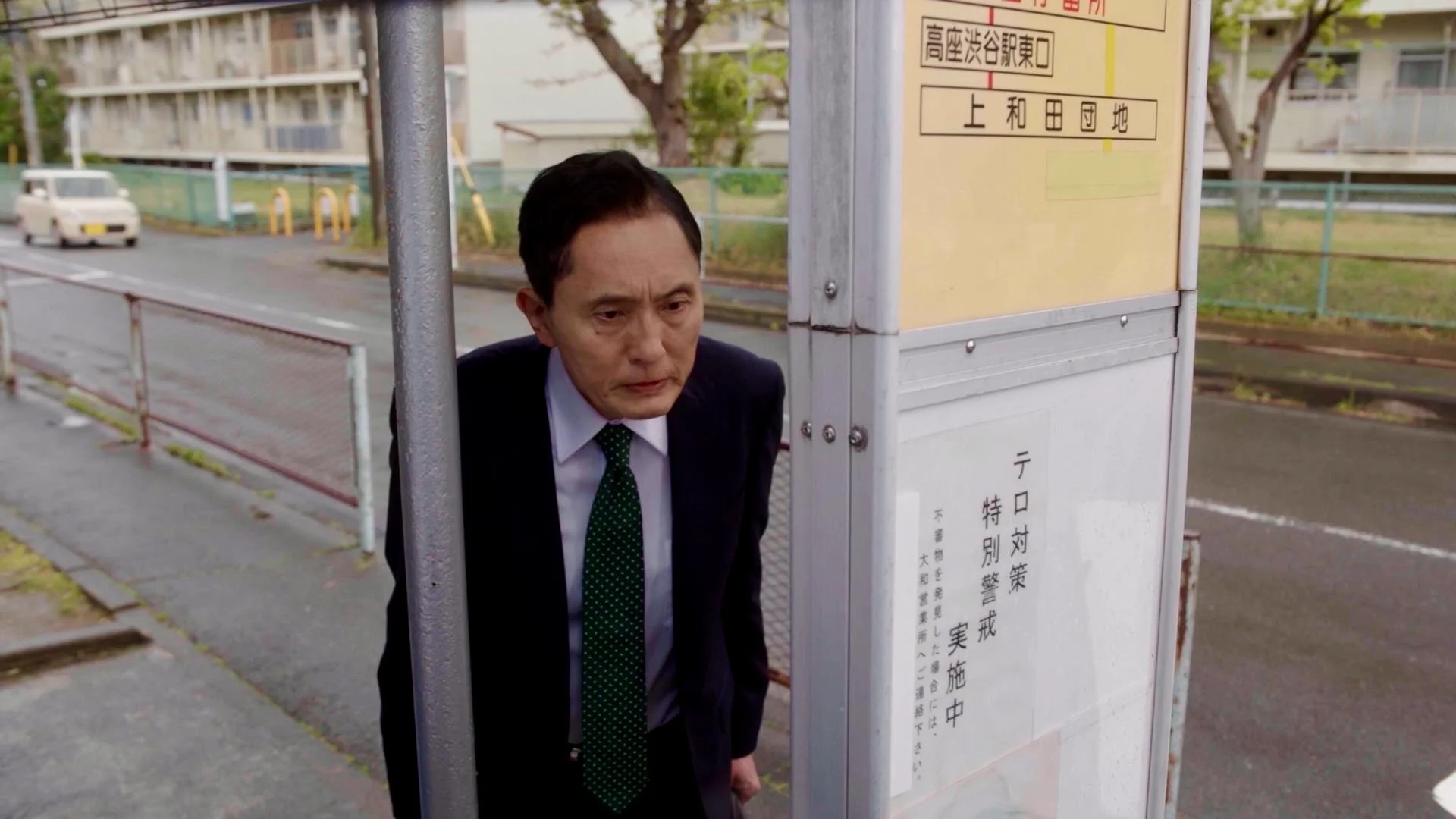
Late in Episode 5, set in Kamiida, a quiet residential neighborhood on the outskirts of Yokohama that most visitors would never think to explore, protagonist Goro Inogashira, played by Yutaka Matsushige, leaves the Vietnamese restaurant Tan Ha after enjoying what he describes as “an unexpected trip abroad.” He glances at his watch, heads to the bus stop, boards the bus, and quietly drifts off to sleep as the episode comes to a close. It’s a simple ending, but one that lingered with me.
Earlier, Goro had planned to head straight home after wrapping up a business meeting with a father and son. At the bus stop, however, he discovered that the next bus would not arrive for another hour. With an hour to spare, Goro does what many of us secretly hope for when we find ourselves somewhere unfamiliar: he sets off in search of a great local meal, eventually stumbling upon Tan Ha.
Few series capture the quiet thrill of dining alone quite like Solitary Gourmet. The simple act of filling an unexpected hour becomes a small culinary adventure, one made all the more satisfying because time is limited. As always, the show pairs irresistibly delicious food, in this case, wonderfully tempting Vietnamese dishes, with the excitement of discovering an unfamiliar place on your own.
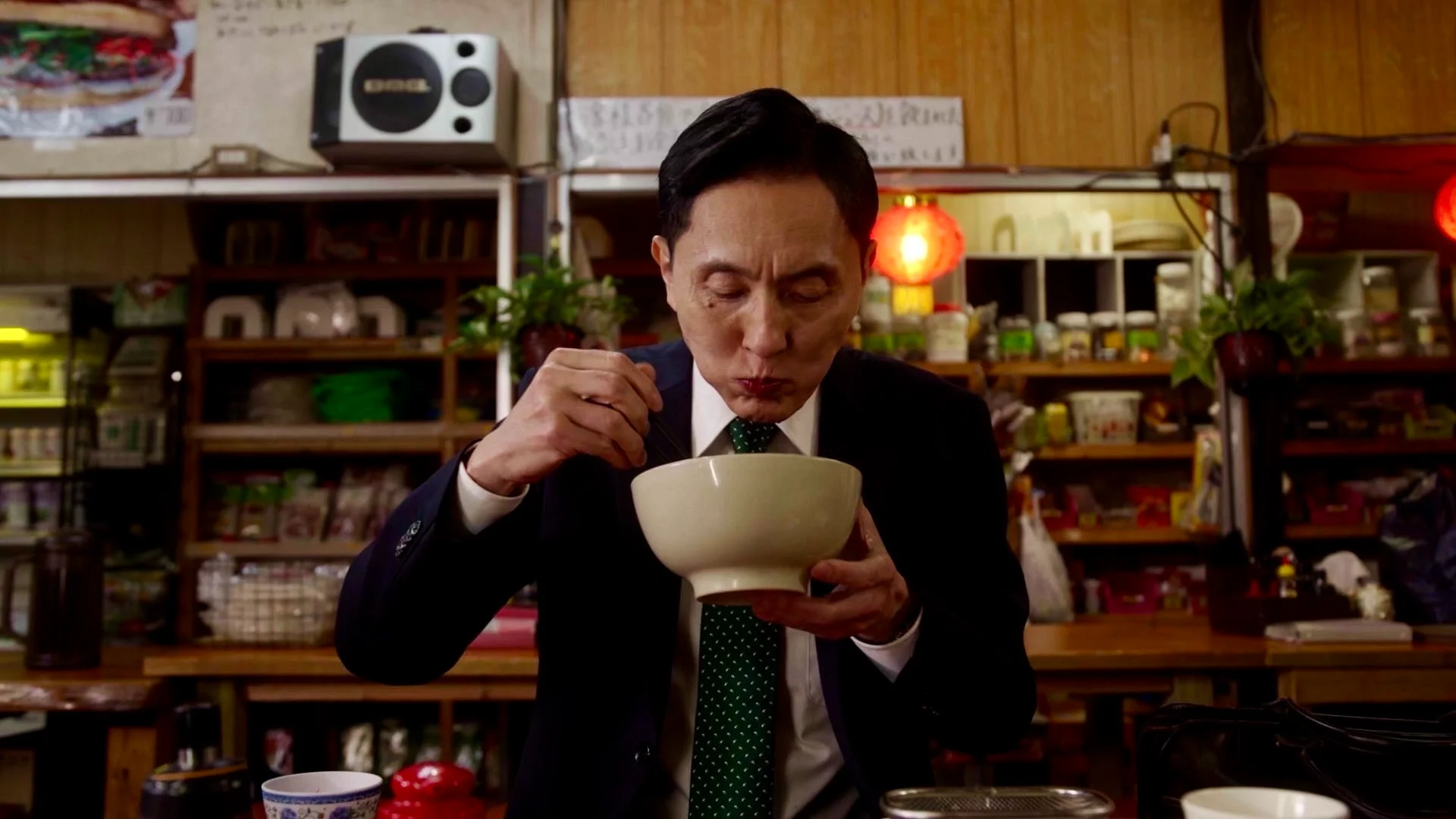
Inside the restaurant, Goro embraces every unfamiliar experience, savoring dishes such as bún thịt nướng, a Vietnamese mixed noodle dish, while taking in the warm, distinctly Vietnamese atmosphere. Before leaving, he watches the regulars chatting in Vietnamese with the owner, played by Chika Uchida, and imagines the lives they return to once they step outside.
By the time he falls asleep on the bus, he looks like someone who has happily exhausted himself after a day of exploring. It’s a quietly beautiful moment, one that leaves you wishing you could set off on a similar adventure yourself. That, perhaps, is one of Solitary Gourmet‘s greatest achievements. It doesn’t just depict the pleasures of dining alone. It inspires people to go out and create their own.
INDEX
A Journey Through Everyday Japan
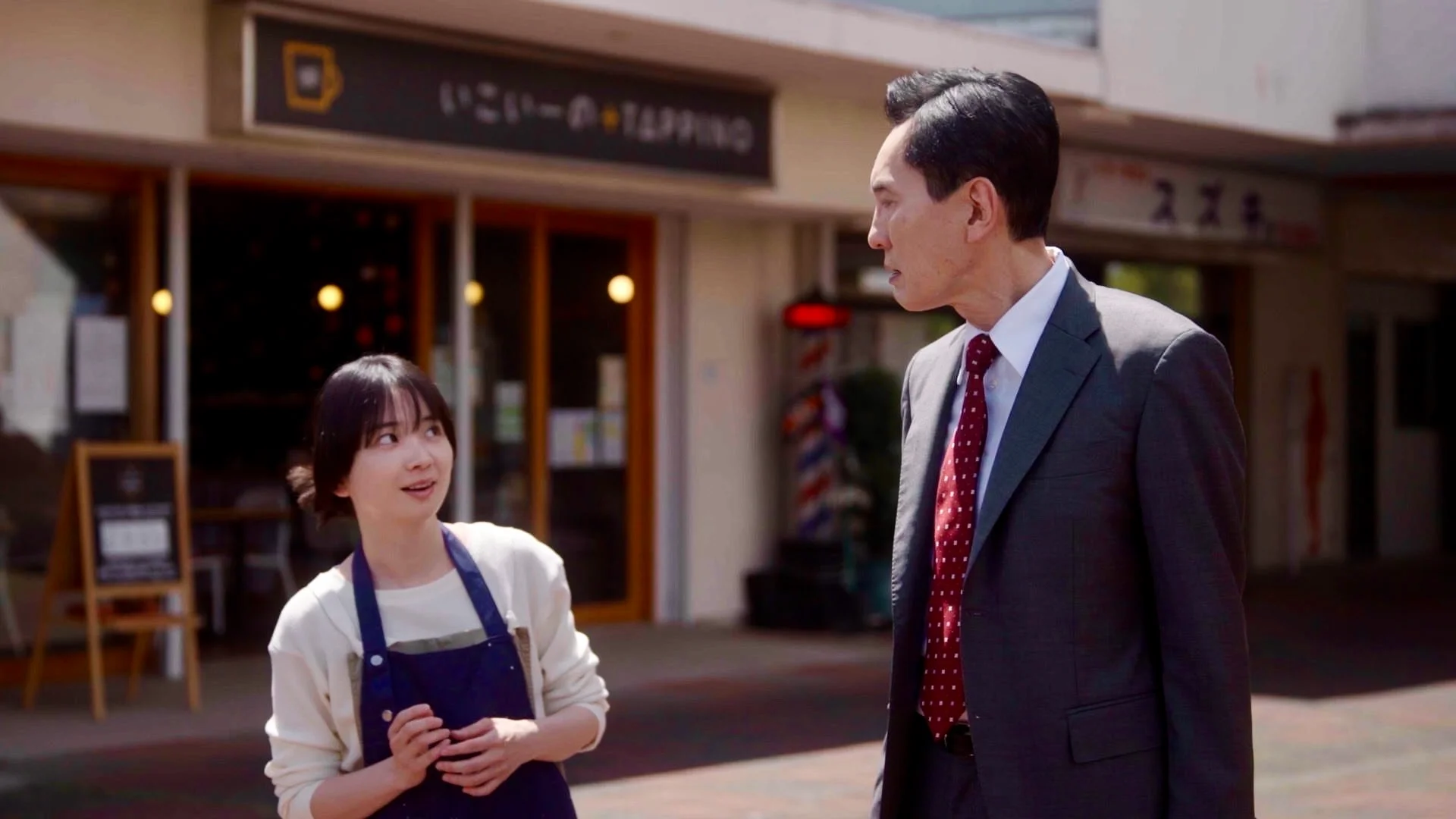
More than a drama about food, Solitary Gourmet is also a drama about travel. Through Goro’s journeys, viewers are introduced to neighborhoods they might never otherwise visit and to the local restaurants cherished by the people who live there. The opening portion of each episode, in which Goro, an importer of miscellaneous goods, travels for work to make deliveries or source products, does more than simply build anticipation until he gets hungry. It also serves as an introduction to the places he visits.
Episode 9, “Liver Steak Set Meal in Toride, Ibaraki,” opens with Goro being shown around a shared artists’ studio in a public housing complex by office worker and wood sculptor Miki Ito, played by Momoko Fukuchi. In just a few scenes, the episode captures Toride’s identity as a city with a thriving arts community.
Likewise, Episode 2, “Tandoori Chicken and Mutton Masala in Nishi Azabu, Tokyo,” paints a different picture of one of Tokyo’s most fashionable neighborhoods. Through Goro’s meeting with Yoshikazu Waga, the warm hearted owner of a local electronics shop, played by Akio Kaneda, and the sight of neighborhood residents chatting together as he walks home after work, the episode reveals the ordinary rhythms of daily life that exist beneath Nishi Azabu’s glamorous reputation.
INDEX
Where Fiction Meets Reality
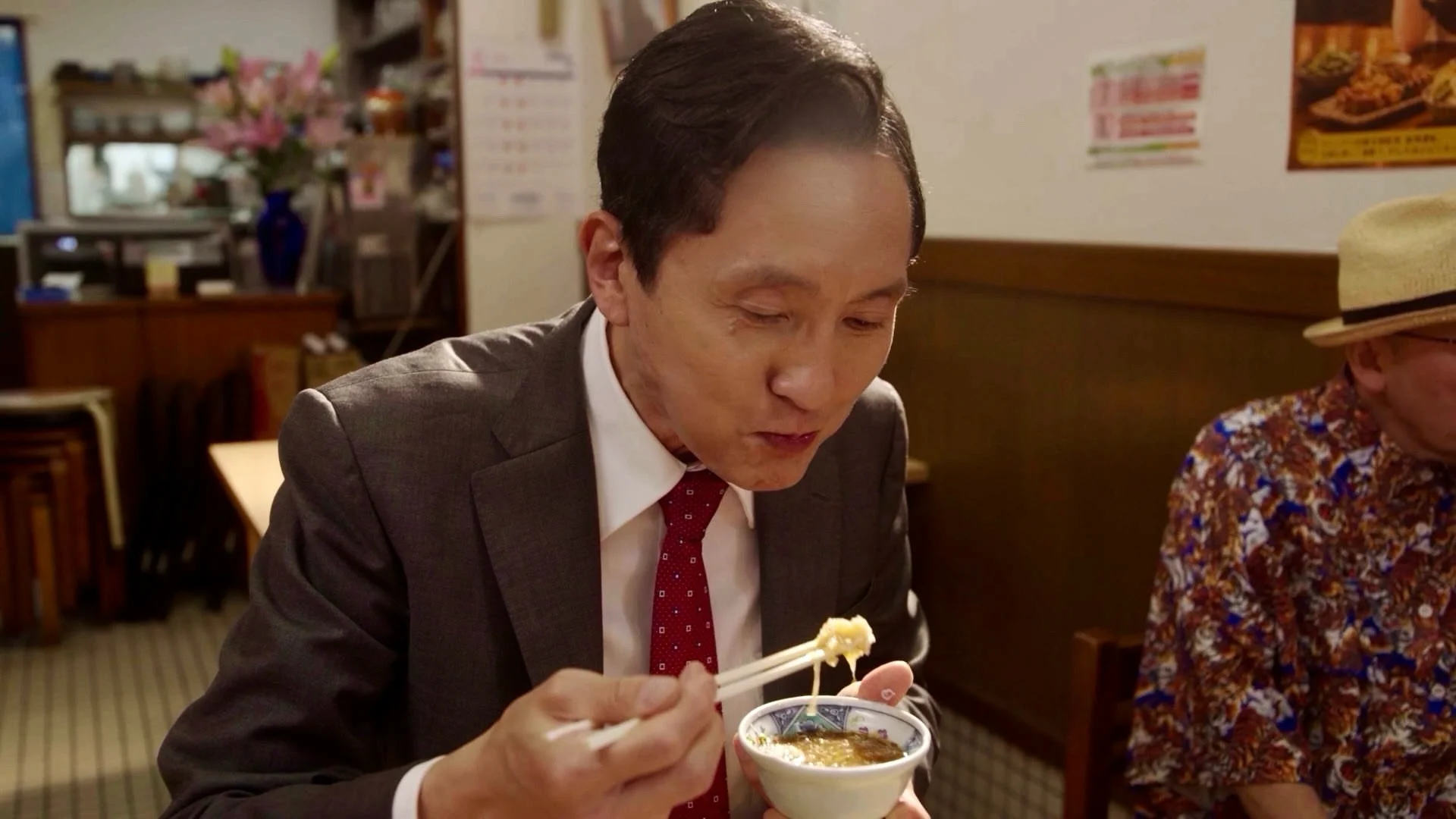
Each episode is followed by Furatto QUSUMI, a short segment in which the manga’s original creator, Masayuki Kusumi, visits the real restaurant that inspired the episode. If the drama is about Goro’s experience, Furatto QUSUMI shifts the spotlight to the restaurant itself.
In the segment following Episode 3, “Spicy Stir Fried Fermented Vegetables with Lamb Shoulder and Pork Belly with Garlic Cucumber Sauce in Sengoku, Tokyo,” Kusumi jokingly tells the young son of the family who runs Sichuan Home Style Cuisine Nakahora, “You’re basically the star of this segment.” The remark neatly sums up what Furatto QUSUMI is all about. Its real protagonist is the restaurant and the people behind it.
The segment also serves another purpose. While Goro is famously written as someone who does not drink alcohol, Kusumi happily samples dishes that pair well with beer or sake, introducing a different side of each restaurant’s menu.
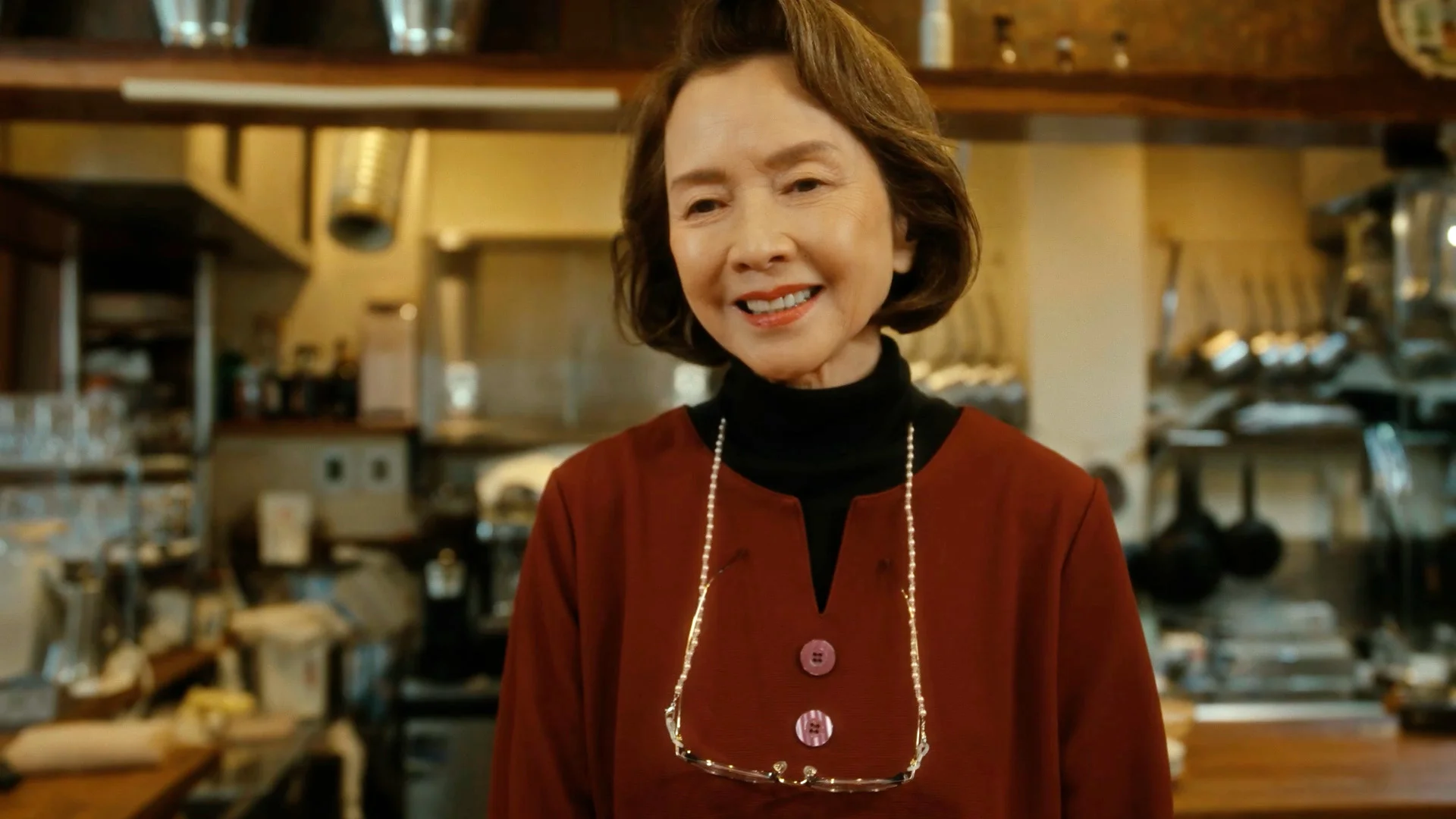
One of the pleasures of Furatto QUSUMI is seeing just how closely the series draws from the real people behind these restaurants. Meeting the owners reveals where many of the performances come from, from the calm, elegant manner of the Italian chef who inspired Hiromi Takigawa’s character in Episode 4, “Bagna Cauda and Spleen Panini in Hon Atsugi, Kanagawa,” to the infectious warmth of the ramen shop owner whose personality shines through Mayumi Sato’s performance in Episode 8, “Taiwanese Ramen and Boiled Dumplings in Hasuda, Saitama.”
More than anything, though, Solitary Gourmet owes its authenticity to the restaurants themselves. Rather than recreating locations on a set, the series films inside the actual establishments that inspired each episode, serving the real dishes prepared by the people who make them. The result is something that exists somewhere between scripted drama and food travel documentary. Episode 6, “Thin Sliced Pork Teppanyaki in Ikejiri Ohashi, Tokyo,” is a perfect example. The restaurant’s owner, Miyako, appears as herself and personally grills the pork for Goro, a moment that captures the warmth and authenticity that have always set the series apart.
INDEX
A Table for One, Never Truly Alone
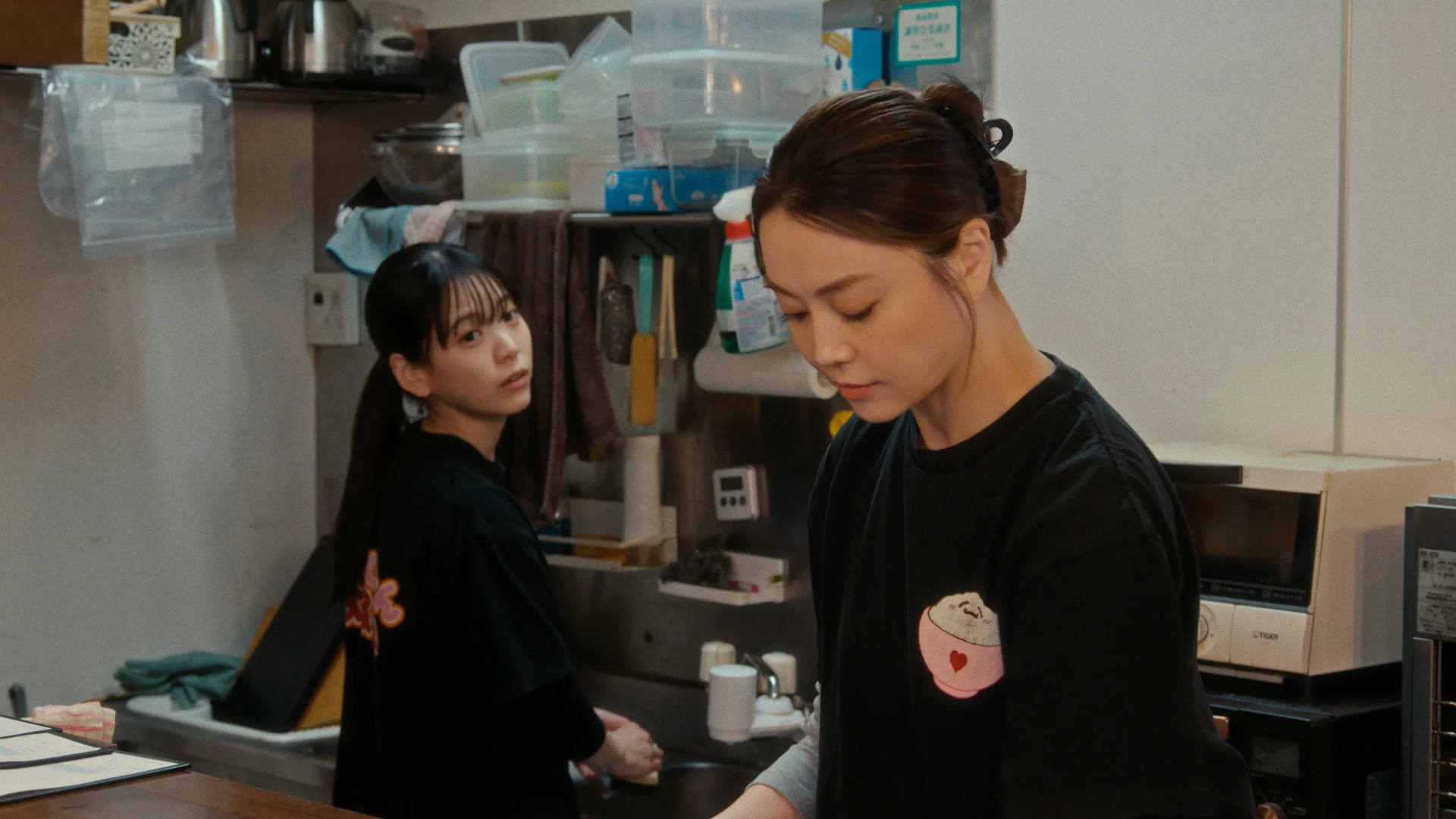
The series also has a quiet gift for revealing the lives behind each restaurant. In Episode 1, “Mackerel Mirin and Pork Miso Soup in Zengyo, Fujisawa,” the easy, familiar exchanges between the mother and daughter who run the diner Harune, played by Alisa Mizuki and Tomo Nakai, capture a family dynamic that feels impossible to fake. Episode 4 offers a different kind of intimacy, centering on an Italian restaurant owner whose late husband’s final creation was a spleen panini, while his portrait watches over the dining room. Without ever drawing too much attention to itself, Solitary Gourmet gently weaves each restaurant’s history and the people who keep it alive into every meal.
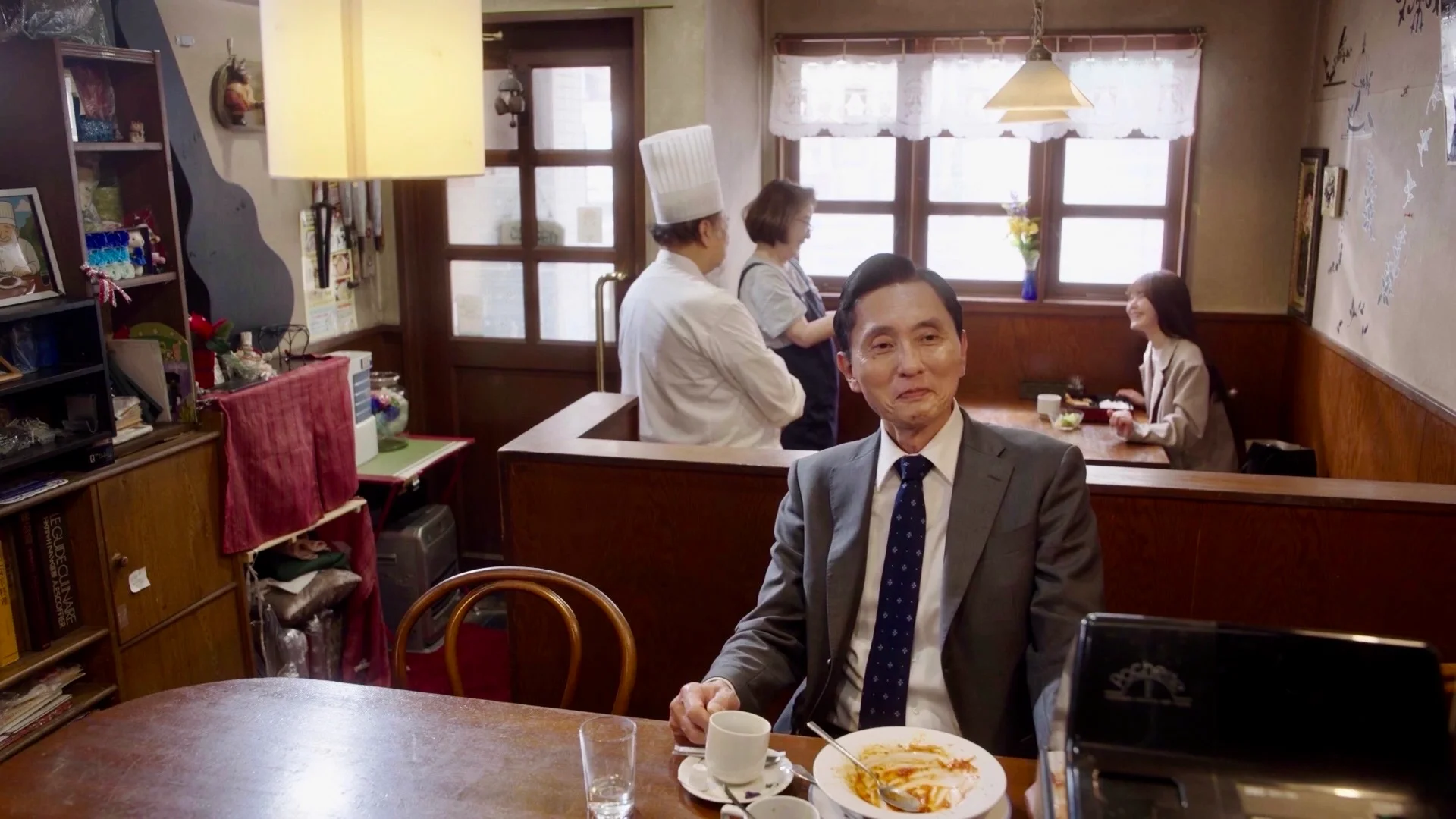
Another quiet pleasure of Solitary Gourmet is eavesdropping alongside Goro.
Near the end of Episode 7, “Swordfish Meunière with Creamed Spinach in Higashi Jujo, Tokyo,” Goro finishes his meal while listening to the restaurant’s owner, played by Kayoko Kishimoto, and the chef, appearing as himself, laugh with a regular customer about an apron and coffee cup they had received from another longtime patron. He leaves the restaurant wearing the contented smile of someone who has briefly shared in a moment that wasn’t meant for him.
A similar moment comes in Episode 9, “Liver Steak Set Meal in Toride, Ibaraki,” where Goro quietly slips in an extra order after hearing the easy shorthand between the owner, played by Tomoko Fujita, and her regulars. A simple “the usual” or “in a bowl” is enough for everyone to understand each other, and Goro delights in becoming part of that rhythm, if only for a moment.
These small moments feel unique to dining alone. When we eat with friends, our attention naturally stays at our own table. But alone, we become more aware of the conversations around us. Solitary dining can seem lonely, yet Solitary Gourmet suggests the opposite. Even without speaking, Goro becomes part of a fleeting gathering made up of the restaurant’s staff and customers.
Those exchanges also carry the weight of time. In the Furatto QUSUMI segment following Episode 9, Kusumi introduces a customer who has been eating the restaurant’s yakisoba for nearly sixty years. Goro, however, can never become that kind of regular. His journey is built on chance encounters, dropping into a restaurant he happens to find while traveling for work before moving on to the next town. Perhaps that is why he watches these relationships with such quiet admiration. He never intrudes, choosing instead to observe the lives that unfold around him through the restaurants they have made their own. That gentle curiosity is one of Goro’s most endearing qualities.
INDEX
The Freedom to Eat Your Own Way
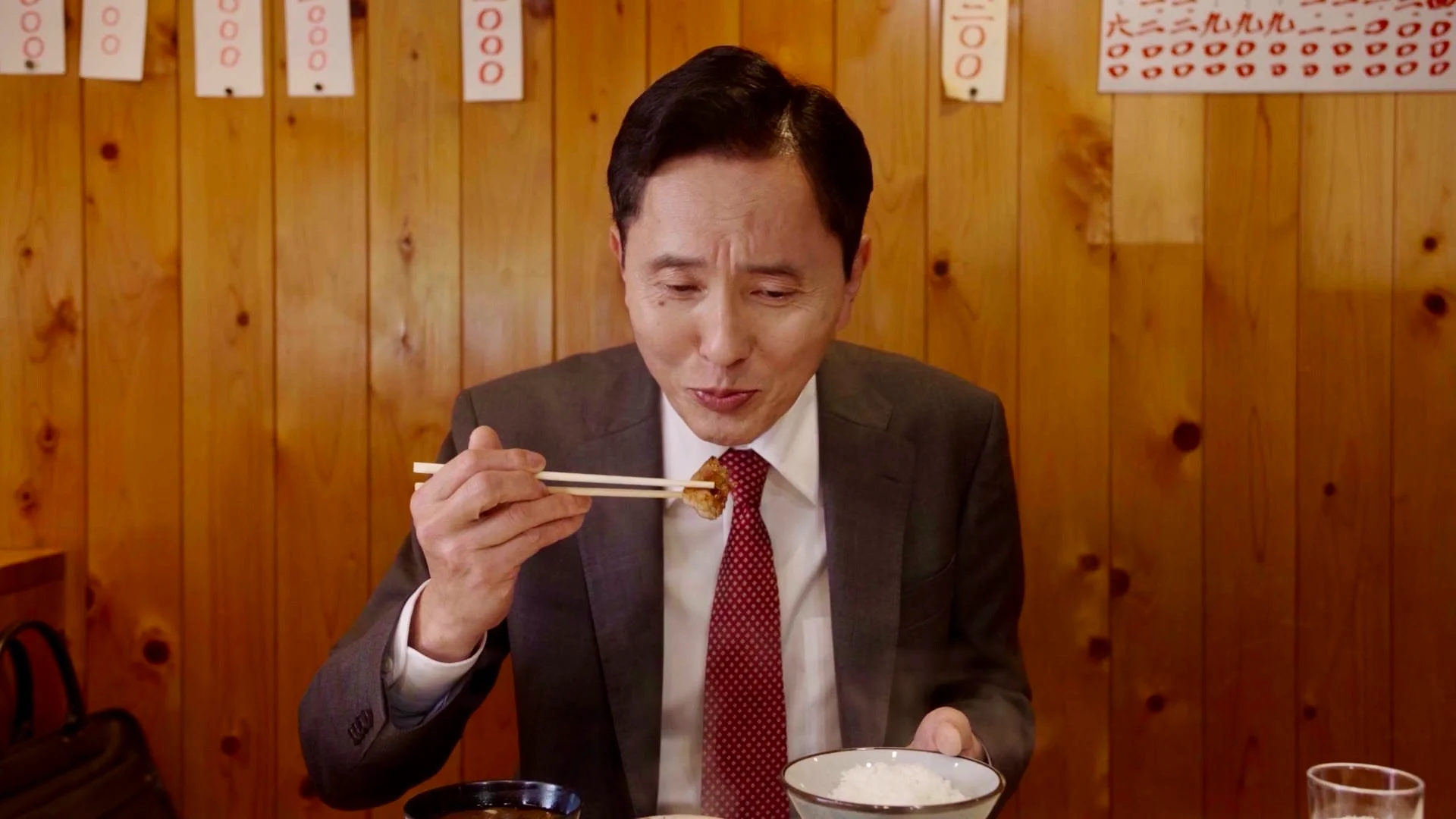
JAs the narration in the opening sequence puts it, “When faced with good food, he becomes selfish for a little while. He becomes free.”
Nowhere is that freedom more apparent than in the final moments of Goro’s meals. He mixes the dishes he has ordered into his own improvised rice bowl, spoons rice into the last of a cream sauce so none of it goes to waste, or discovers unexpected combinations, like pairing fried white eggplant with curry. Accompanied at times by an exuberant score, these small acts of improvisation become celebrations of eating on one’s own terms. It’s easy to see why audiences continue to find them so irresistible.
In Solitary Gourmet, freedom is inseparable from happiness. Near the end of Episode 6, after finishing his teppanyaki meal, Goro reflects, “No matter how much the world changes, as long as places like this continue to exist, there’s still hope for us. Tomorrow will bring something good. And another great meal is waiting.”
Perhaps that’s why Solitary Gourmet continues to feel so essential. It isn’t just about food. It’s about the quiet freedom of discovering a place, a meal, and a moment entirely on your own.
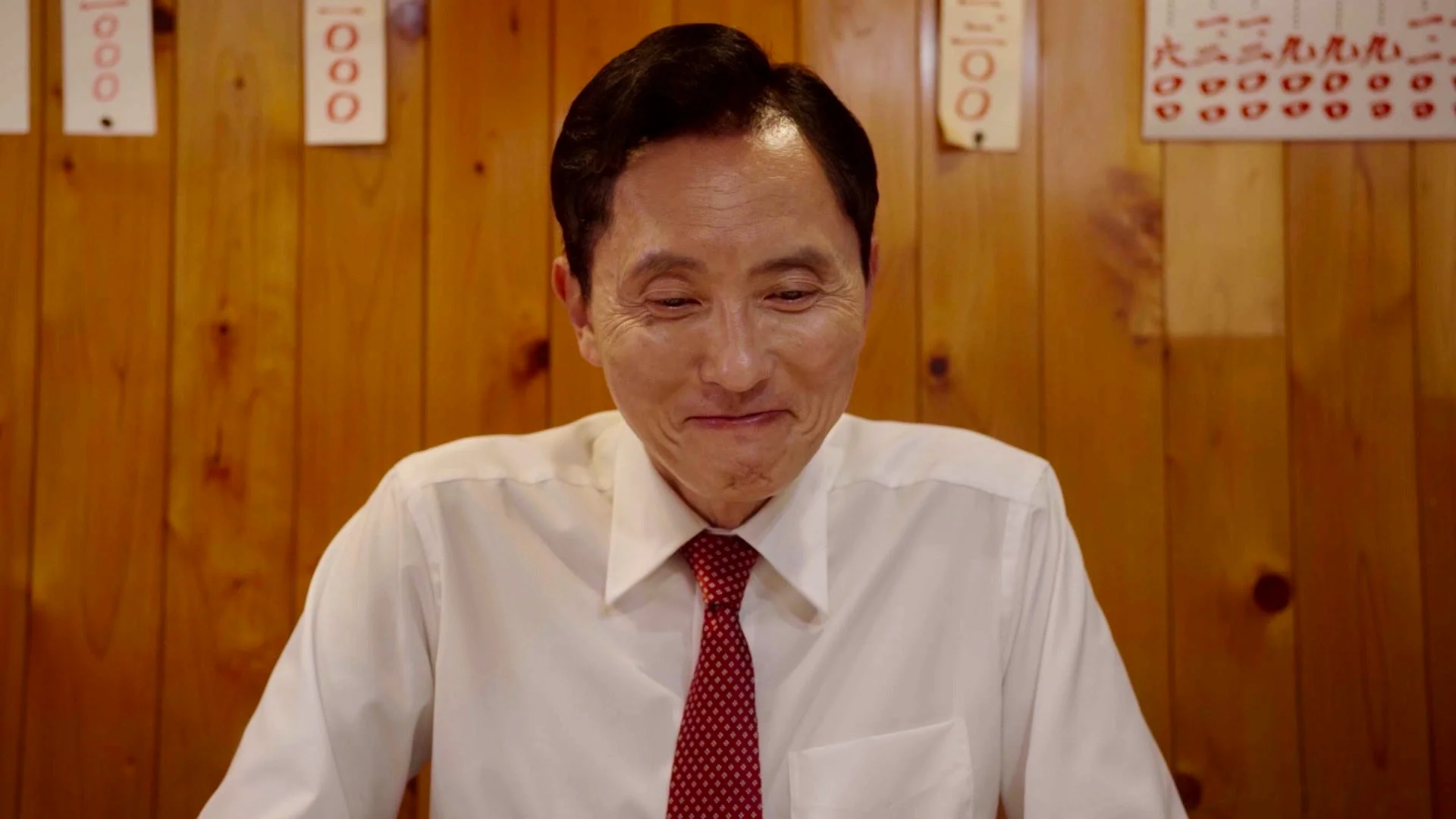
Solitary Gourmet Season 11
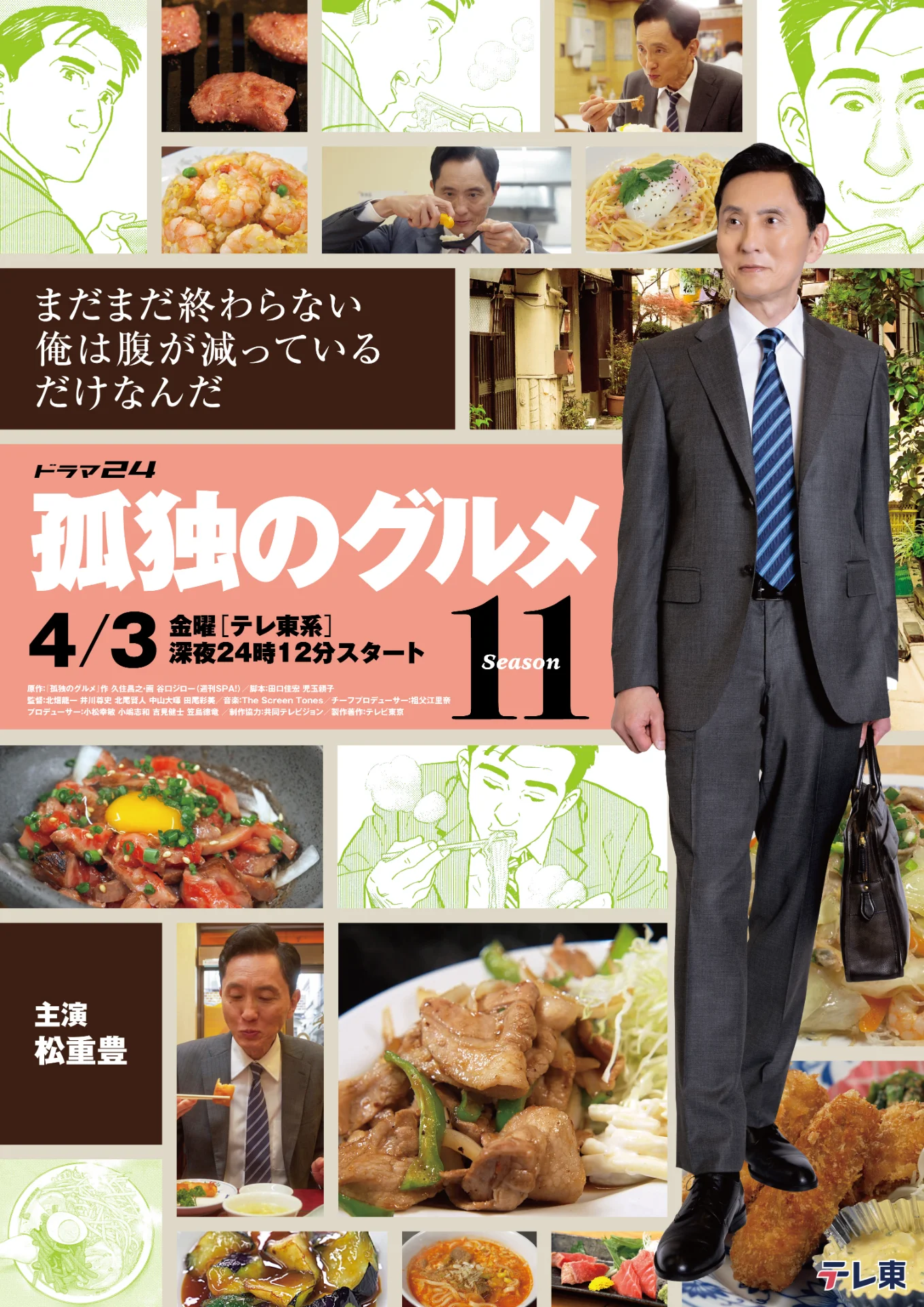
Official Website: https://www.tv-tokyo.co.jp/kodokunogurume11/