INDEX
Holding the Gaze on What Feels Unsettling, and Choosing to Capture It Through Photography
In addition to the works shot at the dacha, there are also many images taken in the city or in people’s homes.
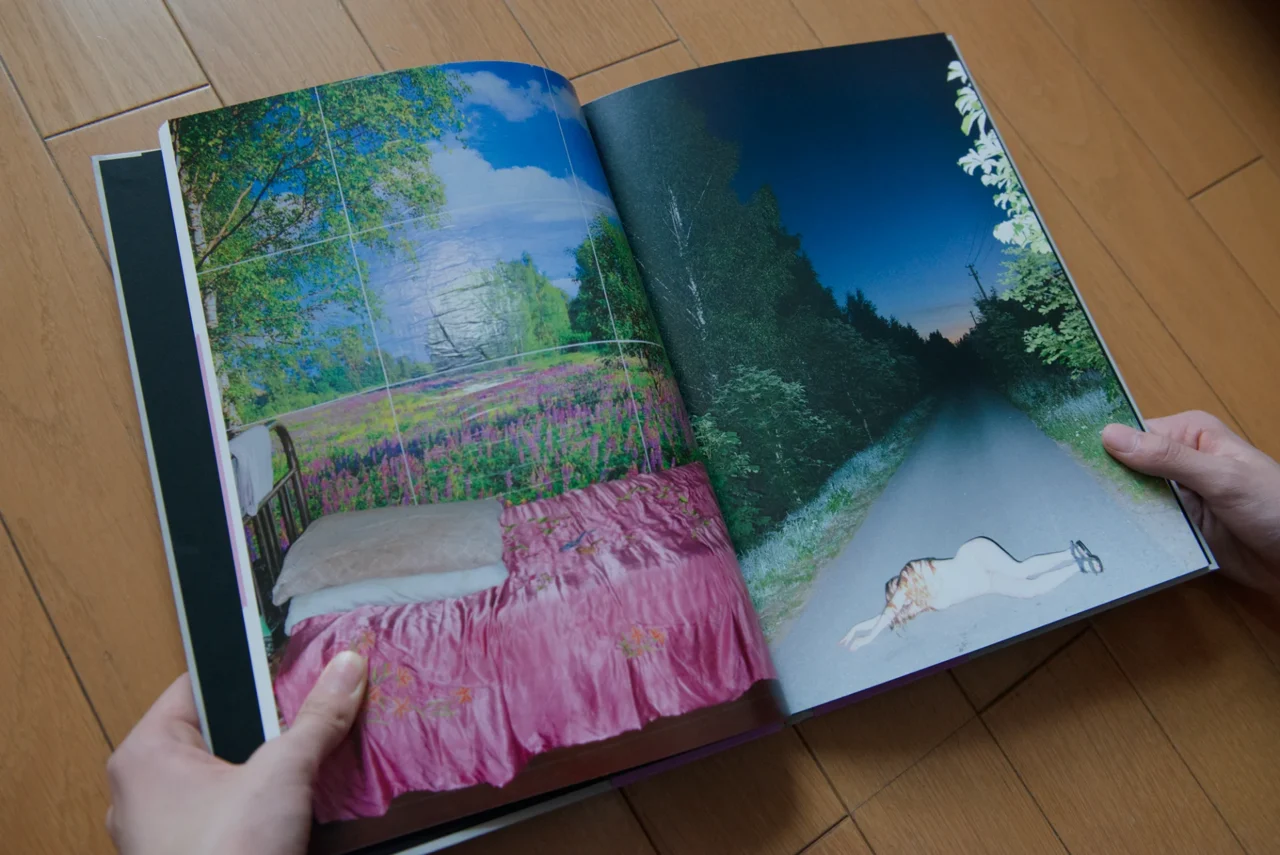
Kristina: In general, I rarely cast models or stage scenes specifically for a work. Even with the photos taken at the dacha, I do not intentionally construct situations or choose locations in advance.
For example, this image is a self portrait. I was walking with a friend when we were at the dacha, and suddenly I had this image of myself lying on that road. So I spontaneously took off my clothes and shot it. [laughs].
Kristina: I am often asked by people I know to photograph them, and when I go to their place, we talk together about what kind of images we want to create. That was also the case with this man. I photographed him in his apartment.
He is a photographer himself, but during the pandemic, his wife took her own life. He reached out to me because he wanted to create something as a way to begin moving forward again.
The boxes on the floor are from a Russian online shopping platform called Ozon, something like Amazon. During the pandemic, his wife became overwhelmed by the fear that she would no longer be able to buy things or even access food, and she fell into a kind of panic that led her to compulsively shop online.
While we were talking about all of this, he brought out a costume he uses during sex and asked me to photograph him wearing it. In a way, you could say the work emerged unintentionally.
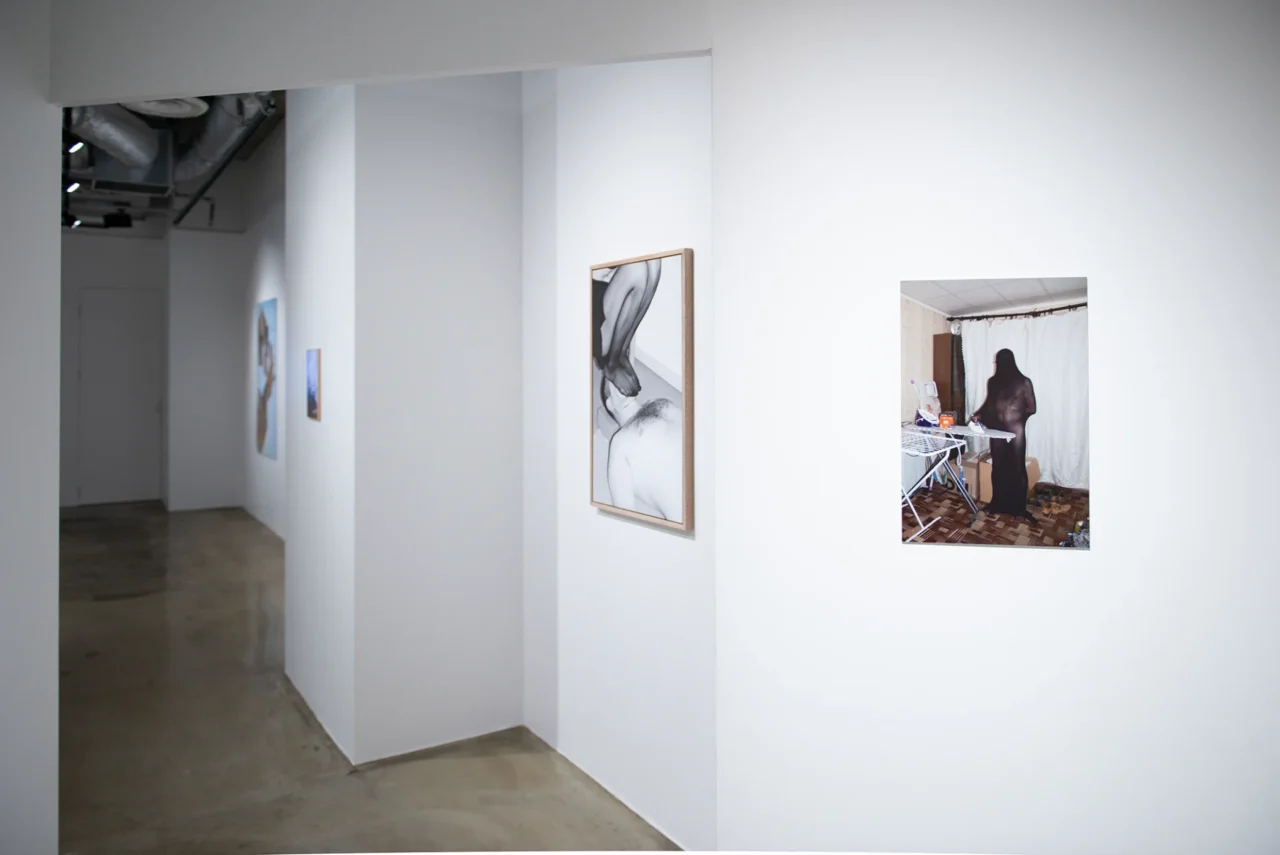
Because the image reveals both this man’s personal story and the broader atmosphere of the pandemic, it feels like photography here functions both as a record and as a narrative medium.
Kristina: Looking back on it now, I do feel that many different layers of story exist behind the images. But one thing I am very particular about when I shoot is removing the sense of distance between myself and the subject.
I want the viewer to feel as if the person in the photograph is right there in front of them. And sometimes, what draws the eye are images that feel shocking or slightly uncomfortable. I do not want to look away from those moments. I want to face them directly and capture them as they are.
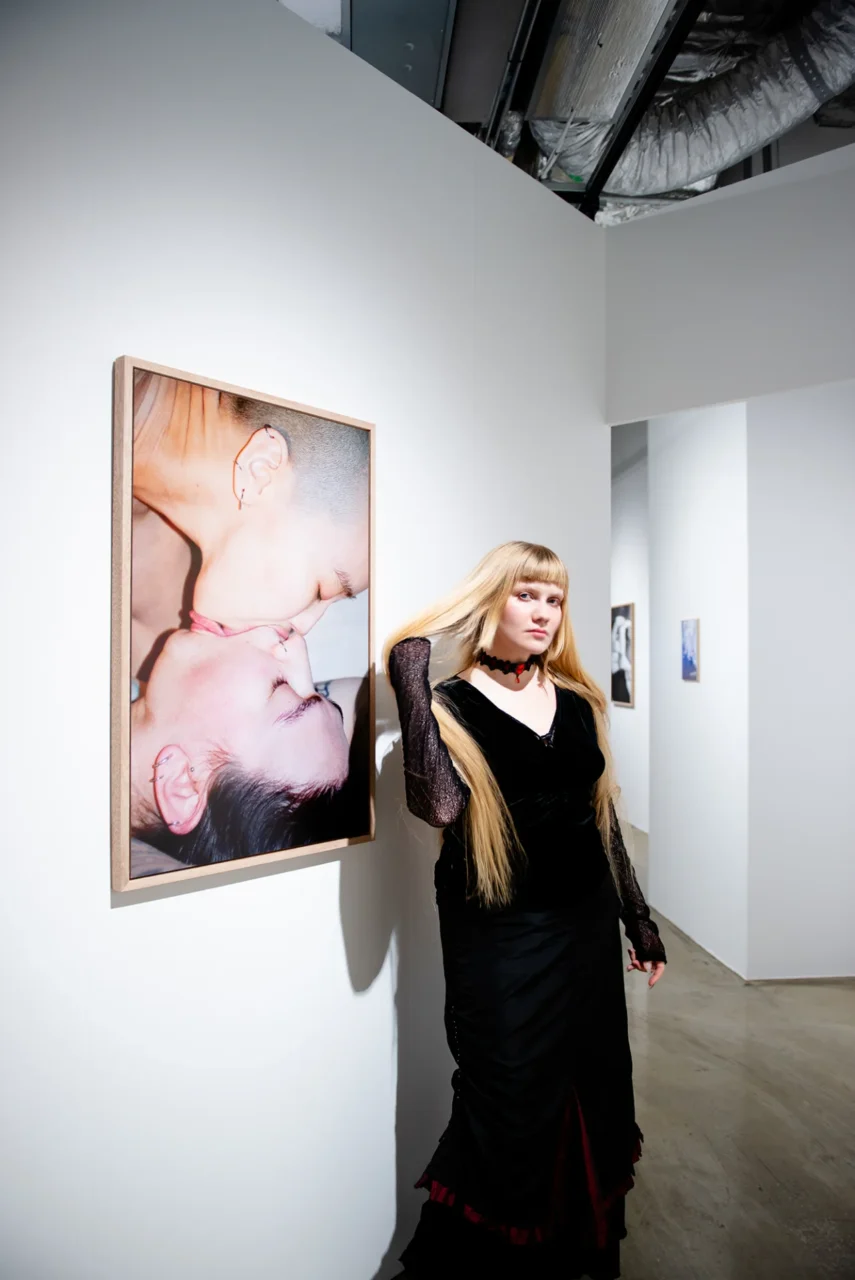
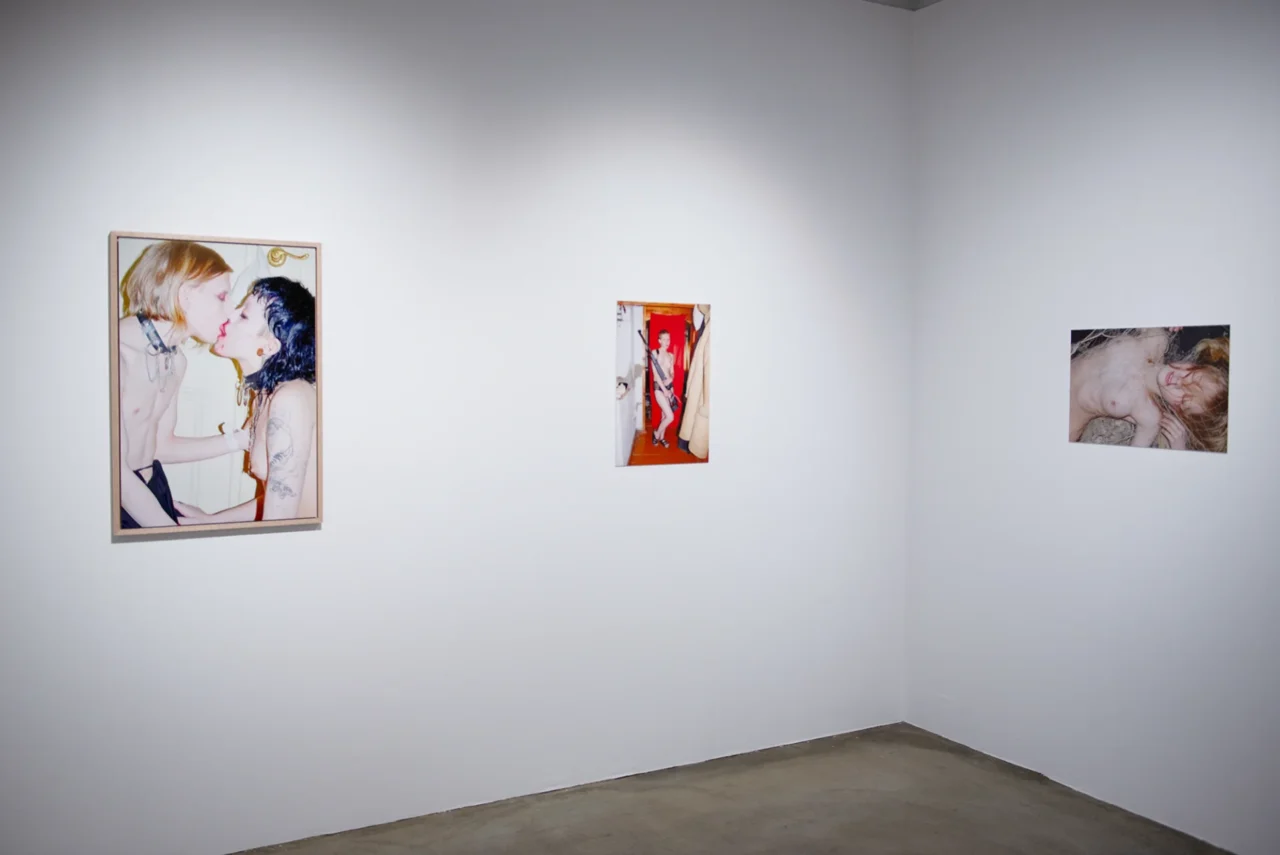
In works such as the image of two women kissing, your photography also seems to reflect diverse forms of love, including LGBTQ+ relationships.
Kristina: It might simply be that many of the people around me are creative, and among them, there happen to be many who are part of the LGBTQ+ community.
As I mentioned earlier, I usually do not stage or direct scenes intentionally, but this photograph is an exception. It is a work where I brought an image I had in my mind into reality. I wanted to capture a kiss between two women wearing a retro wedding dress, so I asked a teacher at Fotografika who owned the dress if I could borrow it.
They agreed on the condition that I would photograph 20 of their students in exchange for the dress, so I did that and received it. (laughs) One of the women is someone I know, and the blonde woman was someone both of us were meeting for the first time.
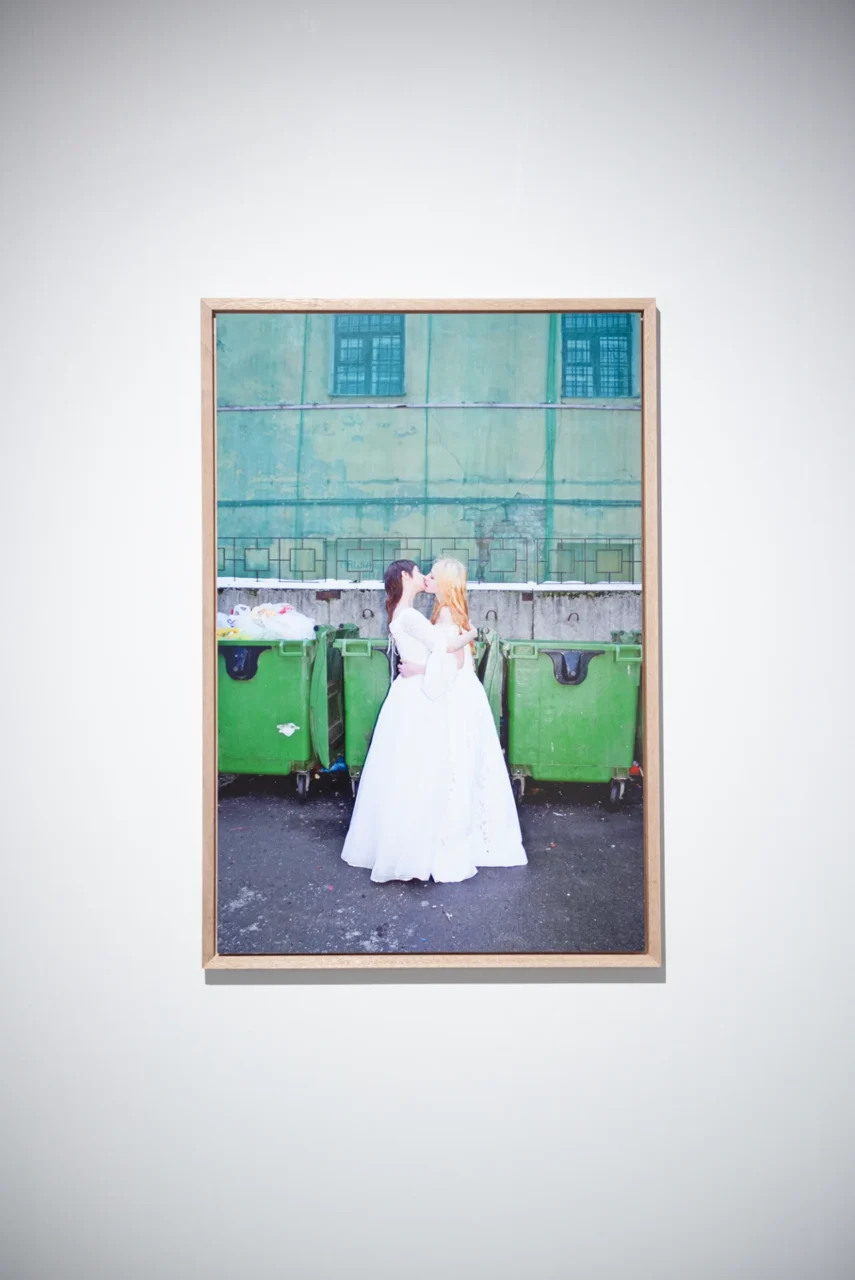
The idea of two people meeting for the first time, wearing a wedding dress and sharing a kiss, feels incredibly romantic.
Kristina: Even when I photograph people, there are times when we never see each other again after that. And with the war, there are also people who have had to leave the country. Relationships in life can be very fleeting.
I feel that those fleeting moments are also captured in the photographs.