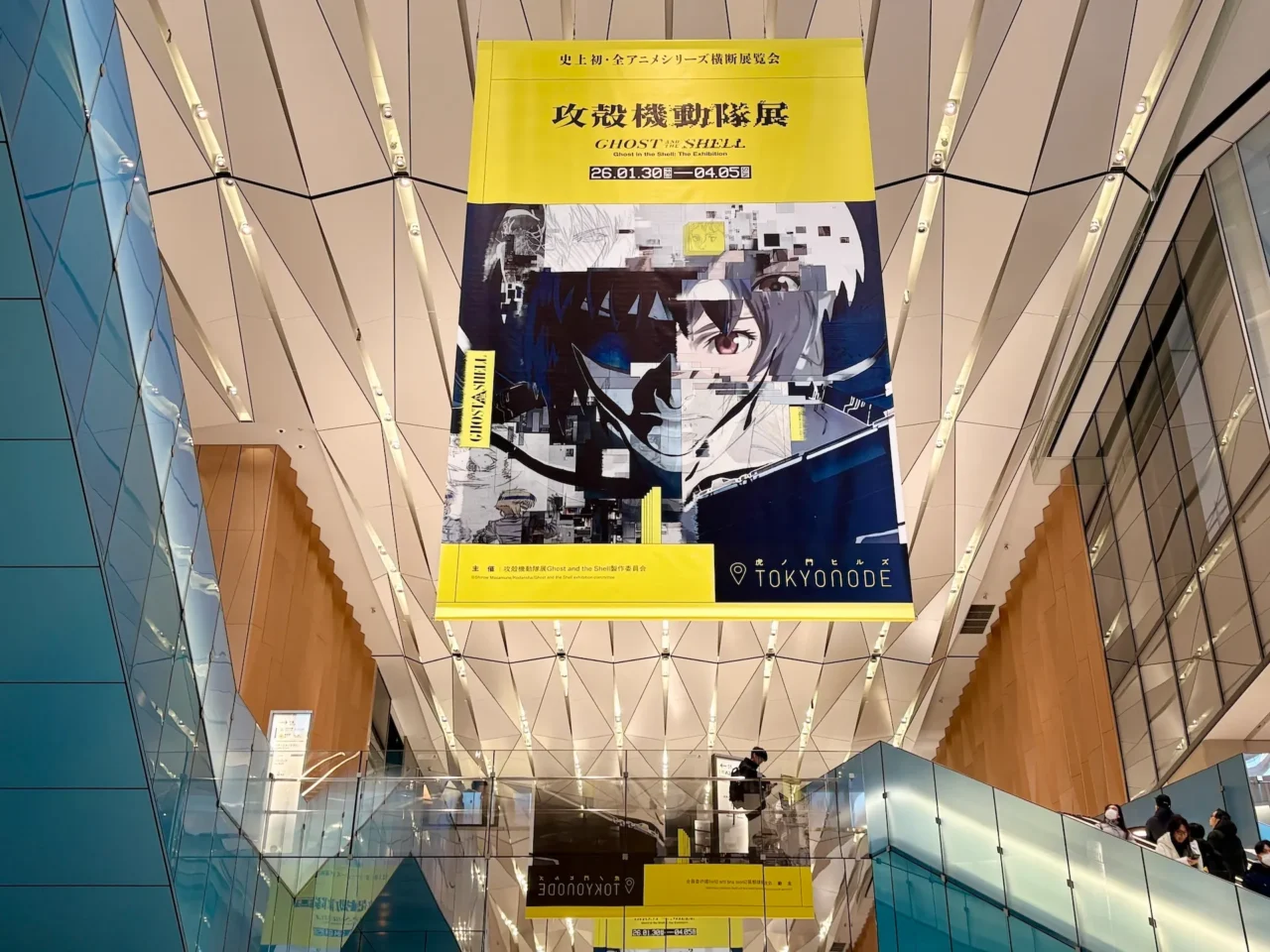
Something extraordinary is happening. The Ghost in the Shell exhibition, running through April 2026, is already proving to be far more than a retrospective. I attended the media preview held ahead of the public opening, and it quickly became clear that this is an experience dense with ideas, discoveries, and moments that demand time. This is not the kind of exhibition that can be captured briefly.
With a devoted global following and a legacy that has shaped generations of creators across disciplines, Ghost in the Shell continues to exist as a cultural force rather than a finished work. This exhibition marks the first comprehensive attempt to trace the full arc of its animated history, bringing together every era of the franchise in one space.
It has been thirty seven years since Masamune Shirow first introduced the original manga to the world, and just over thirty years since Mamoru Oshii released the landmark film GHOST IN THE SHELL in 1995. Within the story itself, Public Security Section 9 is formed in 2029, placing the present moment only three years away from the world the series once imagined as the future.
That sense of convergence gives this exhibition its urgency. To revisit Ghost in the Shell in 2026 is to reconsider it not only as a canonical work of science fiction, but as a mirror held up to contemporary society. In tracing its visions of technology, identity, and consciousness, we are ultimately invited to question where we stand today, and where our own sense of self truly resides.
INDEX
INDEX
Cyberbrain Mode On with AR Glasses
First and foremost, there is one thing that simply must be said. When visiting this exhibition, experiencing the “Cyberbrain Vision” is essential.
Cyberbrain Vision is an AR glasses based exhibition guide system. In simple terms, it functions like a traditional audio guide, but one that has been thoroughly reimagined through the lens of Ghost in the Shell. The result feels less like supplementary information and more like being drawn directly into the world of the work itself.
There is an additional fee of around 1,500 to 1,700 yen, but considering the level of excitement and immersion this simulated cyberization experience delivers, skipping it would be a genuine loss. The exhibition can be enjoyed without it, but with Cyberbrain Vision, the experience becomes something altogether more visceral and unforgettable.
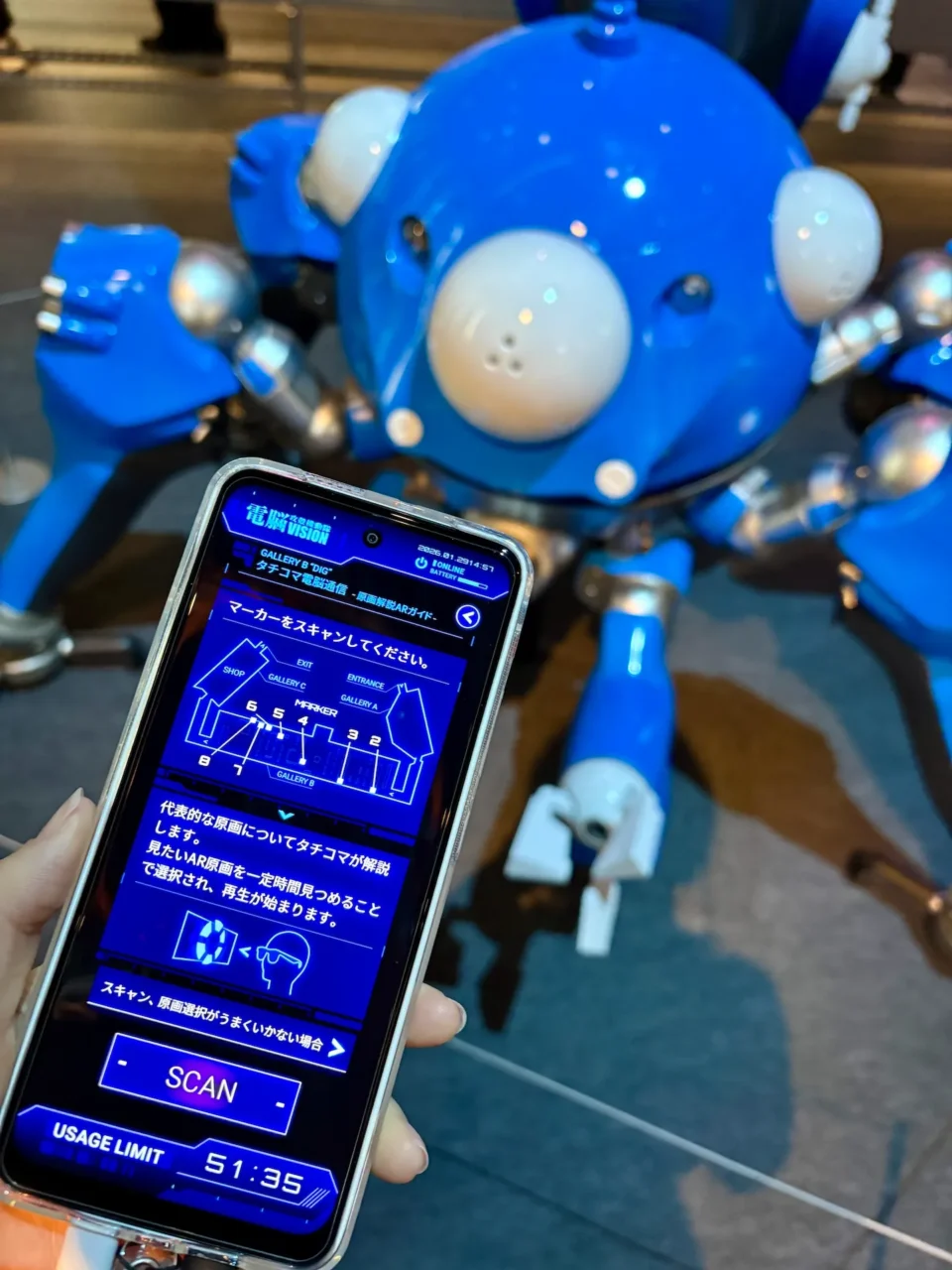

The AR glasses can be worn over regular eyewear, but the staff recommends contact lenses if possible. Covering the sensors on either side can reduce responsiveness, so those with long hair or the Major style angled bob may want to have a way to tie their hair back.
After receiving the AR glasses and a sacoche containing a smartphone like dedicated device, you scan markers inside the exhibition space to activate the guide. It is frustrating not to be able to convey just how striking the visuals are through photos, but one thing is certain. Tachikoma, the beloved guide character from Ghost in the Shell, is overwhelmingly cute.
Exhibits with available commentary glow visibly in your field of view, and in some cases the guide begins simply by following your gaze. The experience is rich with cybernetic flair and genuinely thrilling. The commentary delivered by Tachikoma* itself is also surprisingly sharp and insightful, making the overall experience deeply satisfying.
INDEX
Mapping the Full Scope of the Ghost in the Shell Saga
The exhibition unfolds across three main sections. Gallery A is devoted entirely to a large scale digital installation, Gallery B focuses on animation production materials, and contemporary artworks are interspersed between the two. Let us begin with the installation in Gallery A.
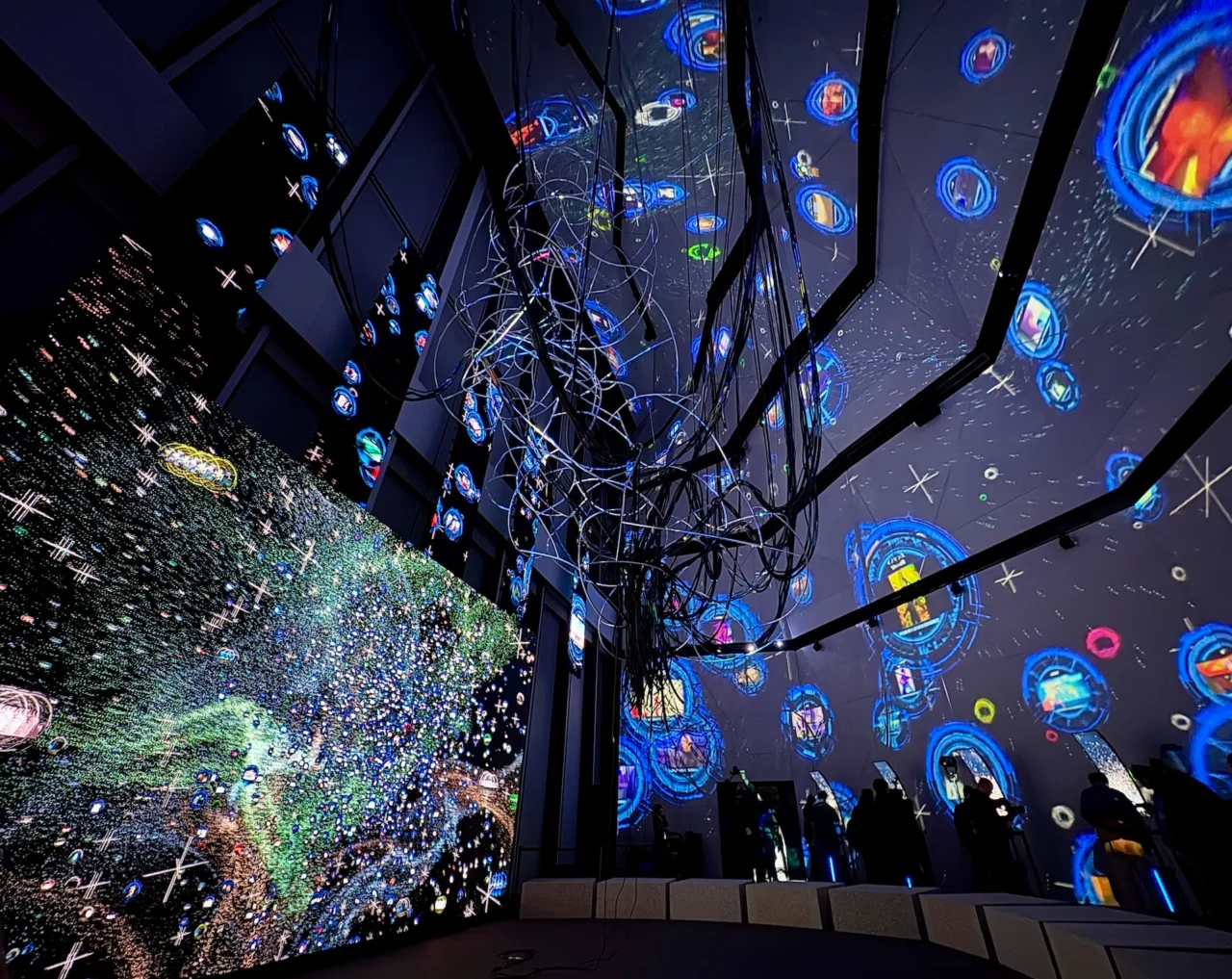
Data particles drift across the massive hemispherical screen of TOKYO NODE. These are fragments of every scene from all anime works in the Ghost in the Shell series.
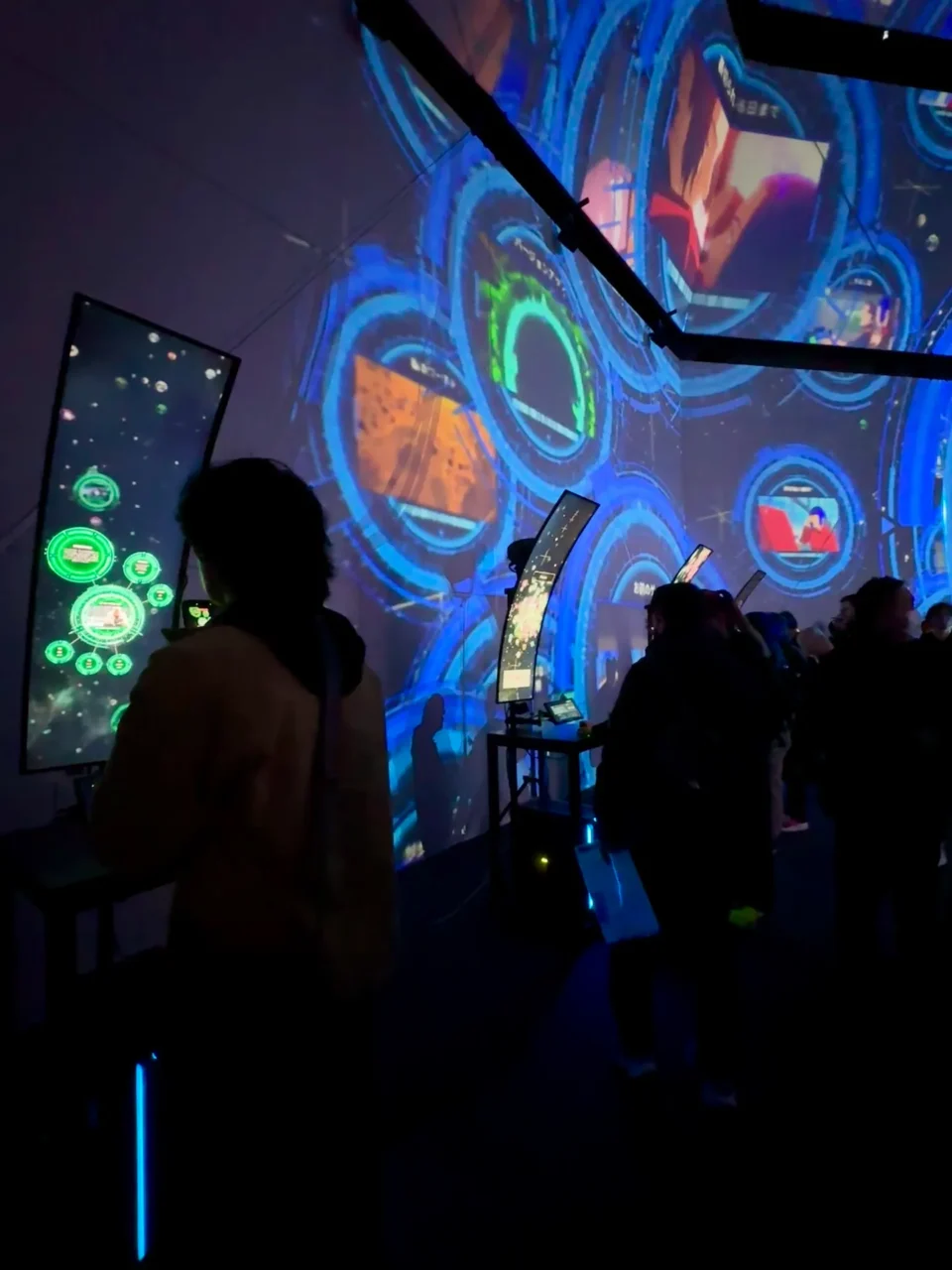
Using the control devices placed around the venue, visitors can freely navigate the information they wish to explore. While revisiting favorite scenes is undeniably satisfying, the true appeal lies in the act of immersing oneself in the dense, unpredictable sea of data. In that moment, the space itself transforms into the cyberbrain world portrayed in Ghost in the Shell.
INDEX
GHOST IN THE SHELL and Its Archive of Over 1600 Production Materials
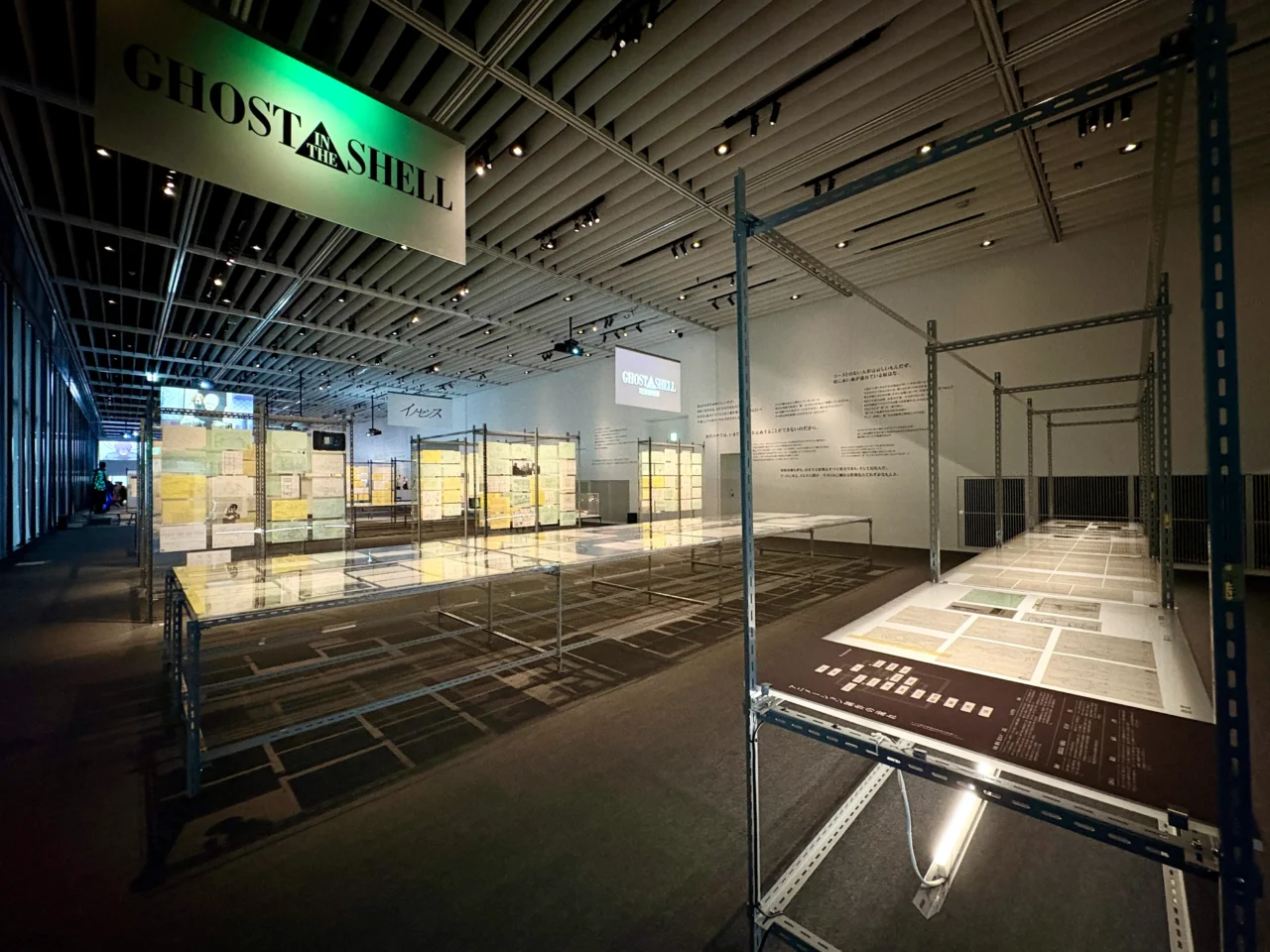
In sharp contrast, Gallery B presents an analog and austere space lined with simple display cases. Here, visitors can explore an immense collection of production materials from each animated entry in the Ghost in the Shell series. From setting materials and background art to storyboards, key animation drawings, and original cels, the selection may be carefully curated, but even so, the total number of items on display exceeds 1,600.
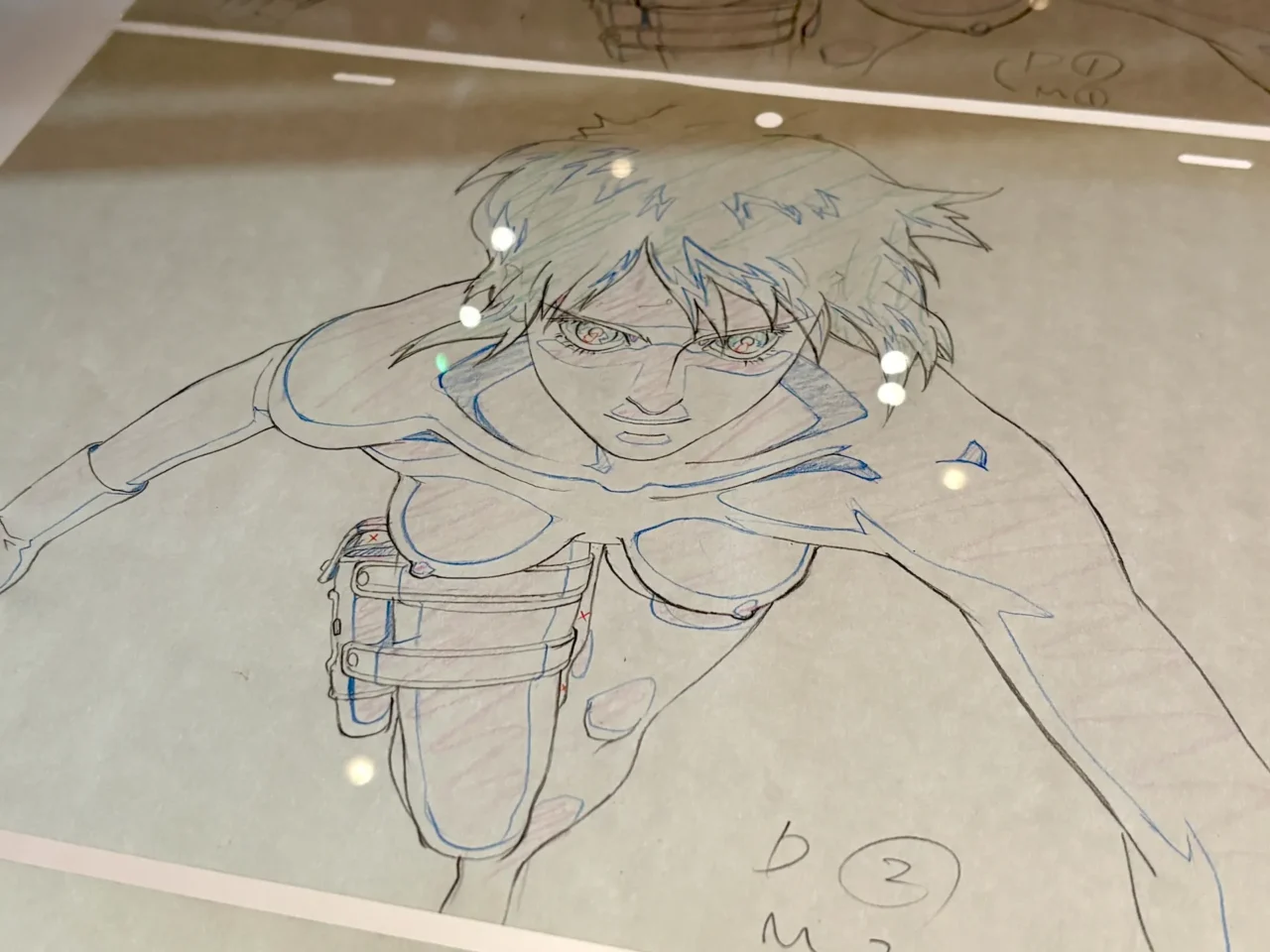
From the GHOST IN THE SHELL section. The iconic opening scene in which the Major vanishes into the darkness of the night hardly needs explanation. The faint tremors of the lines and the traces of erased pencil marks vividly convey the animator’s hand at work. This is the true pleasure of encountering original drawings face to face.
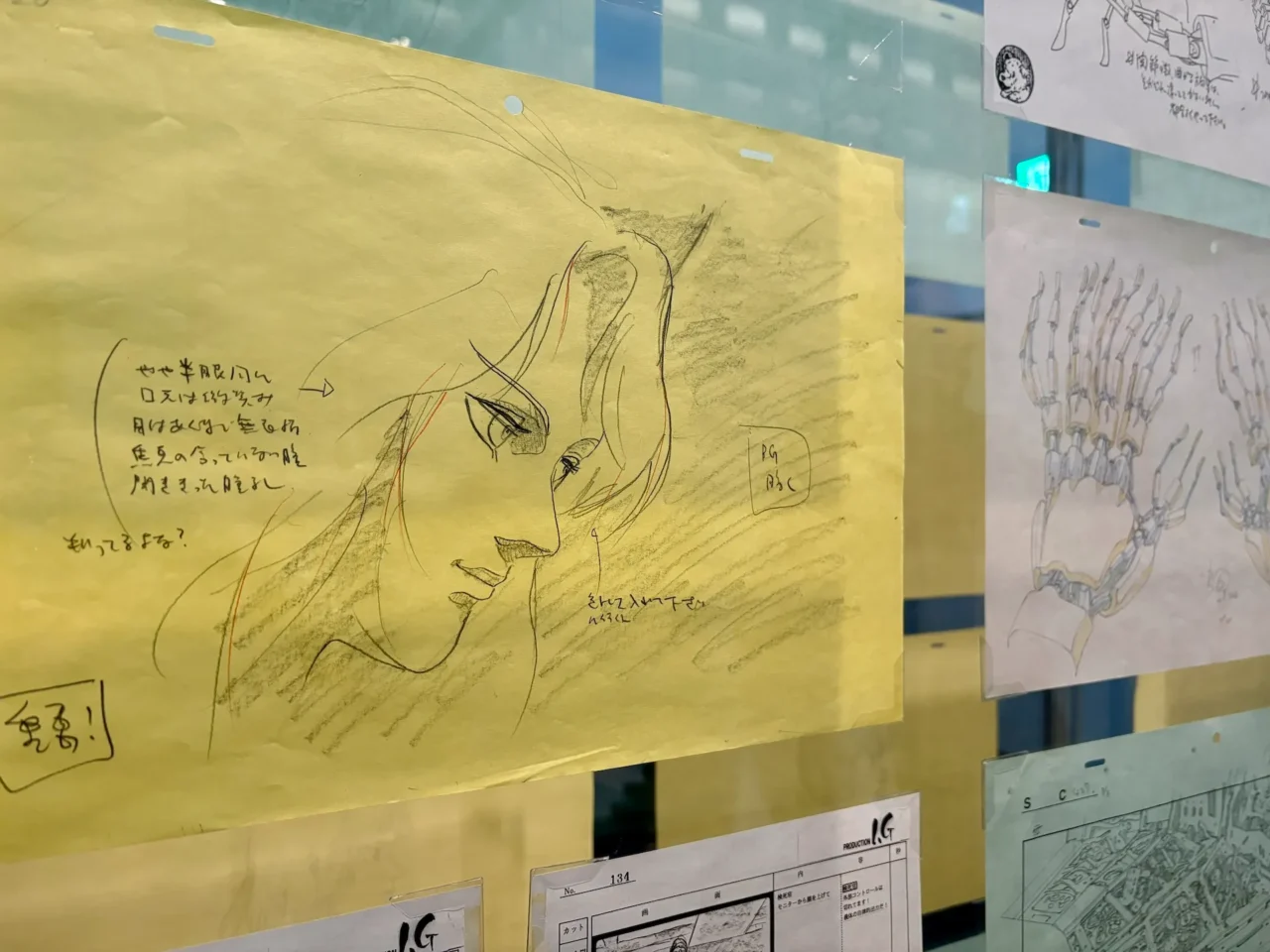
Beyond the beauty of the drawings themselves, the handwritten instructions and comments are equally compelling. One document marked “Important” regarding the expression of the Puppet Master includes five dense lines of detailed notes about each facial feature, followed by the casually pointed remark, “You get it, right?” It is hard not to smile. Whether this reflects trust in the animation team or a subtle kind of pressure is impossible to say, but the sheet radiates a distinctly human energy from the heart of the creative process.
INDEX
The World of Ghost in the Shell SAC Through Rare Production Archives
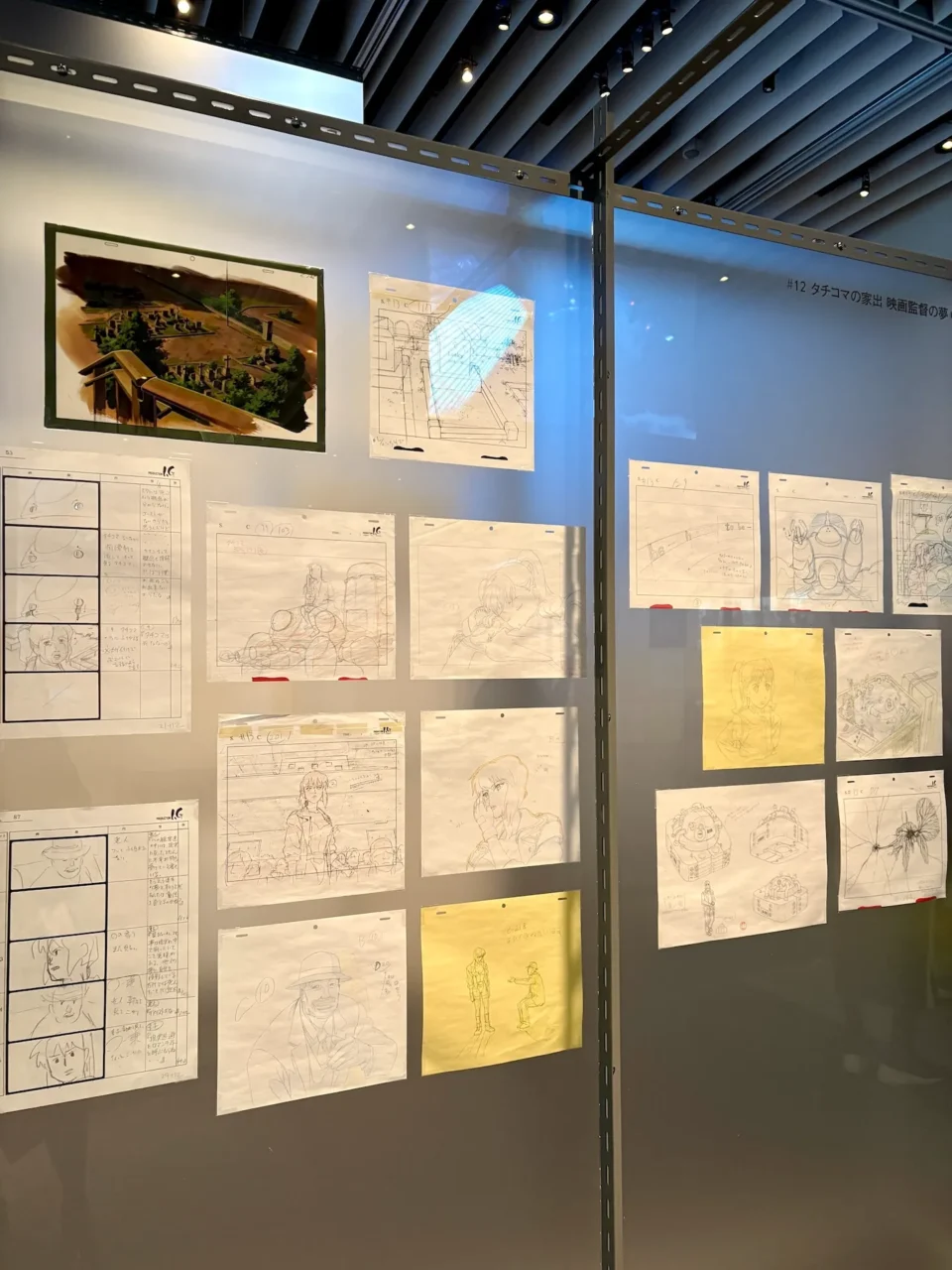
Let me introduce one more area. The section dedicated to Ghost in the Shell STAND ALONE COMPLEX organizes displays by individual episodes as they aired on television, making it easy and rewarding to track down specific scenes. It is striking to be reminded that, despite sharing the same original manga, the series has given rise to such a wide range of animated interpretations. Experiencing the distinct visions and expressive approaches of successive directors side by side in a single venue makes this exhibition feel like a truly rare opportunity.
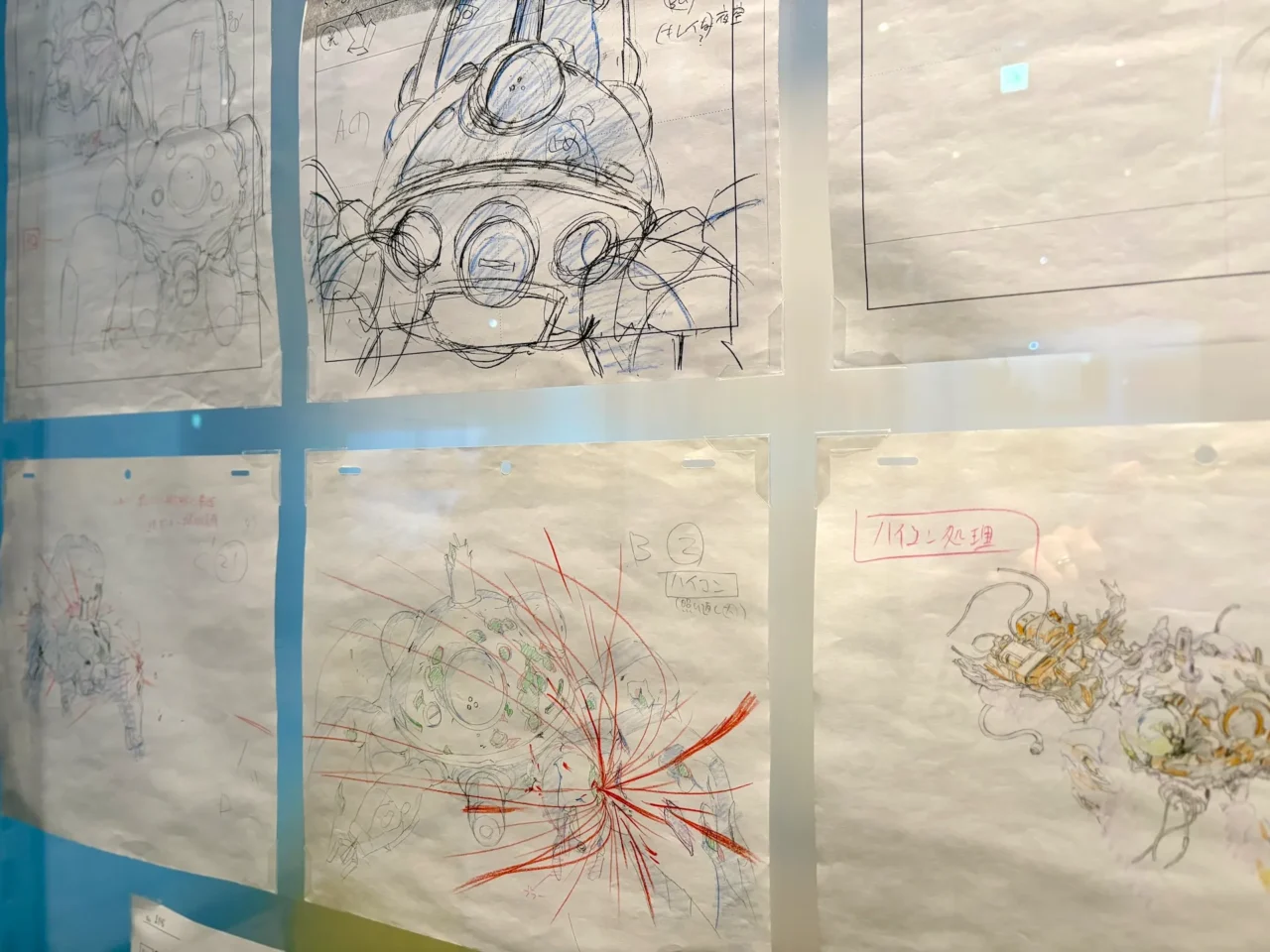
Tachikoma at the story’s climax. As they fight to protect their comrades, their emotions seem etched into every single line, stirring something deep within the viewer. Faced with drawings like these, it is hard to think of them as anything other than vessels containing the artist’s ghost, their soul made visible on the page. This is an absolute must see.