INDEX
A New Turn in the Band’s Sound, Where Diving into Emotional Depths Leads to Danceable Forms
When it comes to the sound, I was genuinely surprised when the single “Writer” came out. That percussive beat you hear right from the opening felt very different from the image Laura day romance had up to that point. Across bridges as a whole, it feels like you’re not just working with a band sound anymore, but actively incorporating more electronic elements, dance music, and ambient textures. Did your production approach itself change this time?
Suzuki: When we started working on the second half, I actually bought a MacBook. I shifted to making music using a DAW—Logic, for the first time. Compared to walls, I wanted to push the sound further, make it more radical and aggressive, and I felt that being able to immediately capture and develop ideas would be crucial. That choice ended up being a big one.
Did it feel very different, physically, from how you’d written songs before?
Suzuki: Once I started using a DAW, it felt like absolutely everything could become a starting point for a song. A small keyboard chord, a simple rhythm pattern—I’d just record it for now, and then it would gradually expand and turn into a full track. I had that kind of experience a lot while making bridges.
Personally, the sound of bridges felt punk in a sense that wasn’t so much about genre, but about attitude. It also felt very physical. When you think about the album as a narrative, what kind of feeling were you trying to express through these more danceable elements?
Suzuki: I had this sense that once I started working on a computer, the music would rise up from a very intimate place — almost like it was coming out of my bedroom. This time, the sound has become more physical, while the story itself feels like it’s going further inward, deeper into a person.
That’s exactly how it came across.
Suzuki: When you go inward like that, the focus naturally shifts toward emotion. And when you try to express emotion, it ends up becoming a very physical kind of ensemble. It’s quite ambivalent, really. By diving deeper inside, we actually found much bigger emotions waiting there. I think that’s what happened.
So going deeper didn’t mean becoming smaller, but actually becoming larger.
Suzuki: Exactly. You’d think that describing external events would lead to bigger songs, but instead, zooming in on the anger and sadness inside us resulted in more physical music. It was a strange experience in that sense.
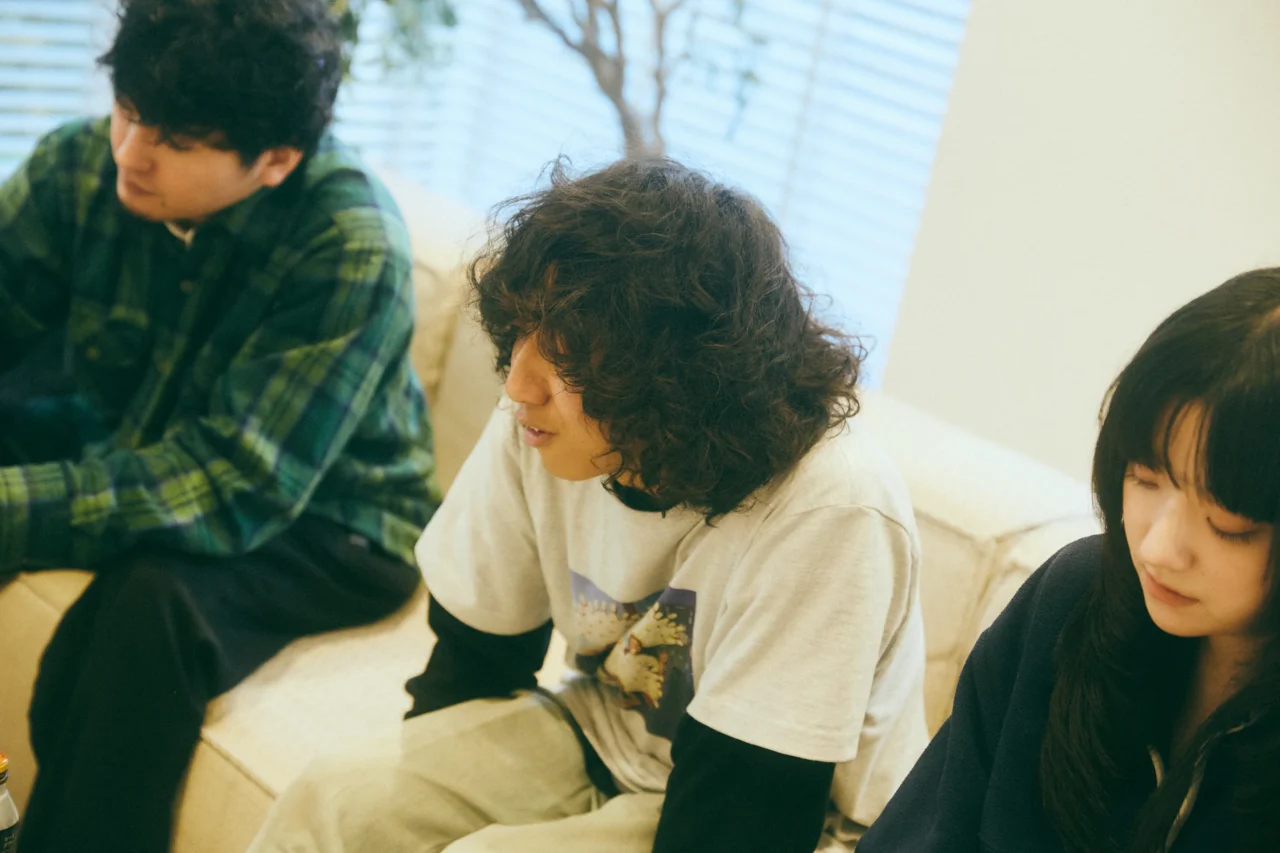
How do you think these changes in the sound affected your vocals, Kazuki?
Inoue: Since many of the songs mix different genres, I felt that if I didn’t stay grounded in my own voice, it might end up sounding like I was just imitating other people. So, being able to fully embrace my own style while exploring all kinds of singing approaches—that’s the range I gained through this recording process. There were moments during tracking when I thought, “Oops, I might’ve overdone it,” and then producer Takeshi Iwamoto or Jin-kun would say, “It’s not exactly what we imagined, but this take works.” That kind of feedback was really fun and a big discovery for me. Honestly, I feel like this album is a straightforward reflection of my growth as a singer [laughs].