INDEX
After the Major Debut: Embracing Change and Choosing Growth as the Only Way Forward (Inoue)
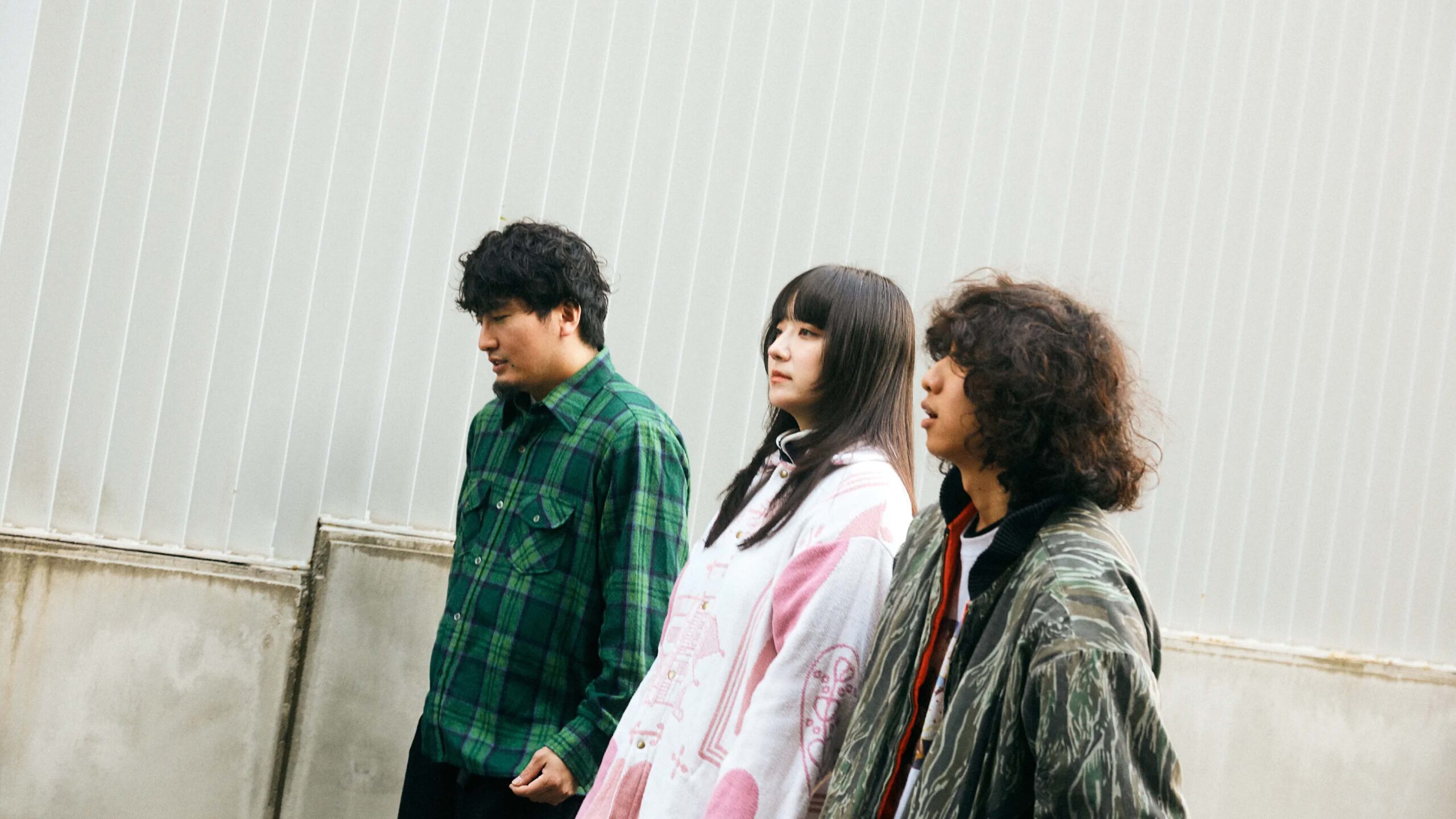
When I saw your live show at the end of November, it felt like Laura day romance were very naturally coming to terms with the way the scale of your stage keeps growing. Watching that, I had the sense that how you’ve faced the changes in your environment over the past year, in order to remain “Laura day romance,” must be deeply woven into this new work. How do you think the band has spent this past year?
Inoue: Hearing that we look like we’re “growing naturally” honestly makes me really happy. For me, this was a year where I kept telling myself to stay as unstrained as possible, no matter what situation we were in. And beyond that… I think sheer experience has started to count for a lot [laughs].
Suzuki: Hahaha [laughs].
Inoue: We’ve played an incredible number of festivals and shows, kept working on “bridges,” shot music videos too — it’s been a completely insane schedule. So there’s this feeling of, “Yeah, we’ve really done it” [laughs]. Lately it feels like there’s always this atmosphere of “we’ve just got to do it,” like there’s no other choice.
Suzuki: Did you slip into a kind of sports team mentality? [laughs]
Inoue: I think a sports team mentality has definitely taken hold of us [laughs]. And honestly, it’s been working pretty well. Having gotten through such a demanding schedule, I feel like we’ve gained a certain calm confidence — in a good way. Like, “No matter what stage we’re on, all we have to do is what we’ve always done.”
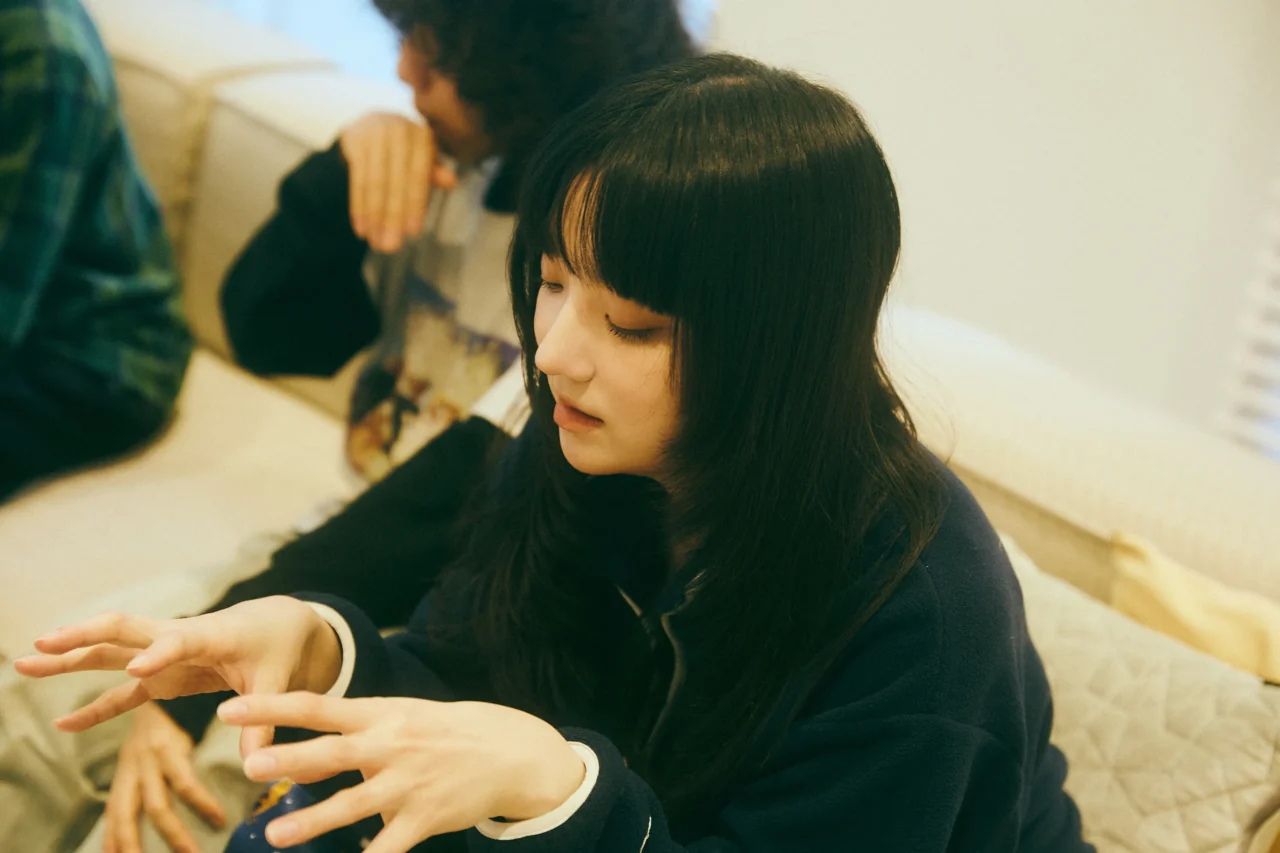
Over the past year, it’s felt like there’s been a real shift in your presence as a vocalist and as a frontperson, Inoue. Especially as the band’s spokesperson, you’ve often been in situations where you had to explain “what kind of band Laura day romance is.” Did that bring about any changes in how you see yourself?
Inoue: I realized that, more than I expected, what truly matters is simply what I genuinely want to do. No matter how much people around me say, “Why don’t you sing it like this?” or imagine, “Maybe you should carry yourself this way,” in the end, the best thing we can do is to fully commit to the choices we make. Someone actually said to me backstage earlier, “You really don’t try to look cool at all,” which I hear surprisingly often [laughs]. Maybe that side of me has started to come through on stage, too. I never thought I was putting on airs to begin with, but perhaps the moments where I tried to make myself look better than I am have been stripped away even more, and now I can step onstage just as myself. There’s no point in putting up a front — right?
Suzuki: Yeah. I think doing things naturally, without over-psyching ourselves up, has started to match the size of the stages we’re on now. Because we’ve built up a kind of basic stamina through experience, we don’t need to rely on that sense of being overly “amped up” to get through a show anymore.
“Amped up” is a term comedians often use, right? Like when someone’s too fired up and ends up overshooting a bit.
Isomoto: “Being amped up” is kind of our theme lately [laughs].
Which also means that going through that phase was important, and that you only realized certain things because you experienced it.
Suzuki: Exactly. There are times when performing in a way that makes yourself look bigger than you are is necessary. But for us, if we try to take shortcuts or push ourselves too hard into something that doesn’t suit our nature, we risk losing what’s actually good about us. And I think that kind of wavering comes across to the audience, too.
Inoue: Listening to what Jin just said, it made me think — over this past year, I’ve had more opportunities to appear in the media as a frontperson, and I’ve really felt that there’s no path forward other than trying to grow as a human being. Through the music, it felt like me as a person was being seen very directly. Because of that, no matter how much I try to dress things up or put on a façade, it’s ultimately meaningless. I’ve kind of given up on that idea and accepted that the only option is to keep raising my own baseline strength [laughs]. “Given up” might not be the right word — I guess I’ve resolved myself to it.
Looking back on the past year, how was it for you, Yuta?
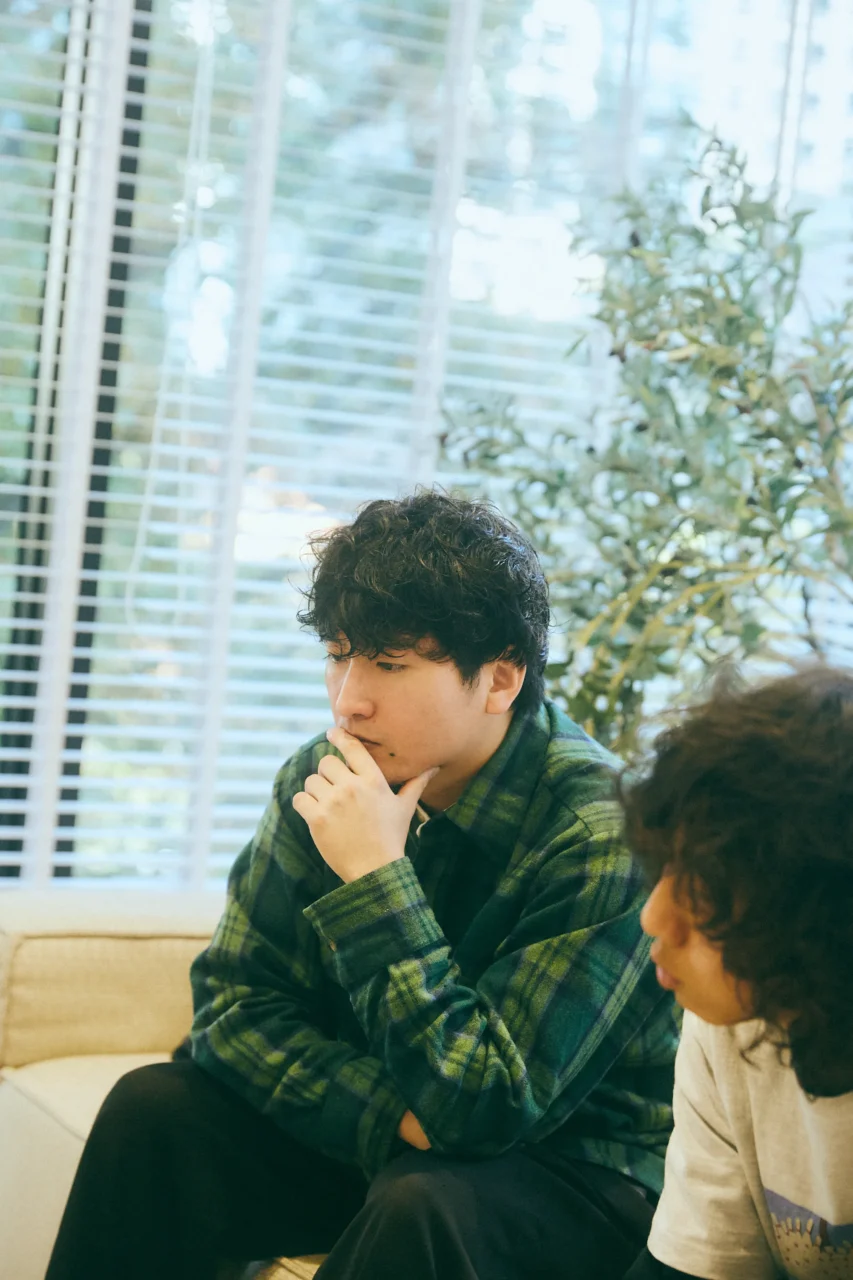
Isomoto: Personally, it was pretty tough. To be honest, there was a long stretch where I felt like, “Live shows just aren’t fun at all.” When I started unpacking why that was, I realized that around the time “walls” came out, I often said in interviews that “my job is basically being part of the stage set.” I’d become too fixated on that idea of my role, and it really started to weigh on me. There were moments during shows when I’d think, “Wait—why am I even playing right now?” And there was even a time when I ended up having a panic attack while performing.
―I see.
Isomoto: But at some point, I started to find it interesting when things didn’t go well, or when something happened that was completely outside my expectations. Before, I was always thinking, “I need to do my job properly,” but once I tried properly accepting trouble and mistakes too, I began to feel like a much more interesting world might open up. Because of that, live shows have finally started to feel fun again lately [laughs]. At our recent one-man show, the very first thing I said after finishing the set was, “Ah, that was fun,” and that really felt like a change that had happened inside me over the course of this past year.
Listening to you now, it feels like what you’re describing connects directly to the nature of this album itself.
Isomoto: That’s true [laughs].