INDEX
Three Steps to Designing “The Garden of Excess”
In the first phase of the project, image generation AI (Stable Diffusion / FLUX) was harnessed to bring to life the unconscious obsessions—those hidden compulsions that shape individual minds. Moving away from traditional architectural principles like functionality, economics, and political logic, this approach places personal obsession at the core of the design process, opening a new path for creation.
This approach stems from the belief that diving into what has traditionally been seen as “personal” obsessions might unlock the key to a collective, shared aesthetic in the modern world. Surrealist experiments with automatic writing have shown that as one plunges deeper into the unconscious, the personal pronoun “I” fades away, giving way to a connection with the collective unconscious. This exploration aims to discover a new set of values for the era of excess, specifically an “aesthetic of overwhelming information.”
The next step involved transforming these individual obsessions into small “sandpit” worlds. Sandplay, a therapeutic method dating back to ancient times, is used to externalize unconscious imagery, allowing for objective observation. In this project, image generation AI, along with 3D model generation tools (Marigold, Stable Fast 3D), was employed to envision the intricate structure of an “excessive world” that exists between the digital and physical realms.
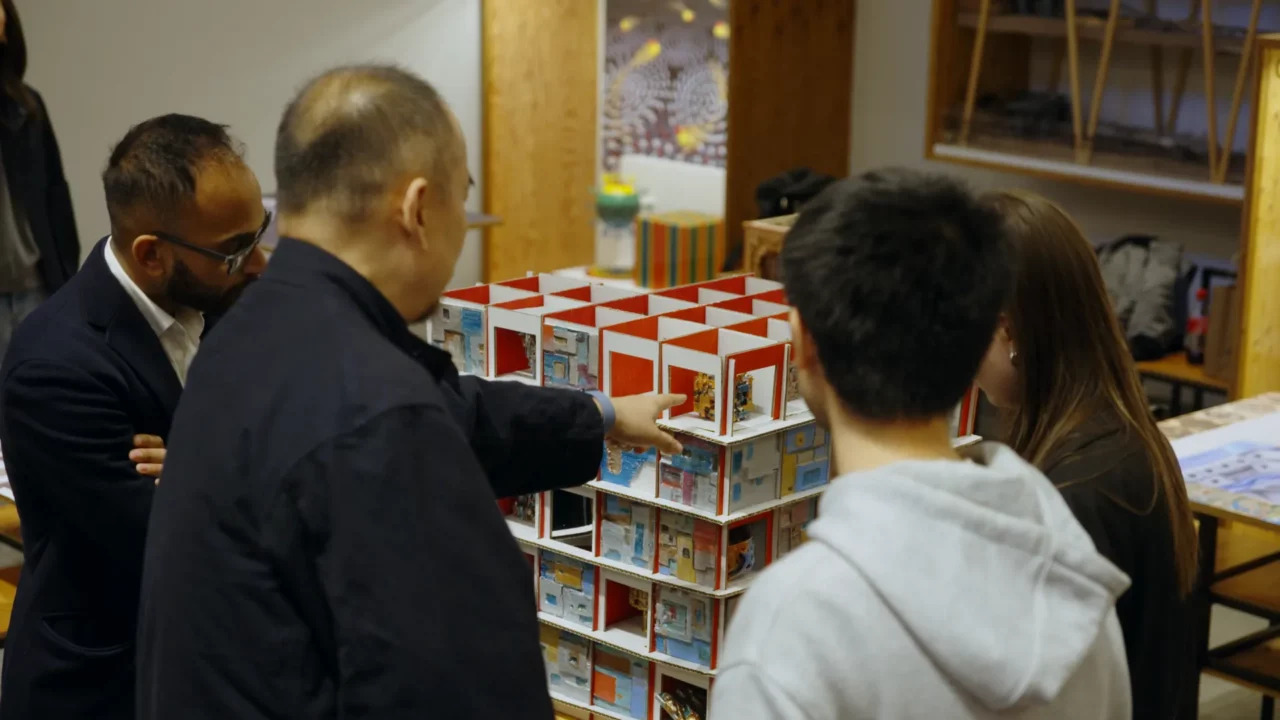
In the final step, each student built “The Garden of Excess” based on their sandpit, unbound by scale or site limitations. By blending digital and physical approaches, they reassembled the fragmented world in innovative ways, seeking to envision the possibilities of future realities.
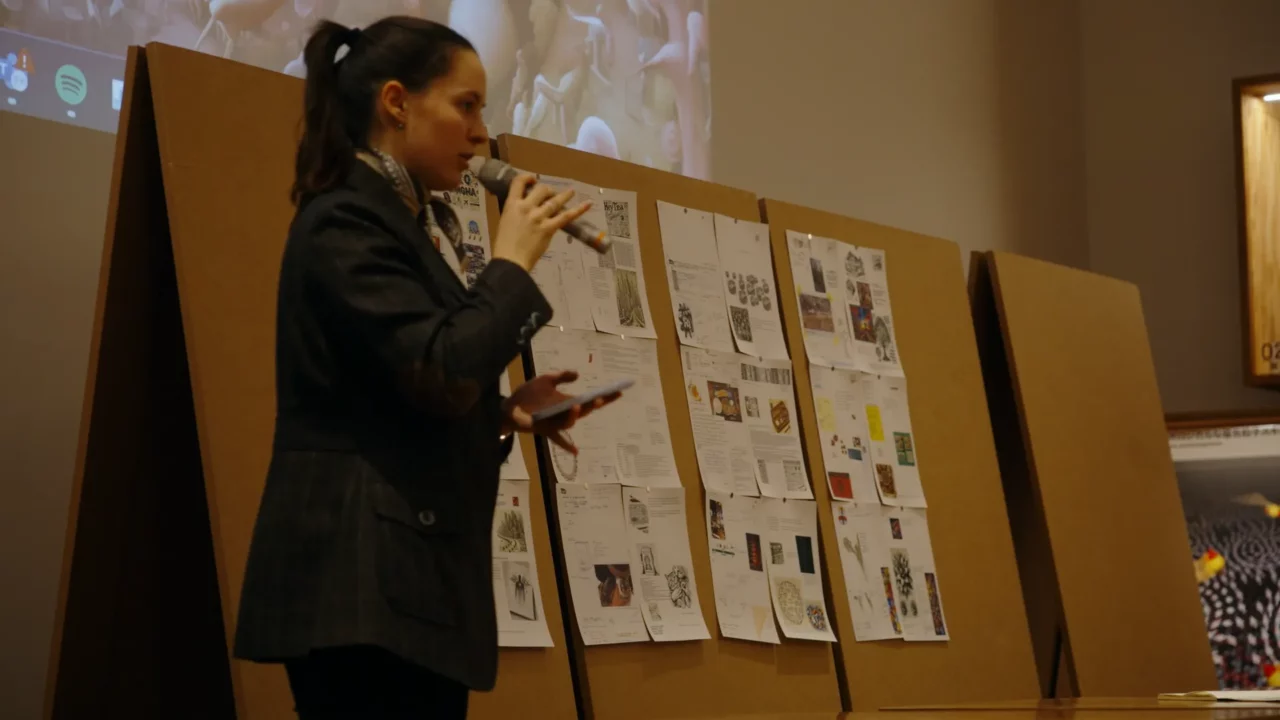
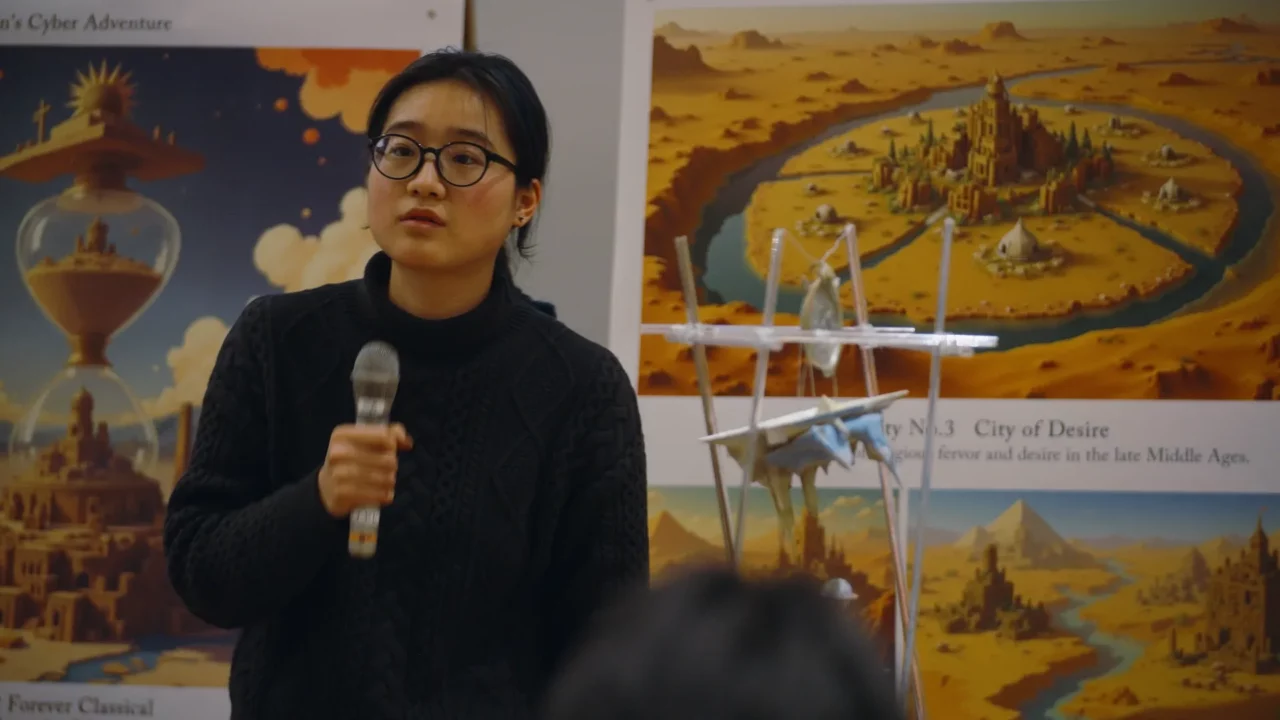
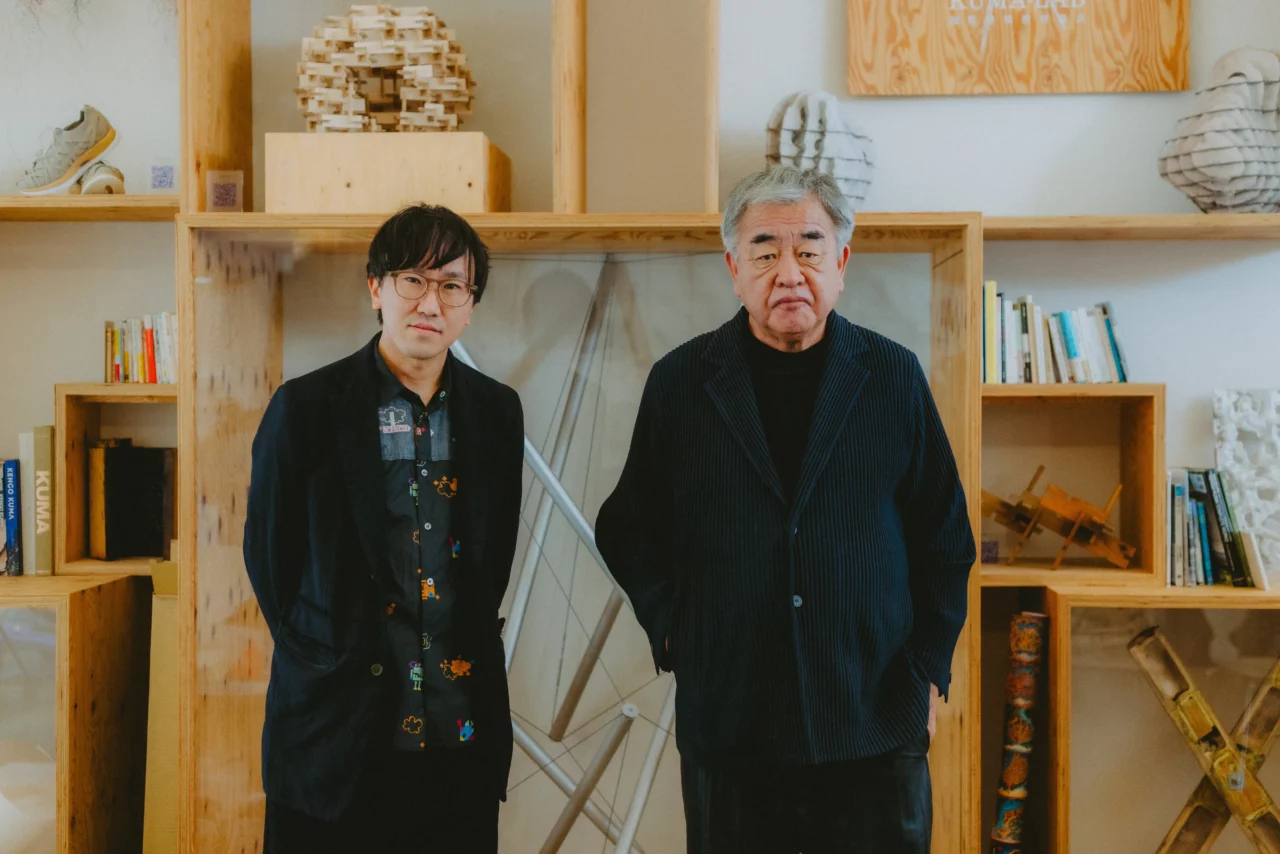
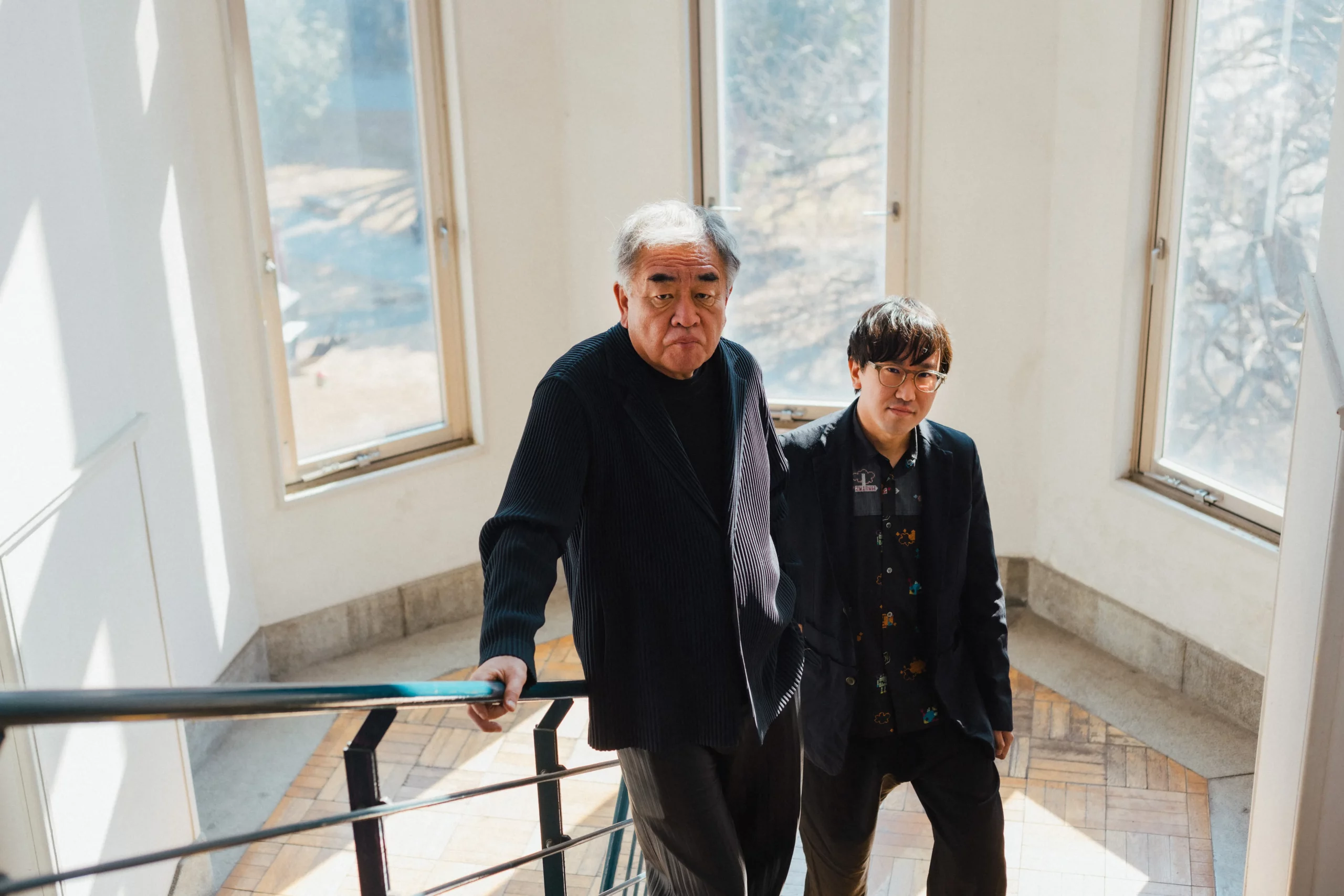
Following the students’ final review, Toshiki Hirano sat down with Kengo Kuma, delving into the role of architecture in the era of generative AI, the evolving relationship between humans and AI, and the future of “richness.”