INDEX
Connecting Asia Through Taiwan as a Hub
On the Emerge Music website, the phrase “building bridges through kindness and vitality” stands out. Bringing Taiwanese bands overseas feels very much in line with that idea, but is “building bridges” something you consciously see as the driving force behind your work?
Nuno: Yes, very much so. That idea carries two meanings for me. The first is about Taichung. Many young people born here eventually move to cities like Taipei or Kaohsiung. But if a music festival is still happening in their hometown, it gives them a reason to come back — to return home just to listen to music. I want to build a bridge that allows people who left Taichung to reconnect with their roots.
The second meaning is more international. Through the IN-CON system, I want to create bridges that take Taiwanese musicians abroad, allowing them to connect and interact with people all over the world. Those two ideas of “building bridges” are always at the core of what I do.
Emerge Music now has a branch in Thailand, and since 2022 you’ve also been holding a Japan edition of EMERGE FEST. Through these exchanges across different Asian countries, how do you see the current challenges facing Taiwan’s music scene today?

Nuno: Honestly, I’m a bit envious of Japan and South Korea. Japan has anime, and Korea has K-pop — both serve as strong cultural gateways to the world. Taiwan doesn’t yet have that kind of powerful, globally recognized export.
If Taiwan’s path into the global music scene is different from the Japanese or Korean model, what direction do you see it taking?
Nuno: Before 2000, Taiwan played a very important role in the Mandarin-language pop world. But as many major labels shifted their focus to the Chinese market, Taiwan may have seen strong commercial returns over the past 10 to 20 years. At the same time, though, it missed a key opportunity to take part in the broader development of the Asian music market.
Now, as China’s music market is beginning to contract, Taiwan faces a much higher hurdle in stepping back into the international scene. Still, over the past few years, indie music among Taiwan’s younger generation has been growing in a really powerful way — developing with its own distinct energy, identity, and style.
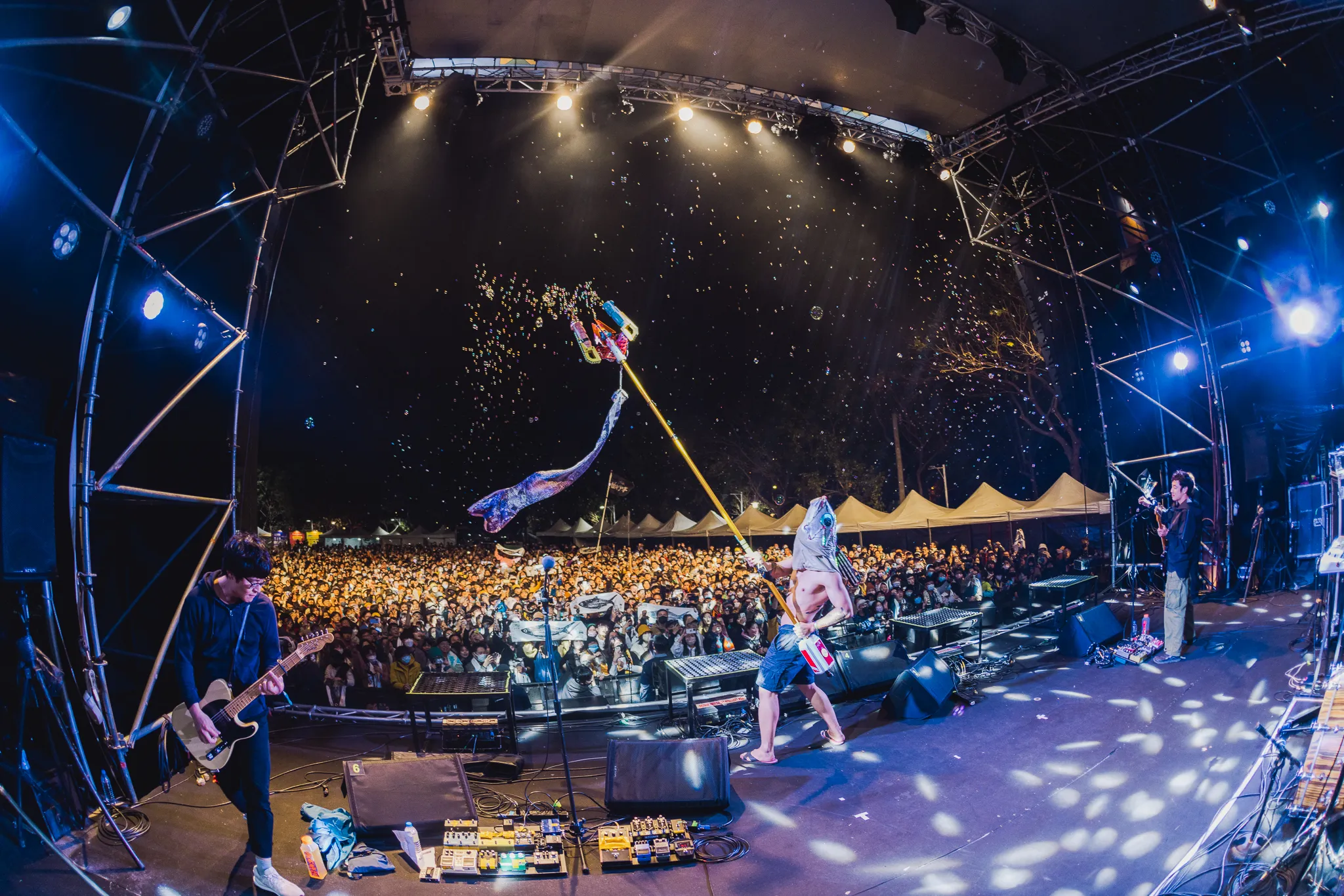
Nuno: Looking ahead, I hope this new generation of creators will carry that same momentum and passion forward — approaching things with a more open, Asia-focused perspective and a truly global outlook, and stepping back into the international music market. To do that, I believe the first step is building bridges within Asia.
Since 2024, the urban music event JAM JAM ASIA has been held in Taichung. What kind of potential do you see in it?
Nuno: JAM JAM ASIA is actually an initiative of the Taipei City Government. For a long time, the city has been thinking about how to promote Taiwan’s music and culture to the world. But rather than just pushing our culture outward in a one-way direction, I think it’s much healthier to also welcome other countries’ cultures in. When there’s real two-way exchange, it creates a much better feeling for everyone involved.
Nuno: So in my role as an advisor, I don’t just want to connect Taiwan with other Asian countries one by one. I want to help build a platform where Taiwan serves as a hub — linking all Asian countries in a circle, so everyone can connect and exchange with one another.
I’ve been advising the government that, rather than simply exporting Taiwanese culture in a one-way direction, it’s just as important to respond seriously to requests from other countries that say, “This is something we’d like to share or introduce in Taiwan.” True exchange has to be two-way — that’s what really matters.