INDEX
Contemporary Art Powered by Deep Respect for Ghost in the Shell
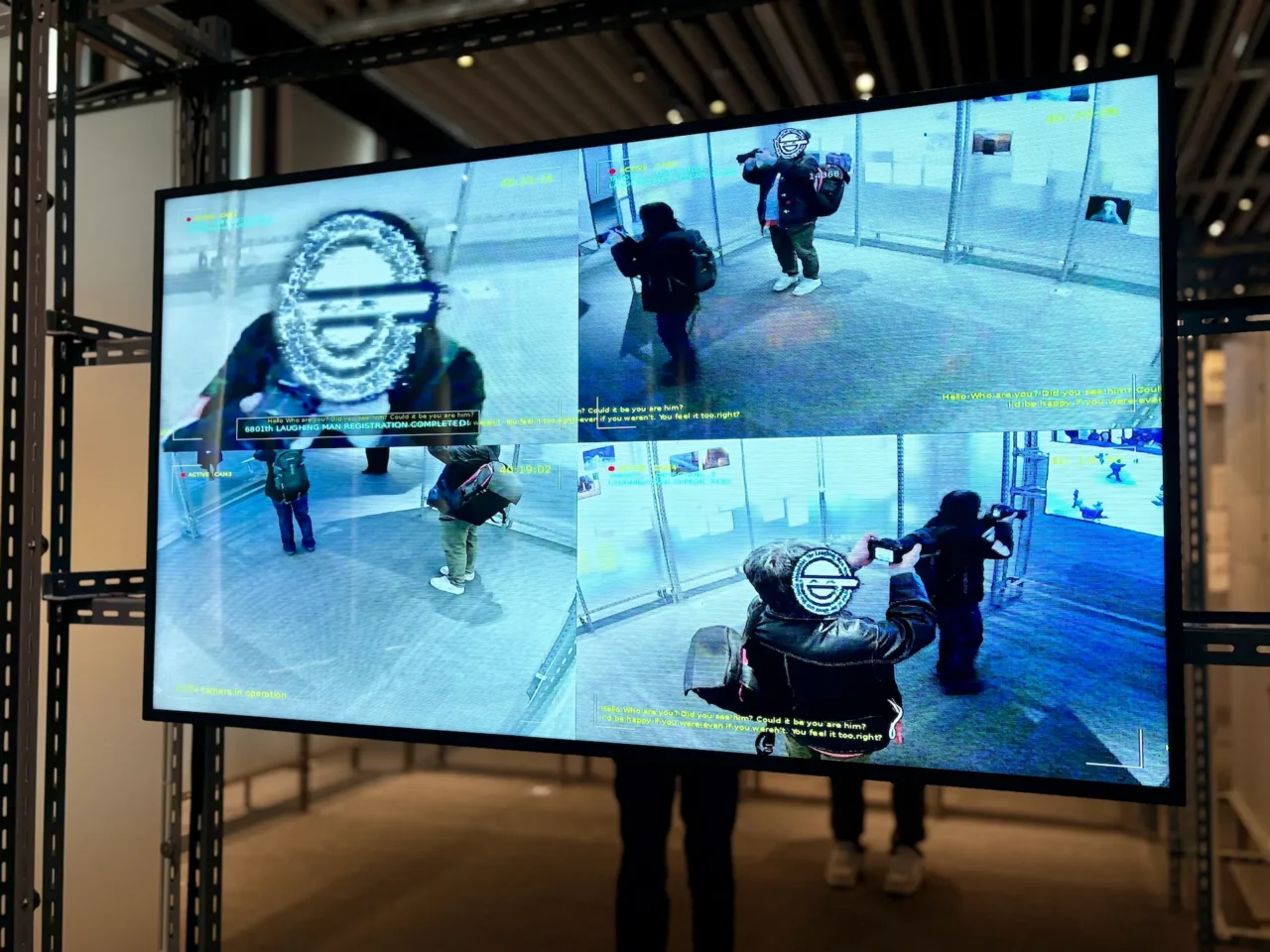
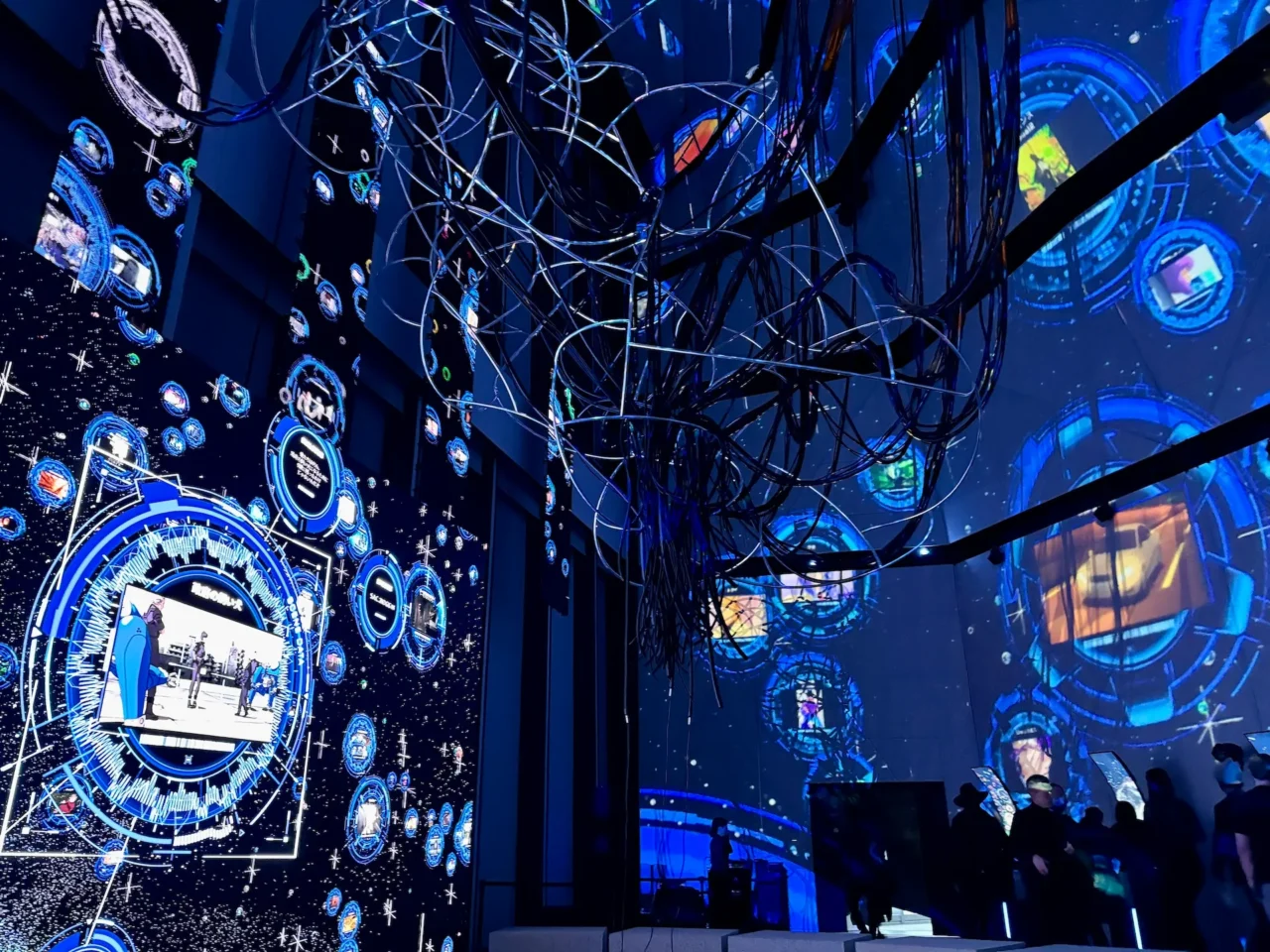
Elsewhere, collaborative artworks are scattered throughout Gallery B. In the area dedicated to Ghost in the Shell STAND ALONE COMPLEX, one particularly playful piece stands out: Laughing Man Mirror.
Much like the cyberterror incident known in the series as the Laughing Man case, the work uses a camera to mask visitors’ faces in real time. In that moment, you and I both become the Laughing Man. It feels as though the fictional world is hacking into reality itself, and while it may be slightly irreverent, the sensation is undeniably thrilling.
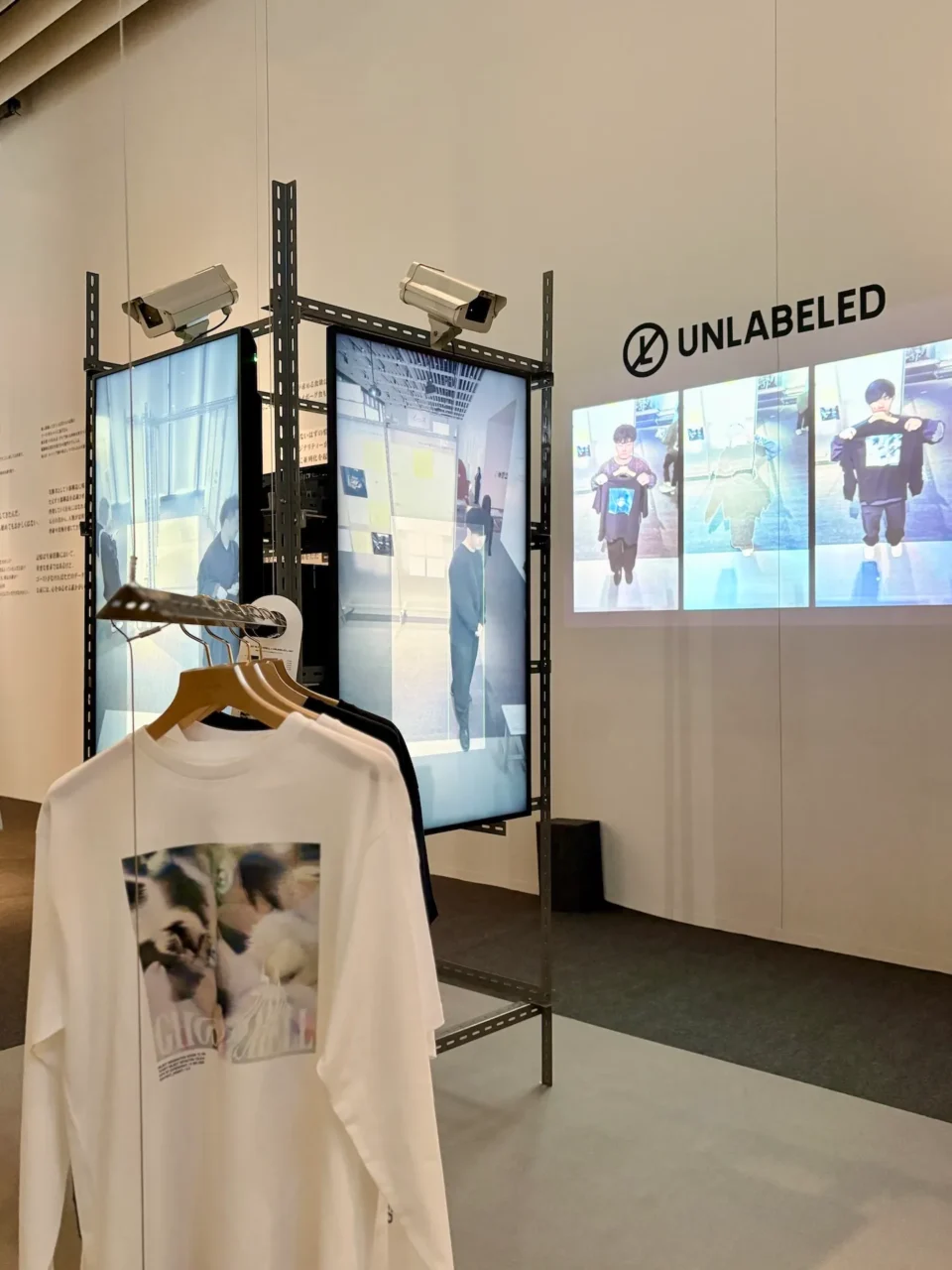
Also available for purchase at the exhibition’s pop up shop.
Of all the works in the exhibition, the one that thrilled me most was the apparel piece titled Camouflage for an AI Surveillance Society. This arresting T shirt does something genuinely unexpected. Simply by wearing it, the wearer becomes less likely to be recognized as a human by the image recognition AI used in surveillance cameras.
The graphic print incorporates a technique known as an adversarial patch, a method developed to interfere with machine learning systems. What looks like an eye catching design at first glance is in fact a functional strategy of resistance, transforming clothing into a subtle yet provocative response to life in an AI monitored society.
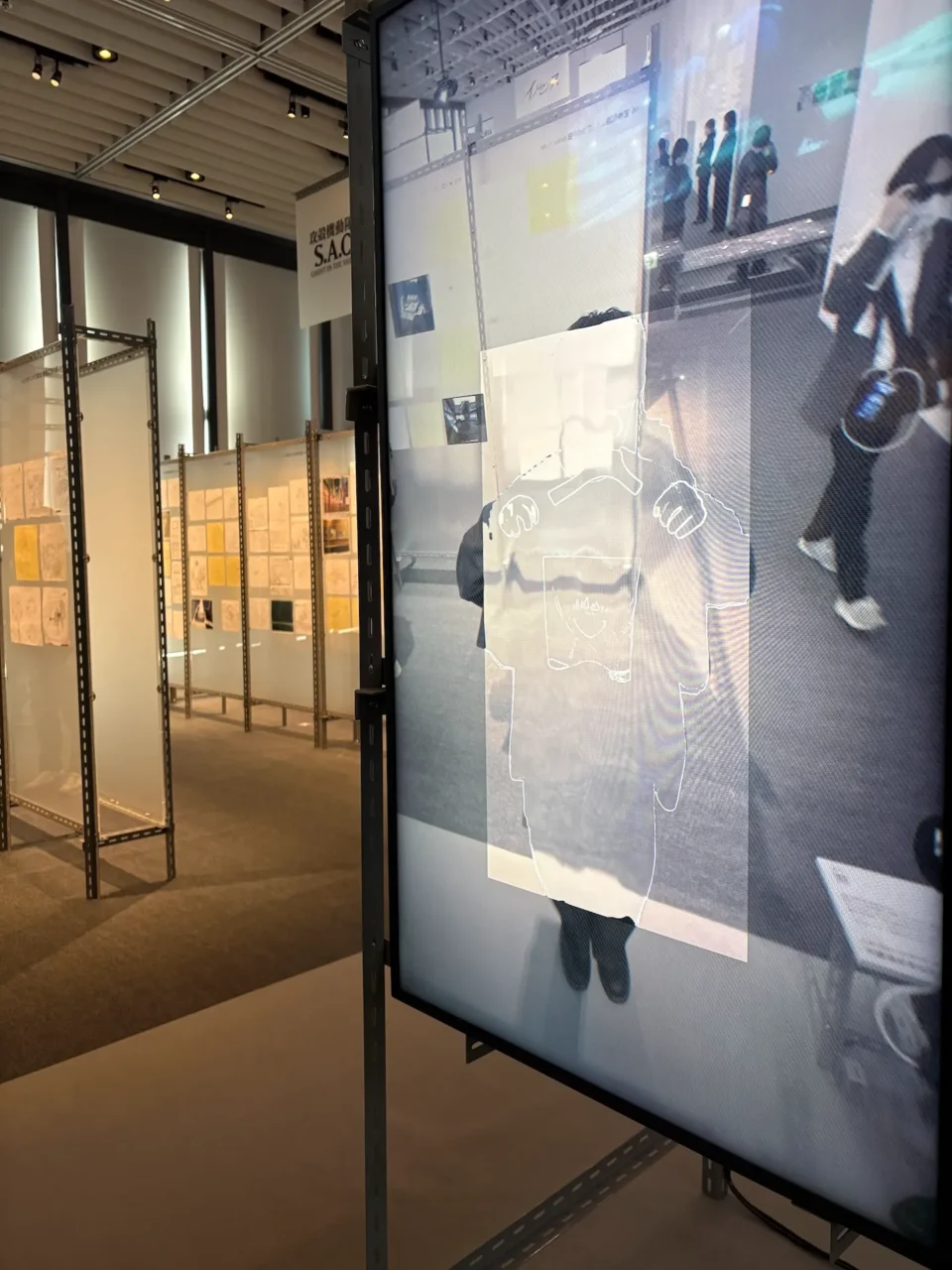
At the venue, visitors can actually test the effect themselves by holding the T shirt against their body in front of a surveillance camera and monitor. Perhaps I was a little too human looking, because I stubbornly continued to be recognized as a person, which was frustrating. The staff member who helped with the demonstration, however, vanished perfectly from the image recognition AI. Combined with a visual effect inspired by the optical camouflage so iconic to Ghost in the Shell, it was a moment that genuinely sent a shiver down my spine.
One last work is also worth mentioning: EGO in the Shell. In this piece, the artist overlays images drawn from their own real memories with AI generated images depicting an imagined lifetime lived as a cyborg woman. The result resembles a wedding profile video or a life flashing before one’s eyes, forming a deeply uncanny and emotional visual sequence.
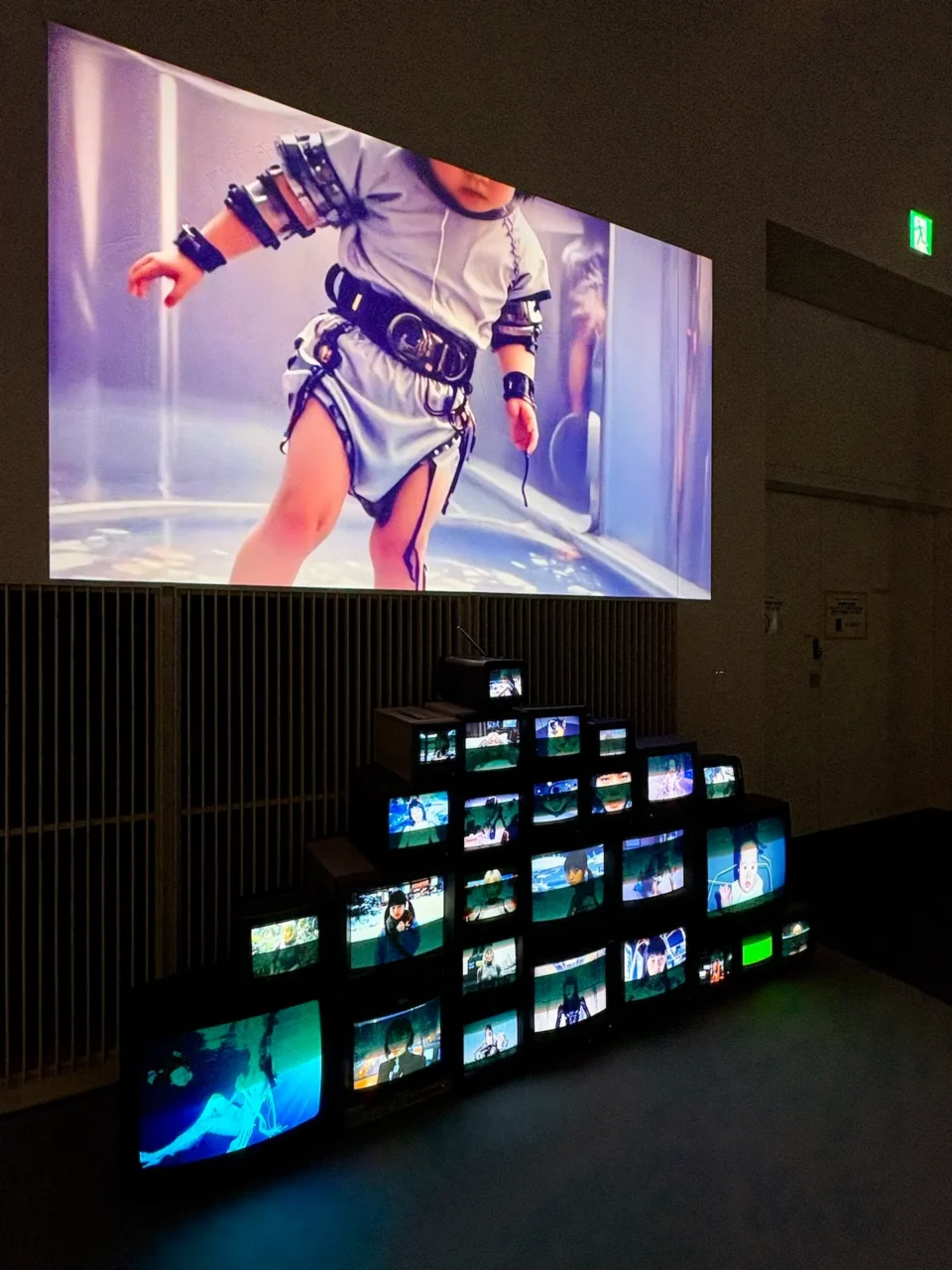
As you continue watching, the boundary between fabricated memories and real ones becomes eerily blurred. You begin to think, maybe it really was like this, or at least it feels as if it could have been. Human memory is constantly overwritten and conveniently reshaped, and that is precisely what makes the experience so unsettling.
If a similar video were created using images from my own life, could I confidently assert that I am unquestionably a living, flesh and blood human being? When I put it that way, I find I have no such confidence at all. In this sense, the work resonates deeply with the existential unease felt by the protagonist of GHOST IN THE SHELL, touching on the same fundamental anxiety about identity, memory, and the self.