Rasmus Faber is a musician of many lives. Producer, composer, arranger, pianist—his career resists a single definition. In Japan, he is widely recognized for the “Platina Jazz” series, where beloved anime songs are transformed into elegant jazz interpretations, as well as for his work scoring numerous anime productions.
Yet his story begins not in concert halls or recording studios for animation, but on the dancefloor. In the early 2000s house music scene, his melodic, romantic, and meticulously crafted tracks caught the ears of DJs like Kenny Dope, Louie Vega, and TOWA TEI, earning him a sudden and lasting presence in clubs around the world.
As his music later expanded into neo-classical, jazz, anime, and game soundtracks, the sensibility of a house producer never disappeared—it simply flowed beneath the surface, shaping everything he touched.
In 2025, that current rose back into full view. With a run of vivid, romantic house releases that echo his early work, Faber stepped once more into the scene that first defined him—a homecoming long hoped for by those who have danced to his music since the early 2000s.
We spoke with Rasmus at his home just before the Christmas holidays, focusing on his identity as a house music creator. Even through a computer screen, his calm, gentlemanly warmth was unmistakable.
INDEX
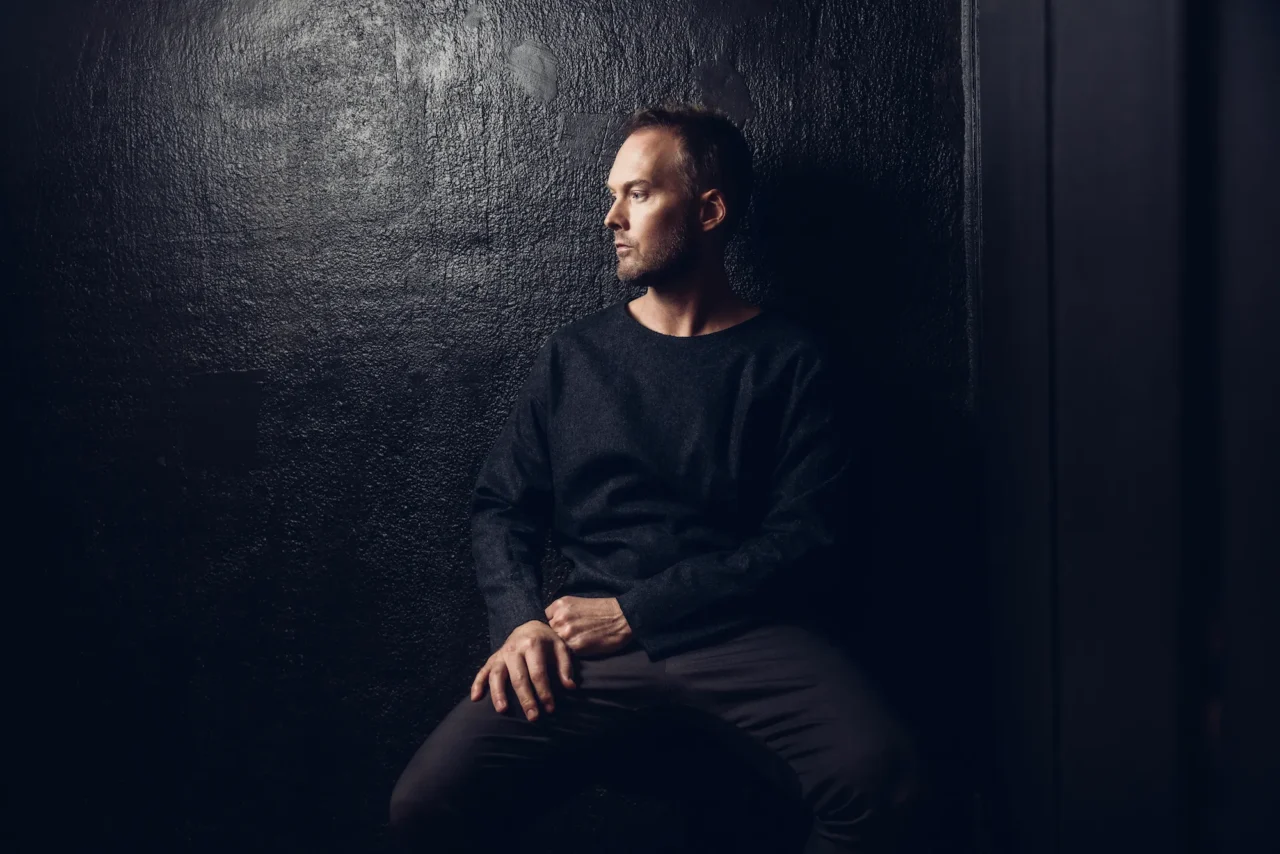
Born in Sweden, Rasmus Faber is a producer, DJ, and multi-keyboardist whose music moves freely between worlds. Raised by a celebrated jazz musician, he began playing piano in early childhood and entered the music scene as a jazz pianist, grounding his artistry in harmony, touch, and improvisation.
His path soon led him to house music, where his debut single “Never Felt So Fly” and the enduring favorite “Ever After” earned him global acclaim. With their elegance, melody, and emotional warmth, these tracks established Faber as a distinctive voice on dancefloors worldwide.
In Japan, albums such as “So Far” and “Where We Belong” expanded his audience beyond the house scene, while his rare position as a foreign composer working in anime music further set him apart. His “Platina Jazz” series—reimagining iconic Japanese anime songs through a jazz lens—has become a defining project, highlighting his ability to bridge cultures and genres.
Blending jazz sophistication, club sensibility, and a deep connection to Japanese pop culture, Rasmus Faber stands as a singular presence in contemporary music, guided less by genre than by curiosity and craft.
A Full Circle Back to House Music
You’ve put out a lot of releases in 2025.
Rasmus: To be honest, sometime around 2024 I started to feel a much stronger pull back toward house music again. The tracks I’ve been releasing were actually ideas I’d been sitting on for several years, but back then it didn’t feel like the right moment to put them out. My interests were pointing in other directions, and the house scene at the time didn’t quite align with the sound I personally wanted to make.
Rasmus: But finally, it felt like everything came together. After a long stretch of time, a kind of big “cycle” completed itself and brought me back to where I started. I think you could say it was a return that happened at an extremely natural moment.
The tracks you’re releasing this time also feel different from your 2019 album “Two Left Feet,” and closer to the sound of your early work. Was that a conscious decision?
Rasmus: Exactly. “Two Left Feet” occupies a slightly unusual place in my catalog. During the 2010s, there was a global EDM boom, and I was DJing in a more festival-oriented style as a result. But somewhere deep down, I always felt a sense of discomfort—like, “This isn’t really where I belong.” At the same time, I never felt any desire to simply conform to the EDM scene either.
Rasmus: That’s exactly why, when the EDM boom started to fade, I decided to make a mellow, restrained album as my own kind of “countermove.” Against a high-energy, highly electronic EDM scene, I deliberately chose slower tempos and a more organic, live-feeling sound. That act of personal resistance is what eventually became “Two Left Feet.”
So during the height of EDM’s popularity, you were feeling a certain sense of constraint?
Rasmus: I felt that a global EDM boom was, in itself, a natural development—but resisting it was far from easy.
The club scene shifted toward a festival-driven model, and EDM ended up stripping away many of the things I had always valued: live instrumentation, and influences drawn from jazz, Latin music, and other genres. I don’t think I was the only one—there were probably many musicians who felt the same kind of restriction at the time.
INDEX
Two Roots That Shaped Him as a Musician
Would you describe this run of house releases as a “return to your roots” for you?
Rasmus: Not exactly. I wouldn’t say it’s that simple, because I have two different roots.
One is house music, which became my foundation as an artist. The other is a more fundamental musical root — Latin, soul, and jazz. For me, the idea of an “origin” exists on these two different levels.
Your father is a jazz musician, and you yourself began your career as a pianist. What was it that drew you toward house music from there?
Rasmus: There was a certain sense of rebellion involved. I grew up going to my father’s concerts, and he was widely respected as a great musician. At the same time, the life of a jazz musician often looked difficult, full of struggle. To my younger self, the jazz world felt a bit closed off.
Rasmus: That’s exactly why I began to feel a strong desire to bring jazz to a much wider world. I thought that by combining the acid jazz and dance music I was deeply immersed in at the time with the Latin, samba, and salsa influences I loved, I could present jazz as something fresh and appealing to a broader audience. That almost mission-like feeling is what ultimately pushed me toward house music.
Which artists were influencing you during that period?
Rasmus: Around 2000 to 2001, when I started seriously working with dance music in Stockholm, the scene was largely divided into two currents: UK garage, and soulful house shaped by US influences.
I was strongly drawn to the melodic side of UK garage, represented by artists like MJ Cole and Artful Dodger. At the same time, I was equally captivated by US house through artists such as Masters at Work, Blaze, and Kenny Bobien.
Rasmus: Around the same time, I was also influenced by the Japanese artist “MONDO GROSSO.” His emotionally rich approach to dance music has stayed deeply etched in me and continues to resonate in my work to this day.
How would you describe the energy of the Swedish dance music scene at that time?
Rasmus: It was incredibly vibrant. In terms of nightlife, I honestly think it was one of the most exciting periods in Swedish history. This was before social media existed—people weren’t focused on filming everything on their phones, but on surrendering themselves to the music on the dancefloor and truly living in the moment.
There was a powerful sense of shared experience centered on music and dance, and I feel very lucky to have been part of that era.
INDEX
Why Musical Knowledge and Skill Don’t Always Help
You play instruments and have a broad musical knowledge and skill set. On the other hand, many dance music creators can’t play instruments and don’t know much about music theory. How do you leverage your knowledge and skills when making house music?
Rasmus: First of all, I’d say that musical theory and instrumental skill don’t always work in your favor. Sometimes, they can even act as a kind of “shackle,” limiting creative freedom.
Producers who can’t play instruments often come up with new visions precisely because they aren’t bound by existing rules. It’s like how someone who is visually impaired develops a sharper sense of hearing. Many of the most innovative ideas in dance music have come from people who, lacking formal knowledge of theory, were simply driven by the desire to express themselves.
Rasmus: In my case, I can take techniques developed by others, like minimal loops, and use my own knowledge of music theory to expand on that style. It’s exactly the idea of “standing on the shoulders of giants”: building new creative discoveries on the foundation of insights already made by those who came before.
On the flip side, do you ever feel that your musical knowledge, theory, or technical skills get in the way when making dance tracks?
Rasmus: Oh, absolutely. The main purpose of dance music is, of course, to make people move, but my priorities naturally lean toward musical expression.
As a result, I sometimes create tracks that are “too musical,” and it’s not uncommon for other DJs to tell me, “Hey, there’s a bit too much going on here” (laughs). Balancing the track’s purpose with its expressive qualities has always been a challenge.
So for DJs, a dance track functions as a tool to get the crowd moving, but you tend to overcraft it as a “piece of music” in its own right.
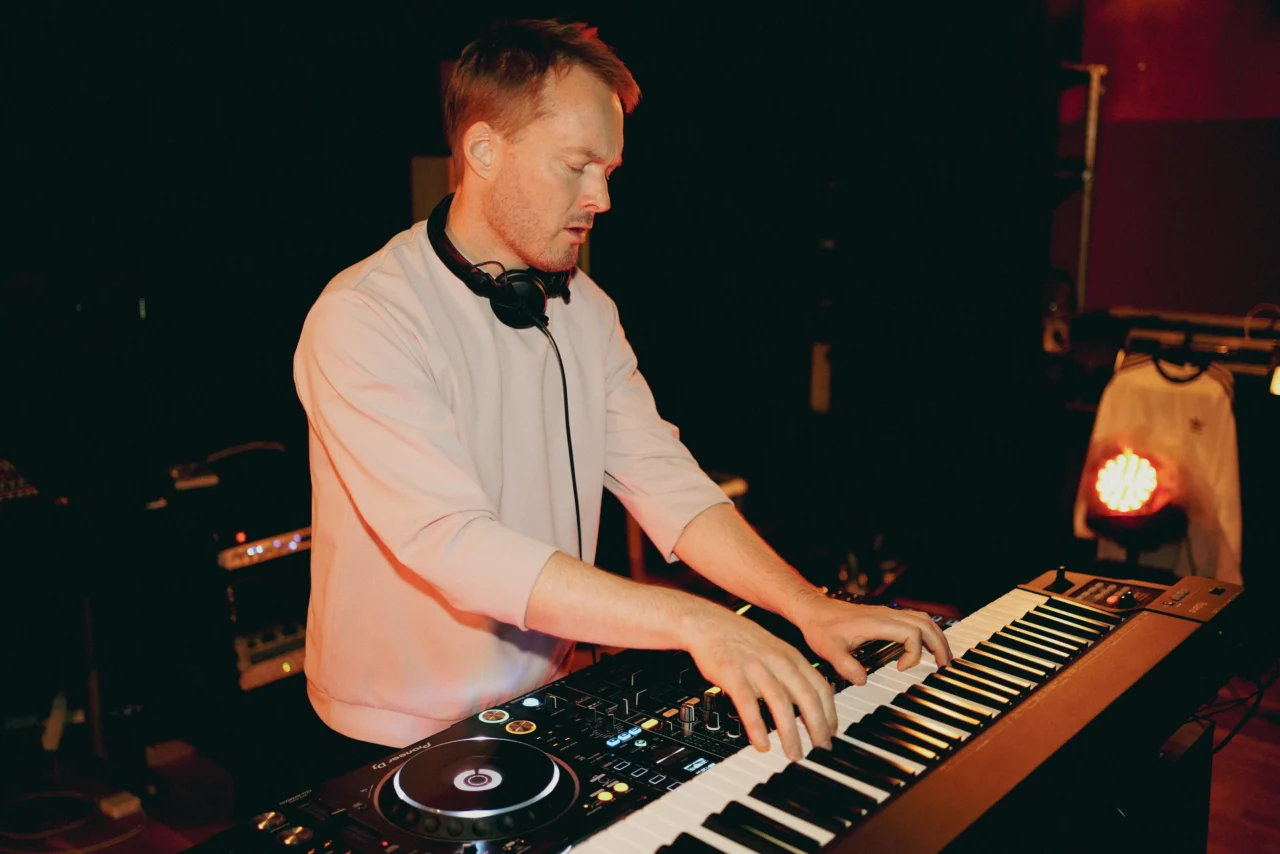
Rasmus: Exactly. Especially when I started making house tracks around 2002, I hadn’t DJed yet, so I didn’t even understand why intros and outros needed to be long. It wasn’t until I began DJing around 2004 that I truly felt, firsthand, why an intro needs to last as long as it does.
I see. Listening to your recent tracks, they feel, in a good way, very much like your early work — pop, elegant, melodic, and refined. Is that a conscious choice, or does it simply reflect your fundamental musical taste?
Rasmus: I think it’s largely just my taste coming through naturally. I’ve explored many styles over the years, but lately I’ve been trying not to overthink things, just to take whatever comes to mind and turn it into music as honestly as I can.
Rasmus: Fortunately, in recent years, there seems to be a new wave of house music that emphasizes melody and songwriting. I felt that this shift created a scene that would once again welcome the kind of sound I love.