INDEX
Finding Connection in the In-Between
Rather than a sound that feels obsessively refined, the album seems animated by a strong sense of intuitive bricolage. Even with all the editing involved, it feels far removed from anything cleanly built through copy-and-paste.
Okada: Even when I repeat a part, I’ll run it through tape first and let the rhythm loosen slightly. I want to avoid patterns that repeat with machine-like precision. That approach connects very directly to mingei thinking. Once you become aware of the mingei philosophy, which places value on handwork, it becomes hard to justify copy-and-paste as a shortcut to save time [laughs].
I spent about a year and a half constantly kneading and reworking the session data. In some cases, a track might not sound dramatically different from its original version at first listen, but continuing to engage with the material in that hands-on way felt like one of the goals of making this album in the first place.
Since mingei has come up, when did you first encounter the idea of “Afro-Mingei,” which feels like a key motif in this album?
Okada: Last summer, in 2024, I was wandering around Roppongi and happened to notice that the Mori Art Museum was hosting an exhibition called “Theaster Gates: Afro-Mingei.” At the time, I barely knew who Theaster Gates was, but I went in out of curiosity. I ended up staying for an incredibly long time—probably longer than I’d ever spent in a museum before.
Afro-Mingei brings together the “Black Is Beautiful” aesthetic that emerged from the African American civil rights movement with the mingei philosophy proposed by Yanagi Sōetsu. It immediately resonated with something I had already been thinking about: the possibility of a connection between African American culture and Japanese culture.
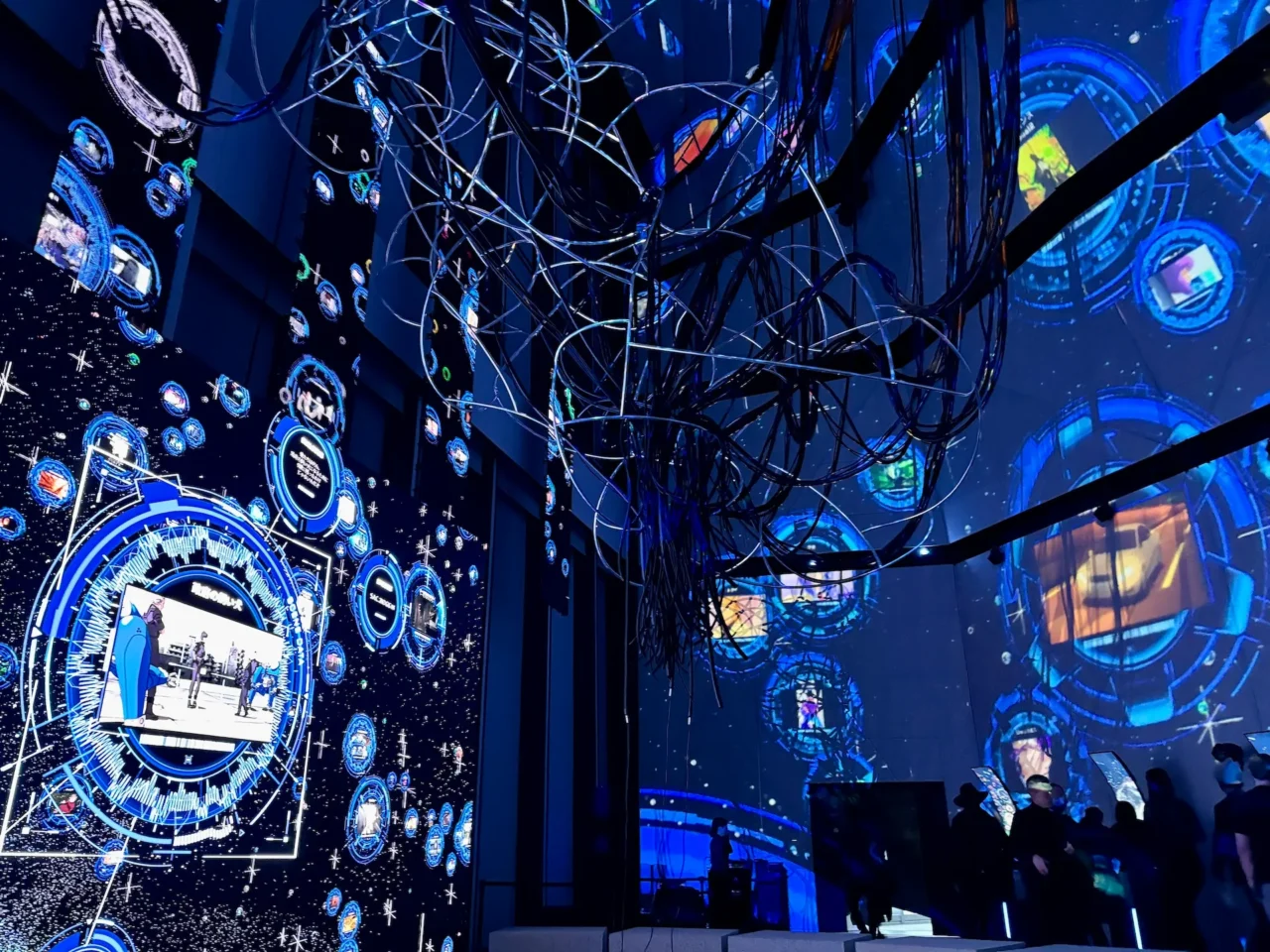
Walking through the exhibition itself was stimulating, but what really stayed with me was how, partway through, the space suddenly opened into something like a bar or a club. In a good way, it completely caught me off guard. Rather than demanding strict contextual interpretation, it felt friendly, relaxed, and welcoming. That sense of accessibility seemed to gently draw out my own interest in mingei as well.
Did that experience then shift your attention toward Japanese or Eastern elements embedded within African American musical culture?
Okada: Yes. I’d already been interested in how Japanese motifs quietly appear in the work of spiritual jazz musicians like Pharoah Sanders and Billy Harper. But that exhibition made me think much more clearly about the potential intersections between the two cultures.
At the museum shop, I picked up Ytasha L. Womack’s book “Afrofuturism: Black Culture and the Imagination of the Future.” Learning about how African American artists have repeatedly imagined possible futures for Black culture made me want to explore what it might look like for that kind of imagination to intersect with Japanese culture as well. And in terms of how to approach that in practice, I didn’t want to become overly serious or self-critical. I kept thinking about that club-like space in the Afro-Mingei exhibition, and whether something similar—open, inviting, and approachable—could exist in music.
In that sense, “konoma” does feel noticeably more approachable than your previous album.
Okada: I sometimes feel that when you build something too rigidly, with excessive logic and precision, you end up reducing the very imagination needed to envision those “possible futures.” Seen that way, I’ve come to think that J Dilla, through his fluid and intimate music, was already giving sonic form to the idea that different cultures could connect.
Through my experience at the Theaster Gates exhibition and encountering the concept of Afro-Mingei, everything I had been thinking about—and everything I was trying to do—began to link together quite naturally.