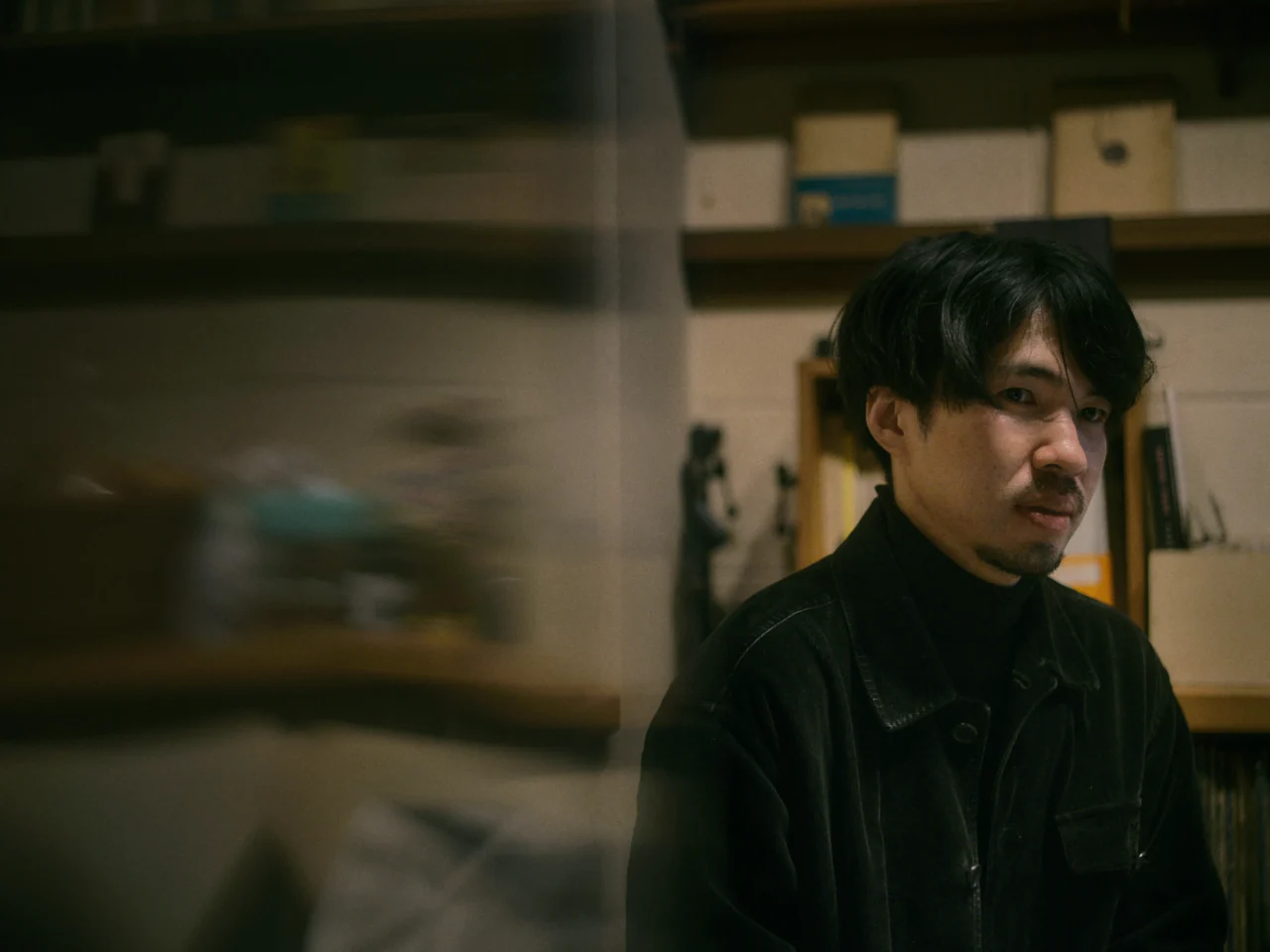
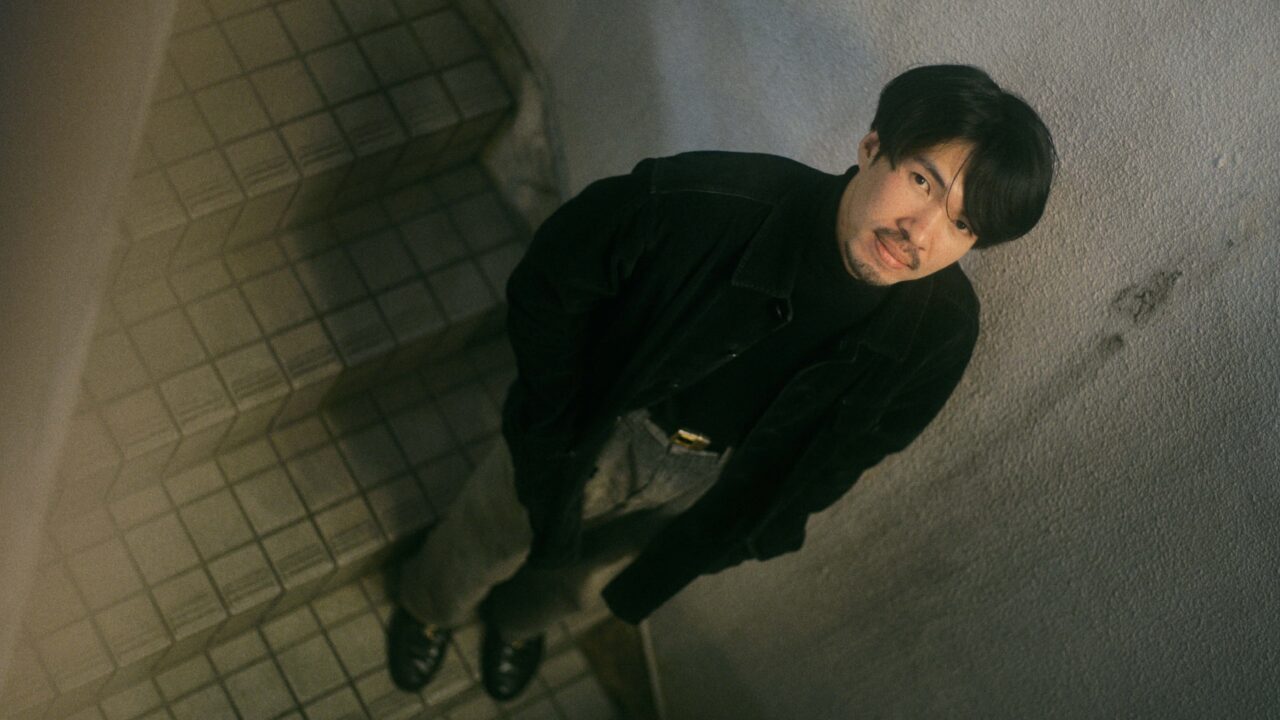
Nearly three years after 2022’s “Betsu No Jikan,” Takuro Okada returns with “konoma,” a new original studio album that quietly yet decisively opens another chapter in his evolving practice. Jointly released by Los Angeles–based labels Temporal Drift and ISC Hi-Fi Selects, the record feels less like a statement of arrival than an invitation to step into a space where time, place, and influence overlap.
Deepening the intricate interplay of improvisation and meticulous editing that marked his previous work, “konoma” unfolds with a newfound openness. Its sounds are gentler on the surface, but beneath that ease lies a densely layered world that resists easy categorization. This is not a turn toward pop so much as a widening of perspective, one that rewards careful, curious listening.
The album takes its name from a phrase in Okakura Tenshin’s The Book of Tea: konoma, “between the trees.” In that in-between space, Okada reflects on what it means to make music as a Japanese artist in the present moment, assembling fragments of memory, history, and sound into a fluid bricolage of identity.
Echoes of Ethiopian music, jazz stretching from Japan to Europe and the United States, blues, ambient, and beat-driven forms drift through the record. Rather than colliding, they trace imagined lines of connection—paths that might once have existed, or perhaps still do.
In this conversation, Okada speaks candidly about the ideas that shaped “konoma”: his self-questioning approach to engaging with Black music, the impact of time spent abroad, and the inspiration he found in contemporary artist Theaster Gates’s concept of “Afro-Mingei.”
INDEX
Wanting the Groove to Never End
When did the initial ideas for this album begin to take shape?
Okada: When was it exactly… After releasing “Betsu No Jikan,” I was constantly on the move, working on production and support projects. In the midst of all that, maya ongaku invited me to play a show at WWW (*). Around that time, I had this vague image in mind: music built on a Willie Dixon–like bass line, repeating in a minimalist way, while remaining harmonically and melodically free—something that sits right on the edge, just barely avoiding turning into a jam. To share that mental image with the band, I started using the phrase “ambient blues.” I think that became one of the key starting points for the album.
※Editor’s note: Referring to rhythm echo noise, a joint event by maya ongaku and Shibuya WWW held on August 10, 2023.
I was actually at that show as well. It felt improvisational, but at the same time it clearly wasn’t bound by the conventions of a 12-bar blues. More like an ambient-tinged take on Americana—really fascinating. For you, is blues still one of your core roots?
Okada: Definitely. When I was in middle school, I was completely immersed in blues. I was listening to records nonstop, and I’d also go sit in at jam sessions at local blues clubs back home.
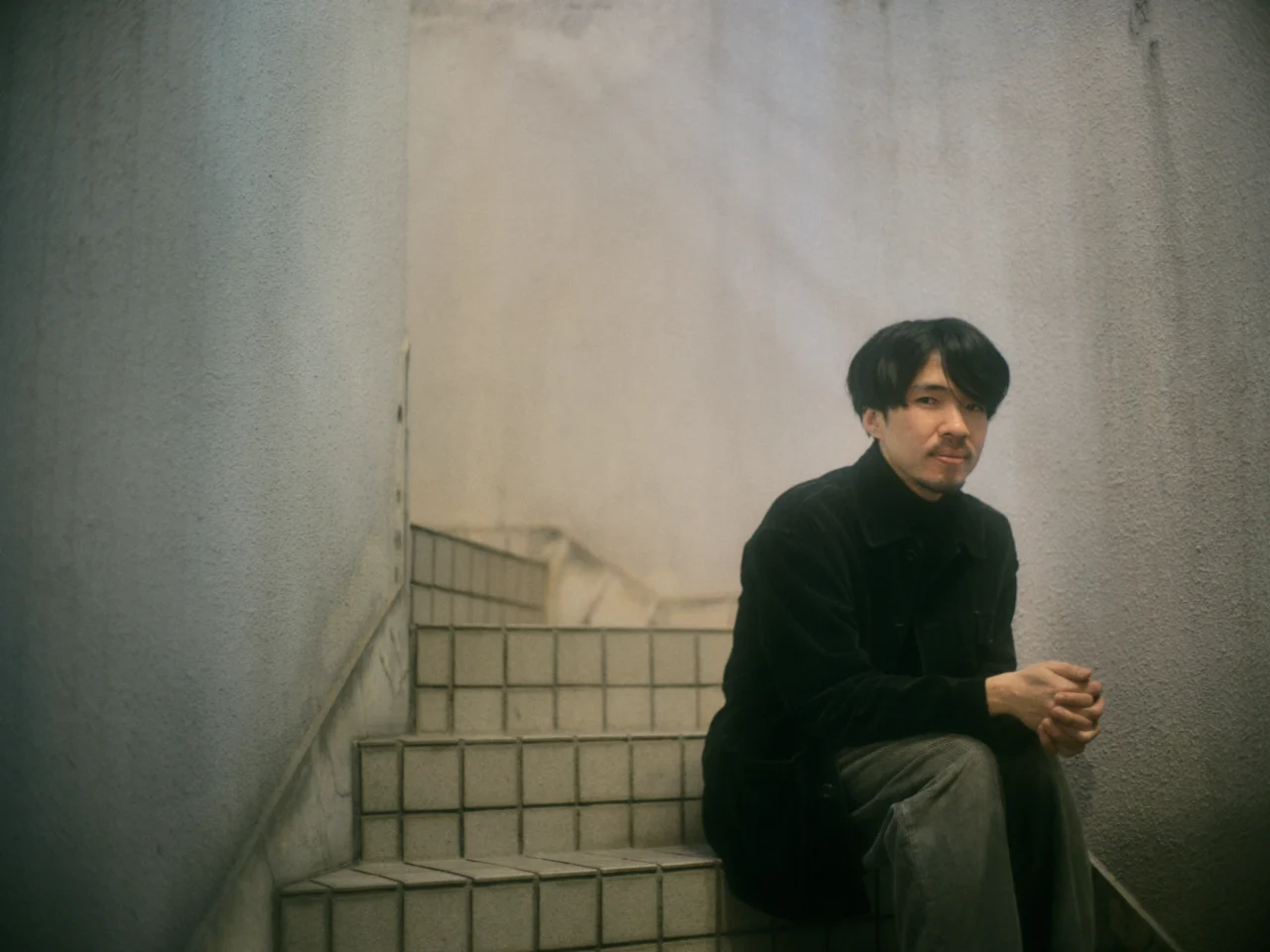
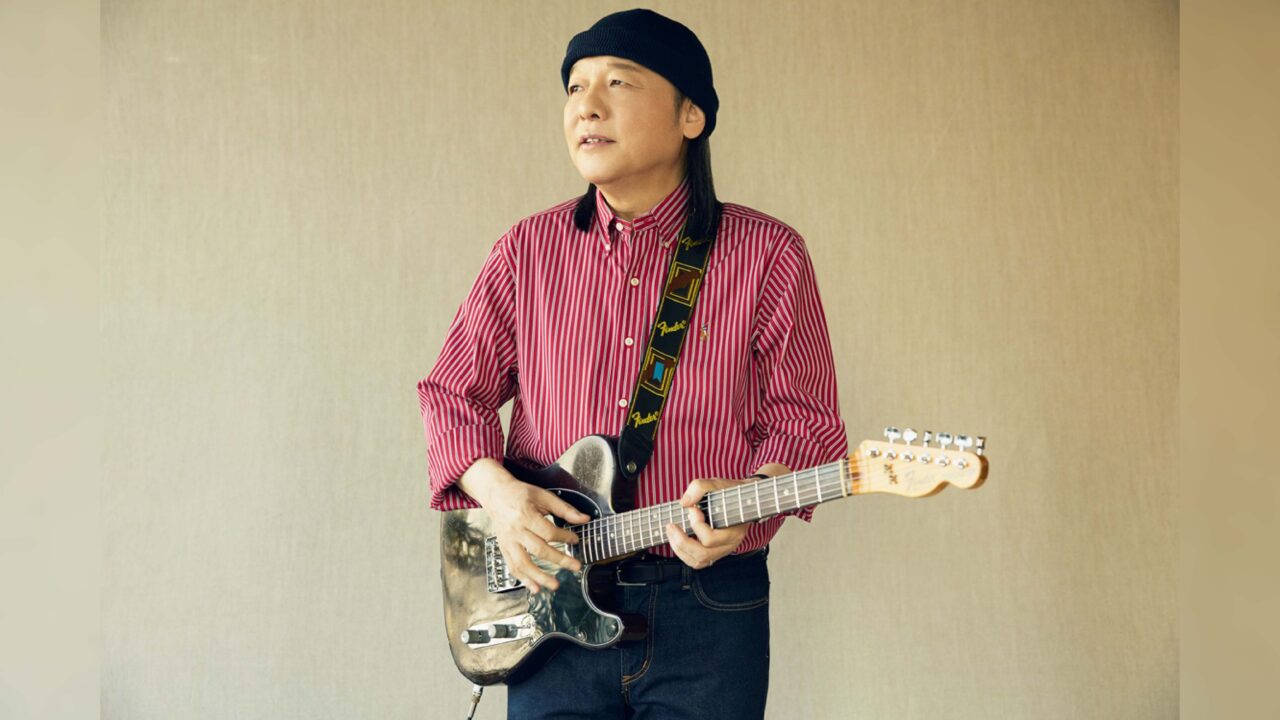
Born in 1991 and raised in Fussa, Tokyo, Takuro Okada is a guitarist, songwriter, and producer. He began his career in 2012 as a member of the band “Mori wa Ikiteiru,” and, following the group’s disbandment, moved fully into his solo work.
His solo albums include “Nostalgia” (2017), “MORNING SUN” (2020), and “Betsu No Jikan” (2022), the latter featuring contributions from Sam Gendel, Carlos Niño, and Haruomi Hosono. Beyond his own releases, Okada has been an in-demand guitarist, taking part in recordings and live performances with artists such as Yuuga, Satoko Shibata, ROTH BART BARON, and never young beach.
Still, since becoming a professional, you haven’t really made anything that could be described as “straight blues,” have you?
Okada: At some level, I always feel the urge to play blues. But the deeper you go, the more you realize how tightly it’s bound to the cultural and historical realities of African American life at that time. Knowing that, I can’t help but hesitate. I’m living in a completely different era, in a completely different environment, and to simply trace the form of blues from that distance never feels quite right to me. That hesitation has been there all along.
When I reach that point, I start thinking about whether the mood and minimalism embedded in blues might be approached differently—by connecting them to the kind of minimal, improvisational playing I explored on “Betsu No Jikan,” filtered through ideas from modal jazz and ambient music.
That comes through. That performance, in particular, seemed to unfold through the repetition of very minimal phrases.
Okada: I’ve said this before in other contexts, but I’ve always had this desire — like wishing the opening of Miles Davis’s “So What” could just continue forever, or wanting to hear Magic Sam’s one-chord boogie go on endlessly. When I tried to translate that feeling into my own music, that’s where I ended up.
Thinking back, what drew me so strongly to blues records in the first place was that sense of atmosphere. The huge reverb on Chess Records releases, or the eerie, almost spectral sound of country blues — those are qualities unique to recorded sound, something quite different from live performance. That sonic world really captivated me.
On this album as well, tracks like “November Owens Valley” seem to embody that idea of “ambient blues.”
Okada: Yes, absolutely. Talking about it now, I’m also reminded of a conversation I once had with Yakenohara at a gathering, which left a strong impression on me. He said that when he’s making beats, he’s always aware of borrowing from other cultures, but when he’s working on ambient music, that sense of borrowing somehow falls away. I found that incredibly relatable.
Maybe that sense of release is part of why I was drawn to thinking about blues and ambient music together.
Why do you think ambient music creates that feeling? It’s also a fairly intellectual concept, closely tied to the frameworks of contemporary music. Could something like a “non-folk” quality be at play?
Okada: That could certainly be part of it, though there are probably several factors involved. One explanation might be its musical flexibility. The simple scales often used in ambient music, its reliance on repetition, its non-beat fluctuations, and its unadorned melodies and harmonies—those elements can be found, in different forms, in indigenous and vernacular music around the world. That openness is probably what allows ambient music to connect so easily with so many different traditions.
At the same time, even before Brian Eno articulated the concept of ambient music, there was already plenty of music that carried an ambient-like mood—not just in contemporary music, but across many cultures, where it existed naturally, woven into everyday life.